




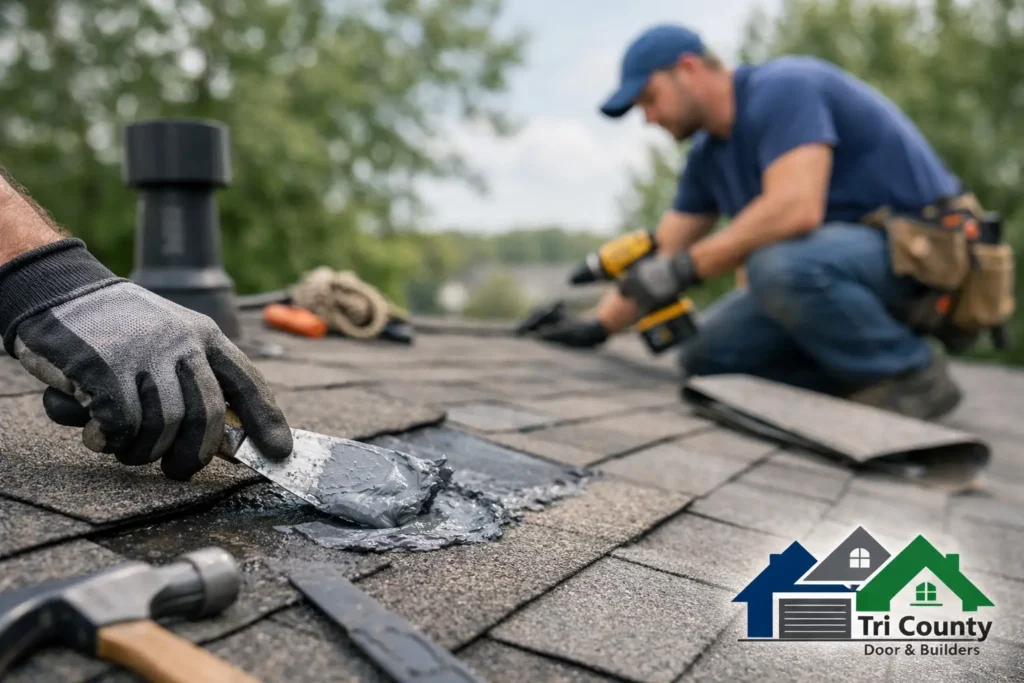
A roof leak usually shows up at the worst possible time – during a hard rain, after a windstorm, or right when you thought the house was in good shape for the season. When people start looking at roof leak repair options, the real question is not just how to stop the drip today. It is how to fix the problem in a way that protects the structure, matches the roof system, and makes financial sense.
That matters in Southwestern Pennsylvania, where roofs deal with heavy rain, wind, snow load, freeze-thaw cycles, and the kind of seasonal wear that exposes weak spots fast. A quick patch can absolutely be the right move in some cases. In others, it only delays a larger repair and adds cost later. The best choice depends on where the leak started, what roofing material is installed, how old the roof is, and whether the damage is isolated or widespread.
Understanding roof leak repair options before you spend
Not every leak means you need a full roof replacement. That is good news for property owners, but it can also make the decision harder. A water stain on the ceiling might come from a missing shingle, failed flashing, a cracked pipe boot, exposed fasteners, storm damage, or even condensation that looks like a roof leak.
This is why the source matters more than the symptom. Water travels. The spot where you see it indoors is often not the point where it entered the roof system. A proper repair starts with tracing the leak to its origin, checking surrounding materials, and looking at the roof as a system instead of one isolated wet spot.
The most common repair paths
Shingle replacement for localized damage
If a few shingles are torn, lifted, missing, or badly worn, replacing those sections may be enough. This is often a practical repair when the roof is still in generally good condition and the leak is tied to a specific damaged area.
The main advantage is cost control. You address the problem without paying for work the roof does not yet need. The trade-off is that spot shingle repair only works if the surrounding shingles still have life left in them. If the roof is brittle, heavily granule-worn, or showing repeated issues in multiple areas, patching one section may not hold up for long.
For homeowners comparing products during a larger repair decision, this is where quality shingles matter. Better materials tend to handle weather changes and long-term exposure more reliably, especially in regions with real winter weather.
Flashing repair or replacement
A lot of leaks come from metal flashing around chimneys, valleys, dormers, skylights, and wall transitions. Flashing is supposed to direct water away from vulnerable joints. Once it loosens, rusts, separates, or was poorly installed in the first place, water gets in where two roof surfaces meet.
Flashing repair can be one of the most effective roof leak repair options because it targets a common failure point directly. Sometimes the fix is a reseal and refasten. Sometimes the flashing needs to be fully replaced. If the shingles around it are also damaged, both issues should be addressed together. Repairing only the flashing while leaving worn roofing material beside it can leave you with another leak in short order.
Pipe boot and vent repairs
Roof penetrations are another frequent source of leaks. Plumbing vent boots, attic vents, exhaust vents, and similar components rely on seals that do not last forever. Rubber boots crack. Sealants dry out. Fasteners back out. Once that happens, water can work its way under the roofing material and into the decking.
This type of repair is often straightforward when caught early. Replacing a boot or vent flashing is usually far less expensive than addressing water damage to roof decking, insulation, and ceilings after the leak has had time to spread.
Sealant and coating repairs
There are situations where a professional-grade sealant or roof coating is appropriate. This is more common on certain flashing details, metal roofing components, or low-slope roof sections than on standard asphalt shingle fields. Used correctly, these products can extend life and stop a minor leak.
Used as a shortcut, they create problems. Caulk is not a cure-all. Roof cement smeared over failing materials may stop water briefly, but it rarely solves the underlying issue if components are loose, rusted, cracked, or improperly installed. A good repair should be built around sound materials, not just surface coverage.
Metal roof leak repair
Metal roofs have their own leak patterns. Seams can separate, exposed fasteners can loosen, washers can fail, and flashing around penetrations can wear out. In some cases, replacing fasteners and resealing seams is enough. In others, damaged panels or trim pieces need to be replaced.
Metal roofing can be an excellent long-term system, but repairs need to match the profile, fastening pattern, and movement of the roof. A generic patch on a metal roof often fails because metal expands and contracts. The repair has to account for that movement or the leak comes back.
When a patch is enough and when it is not
A lot of property owners want the simplest answer possible: patch it or replace it. Realistically, there is a middle ground. Some roofs need a focused repair. Some need multiple repairs plus maintenance. Some have reached the point where continuing to patch them is more expensive than replacing them.
A repair is usually worth considering when the leak is isolated, the roof is not near the end of its service life, and the decking underneath is still solid. It also makes sense when storm damage affected one area rather than the full roof.
Replacement becomes the smarter move when leaks are recurring, shingles are failing in several sections, the roof has widespread deterioration, or water has already compromised underlayment and decking. If one repair turns into another every season, that is not savings. That is deferred cost.
What can make repair costs go up
The leak itself is only part of the price. The extent of hidden damage matters just as much. Water that gets past the roof covering can affect decking, rafters, insulation, drywall, and even interior finishes. The longer the leak goes unchecked, the more likely the repair grows beyond roofing alone.
Roof design also affects cost. A simple walkable roof is faster to inspect and repair than a steep roof with multiple valleys, penetrations, and transitions. Material availability matters too. Matching older shingles or specialty metal panels can take more effort than repairing a newer, standard system.
This is one reason local guidance matters. A contractor or supplier familiar with the roof types and weather demands common in this region can usually spot whether you are dealing with a true isolated leak or a roof that is beginning to fail in several places.
Why temporary fixes should stay temporary
A tarp, emergency patch, or sealant application can be the right move after storm damage or when immediate weather protection is needed. There is nothing wrong with a temporary fix if it buys time and prevents more damage.
The mistake is treating it like a finished repair. Temporary materials are not designed to carry the roof long term. Once weather permits, the roof still needs to be inspected properly and repaired with the right materials. Waiting too long can turn a manageable issue into rot, mold, insulation loss, or structural damage.
Choosing the right solution for your roof
The best roof leak repair options are the ones that fit the condition of the roof, not just the urgency of the leak. If your roof is relatively new and the problem is confined to a vent, flashing section, or a few storm-damaged shingles, a targeted repair may be the smartest route. If your roof is older and showing wear in multiple areas, it may be time to stop patching and look at replacement with stronger long-term value.
That is where straightforward advice matters. Property owners do not need pressure. They need a clear explanation of what failed, what can be repaired, what should be replaced, and what is likely to happen next if nothing changes. Tri County Door & Builders has built its reputation on exactly that kind of practical guidance, along with quality roofing products that fit real budgets.
If you have a leak, the best next step is simple: get the roof checked before the next storm tests the same weak spot again. The sooner you know what failed, the easier it is to make a repair decision you can feel good about.