




A garage door usually gives you plenty of warning before it quits for good. The trouble is that many property owners wait until it sticks halfway open on a cold morning, slams shut harder than it should, or stops matching the condition and value of the rest of the building. If you are asking when should garage doors be replaced, the real answer depends on safety, reliability, repair history, and whether the door is still doing its job.
For some owners, replacement becomes obvious after storm damage or a broken panel. For others, it is a slower decision shaped by rising repair costs, poor insulation, and a door that simply looks worn out. A good replacement decision is not about replacing a door at the first squeak. It is about recognizing when repairs are no longer the practical or cost-effective option.
When should garage doors be replaced instead of repaired?
A single problem does not always mean the whole door has reached the end of its life. Rollers wear out, springs break, tracks need adjustment, and openers fail. Those are repair issues. Replacement becomes the smarter move when the door itself is compromised or when multiple problems start stacking up at the same time.
Age is one of the biggest factors. Many garage doors can last 15 to 30 years, depending on the material, installation quality, maintenance, and weather exposure. In Southwestern Pennsylvania, freeze-thaw cycles, moisture, wind, and regular wear can shorten that timeline, especially for doors that were installed with lower-grade materials or have seen years of heavy use.
If your door is past the 15-year mark and has ongoing issues, it is worth looking at the bigger picture. You may be spending money to keep an outdated system alive when a new door would give you better performance, quieter operation, and fewer service calls.
Signs your garage door is nearing the end
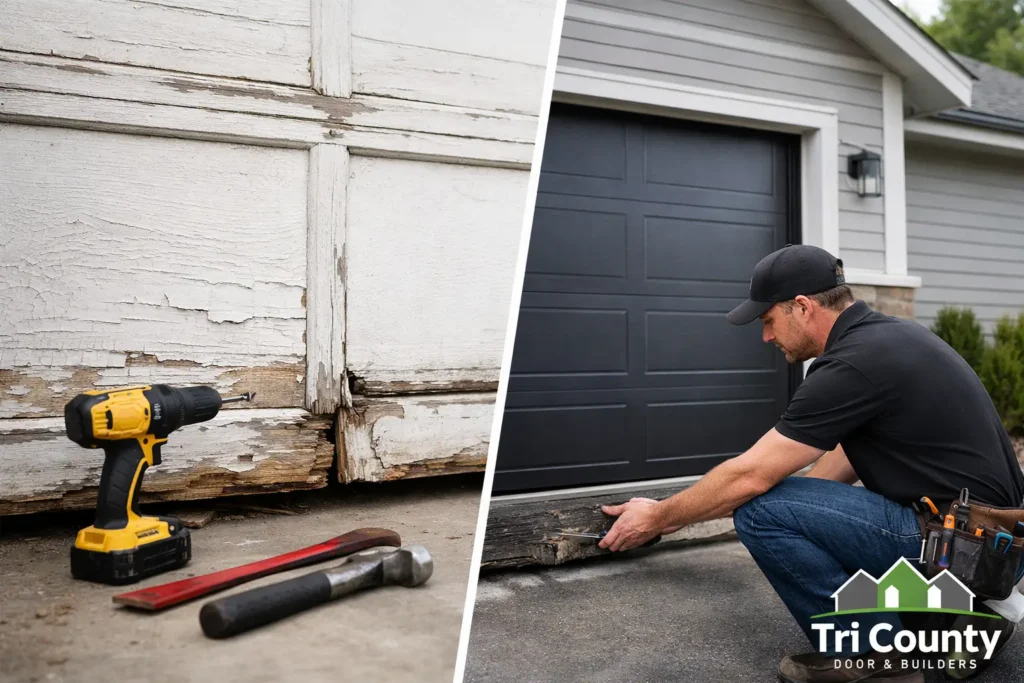
One of the clearest signs is structural damage. If the door is cracked, warped, dented in key sections, rusting through, or pulling away from its tracks, repair may only buy limited time. Cosmetic flaws alone are not always a reason to replace, but damage that affects balance, movement, or sealing is different.
Noise is another clue. Garage doors are not silent, but grinding, popping, scraping, or shaking can point to deeper wear. Sometimes the issue is hardware. Other times, the problem is a tired door that no longer opens and closes evenly. If the system keeps needing adjustment, that usually tells you the wear is no longer isolated to one part.
Poor energy performance also matters more than many homeowners expect. An older non-insulated door can make an attached garage much colder in winter and hotter in summer. That can affect comfort in adjacent rooms and put more strain on your heating and cooling system. For garages used as workshops, storage areas, or mixed-use spaces, insulation becomes even more valuable.
Then there is safety. A garage door that reverses unpredictably, drops too fast, or does not close squarely should be taken seriously. Garage doors are large, heavy moving systems. If the door has become unreliable, replacement is often the safest choice, especially if the door lacks modern safety features.
The repair-versus-replace cost question
This is where many owners hesitate, and fairly so. Repairs usually cost less upfront than a full replacement. But repeated repairs can turn into a more expensive path over time.
A good rule of thumb is to compare the size of the repair bill to the age and condition of the door. If a major repair is going to cost a significant percentage of replacement and the door is already older, replacement often makes better financial sense. The same is true if one repair seems likely to be followed by another. A new spring on a badly worn door may solve one issue while leaving you with aging panels, noisy rollers, and weak seals.
There is also the value side of the equation. A new garage door can improve curb appeal, day-to-day convenience, insulation, and reliability all at once. For homes and commercial properties alike, that is not just a cosmetic upgrade. It is a practical improvement that affects how the building performs.
When damage makes replacement the better option
Impact damage is common. A vehicle bump, storm debris, or a shifting load can bend sections or knock the door out of alignment. In sectional doors, one damaged panel can sometimes be replaced. But exact panel matching can be difficult, especially on older models or discontinued product lines.
If the panel style, finish, or color no longer matches, patchwork repairs may leave the building looking uneven. That can matter on a home, but it matters just as much on a farm building, detached garage, or small commercial property where appearance still affects value and professionalism.
Replacement is also more likely if the track system has been compromised or if the door no longer seals properly at the bottom and sides. Gaps let in moisture, pests, dirt, and cold air. In this region, that can create bigger problems quickly, especially in buildings storing tools, equipment, inventory, or vehicles.
Material and usage make a difference
Not all garage doors age the same way. Steel doors are popular because they are durable and relatively low maintenance, but they can still dent, rust, or lose finish over time. Wood doors can be attractive, but they demand more upkeep and can suffer from moisture-related warping. Aluminum doors resist rust but can be more vulnerable to dents. Composite and insulated options may hold up better in certain settings, especially where temperature control matters.
Usage matters just as much as material. A garage door on a busy household garage or commercial bay may cycle several times a day. A farm outbuilding might face dirt, wind, and hard use. A lightly used detached garage may last longer even with basic maintenance. That is why two doors installed in the same year can end up on very different replacement timelines.
When should garage doors be replaced for safety and security?
If your current door lacks modern safety features, replacement deserves serious consideration. Older systems may not have dependable auto-reverse functions, updated sensors, or stronger locking and opener technology. That can create risks for families, employees, and anyone using the space regularly.
Security is another reason owners decide not to keep patching an old door. If the panels are thin, the hardware is weak, or the opener system is outdated, the door may be easier to force than a newer model. For homeowners protecting vehicles and tools, or for businesses protecting equipment and inventory, that matters.
This is one of those areas where the cheapest short-term fix is not always the best long-term decision. A secure, properly fitted, professionally installed door offers value every day, not just when something goes wrong.
Timing your replacement before it becomes urgent
The best time to replace a garage door is usually before failure turns it into an emergency. If the door still works but has visible wear, inconsistent operation, and rising repair needs, planning ahead gives you more control over style, insulation level, features, and budget.
That is especially useful for property owners managing larger projects. If you are already updating siding, roofing, exterior trim, or a pole building, replacing the garage door at the same time can create a better fit in both appearance and labor planning. Coordinating those improvements often saves hassle compared with reacting after the old door fails.
For property owners in places like Westmoreland, Somerset, and Fayette counties, weather is another reason not to delay too long. A weak door going into winter can become a bigger headache fast. Better to replace on your schedule than during the first stretch of freezing weather when every contractor is handling urgent calls.
How to know if now is the right time
Ask a few straightforward questions. Is the door safe and dependable every day? Are repairs becoming more frequent or more expensive? Is the door hurting efficiency, security, or appearance? Are replacement parts getting harder to match? If the honest answer to several of those is yes, you are likely past the point where repair is the better long-term choice.
A trustworthy local supplier and installer should help you weigh that decision honestly. That means looking at the door’s condition, not pushing replacement for every minor issue. Companies like Tri County Door & Builders have seen the difference between a door that needs a focused repair and one that is costing the owner more with every season.
A garage door does not have to be completely dead to be ready for replacement. Sometimes the right move is replacing it while you still have time to choose wisely, avoid emergency costs, and get a door that fits the way you use your property now. A good door should open smoothly, seal properly, look right on the building, and give you one less thing to worry about.