



If your asphalt roof is aging but the decking underneath is still sound, one question usually comes up fast: can metal roofing go over shingles? The short answer is yes, sometimes. The better answer is that it depends on the condition of the existing roof, local code requirements, ventilation details, and whether the new system is being installed the right way.
For many property owners, the appeal is obvious. Leaving shingles in place can reduce tear-off labor, shorten the project timeline, and cut down on jobsite mess. But putting metal over shingles is not a shortcut you want to take blindly. A roof system only performs as well as the structure under it.
Can metal roofing go over shingles without a full tear-off?
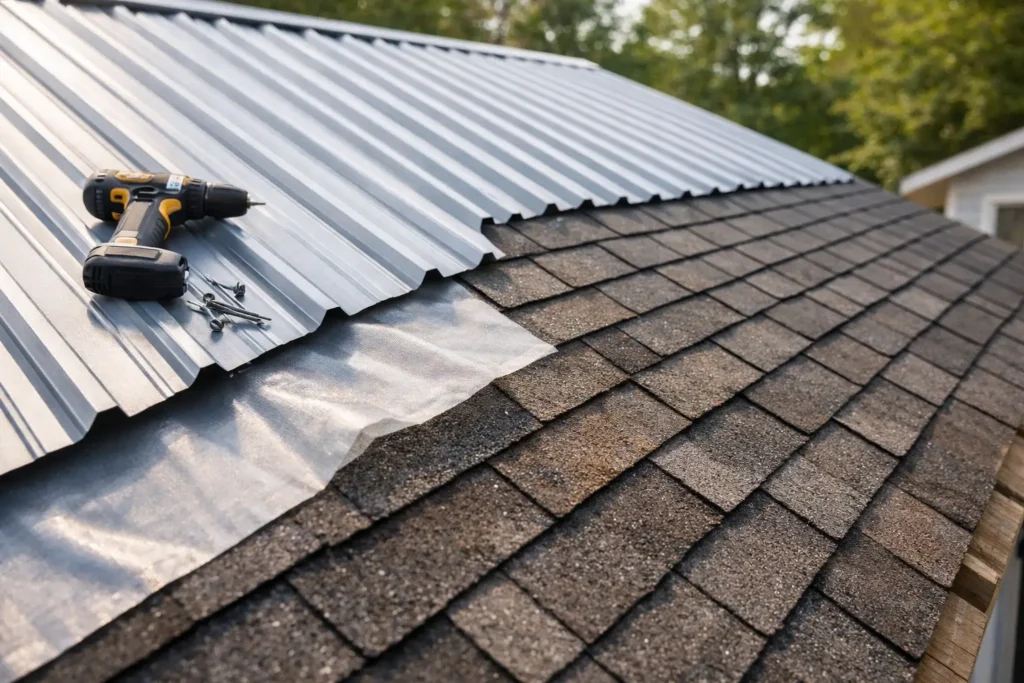
In many cases, metal roofing can go over shingles without removing the old roof first. This is common on homes, garages, agricultural buildings, and some light commercial structures. It is especially attractive when the existing shingle roof has reached the end of its life cosmetically but still has a solid deck underneath.
That said, “can” is not the same as “should.” A metal roof installed over failing shingles, soft decking, or hidden moisture damage can trap problems instead of solving them. If the old roof has sagging areas, widespread leaks, spongy spots, or evidence of rot, a full tear-off is usually the smarter move.
A proper inspection matters more than the roofing material itself. Before anyone installs panels, the installer should be checking the roof deck, the framing condition, flashing areas, penetrations, and attic ventilation. Skipping that step can turn a money-saving idea into an expensive repair later.
When installing metal over shingles makes sense
This approach tends to work best when the roof has only one existing layer of shingles, the decking is structurally sound, and the roof plane is relatively even. If the old shingles are curling heavily or have large dips and humps, those irregularities can telegraph through the metal or create fastening issues.
It also helps when the project uses a system designed for retrofit installation. In many cases, installers use underlayment and a batten or furring strip system to create a flatter attachment surface and an air gap between the shingles and the metal panels. That setup can improve drainage and help reduce moisture concerns.
For barns, workshops, detached garages, and utility buildings, metal-over-shingles is often a practical fit. For homes, it can still be a very good option, but the details have to be tighter because appearance, ventilation, and long-term weatherproofing matter more.
When a tear-off is the better choice
Sometimes removing the shingles first is the only responsible recommendation. If there are already two roofing layers, another layer may exceed code or structural limits. If the deck has hidden rot around eaves, valleys, chimneys, or skylights, covering it up does nothing to stop the deterioration.
A tear-off also makes more sense if you want a cleaner inspection of the roof deck or need sheathing repairs before the new roof goes on. It gives the installer a fresh start, which can be important on older homes where years of patching have left uneven surfaces underneath.
There is also a resale and maintenance angle. Some buyers like knowing the old material was removed and the deck was inspected fully. That does not mean overlay systems are poor practice. It just means the right choice depends on the condition of the building and the goals of the project.
Code, weight, and structural questions
One reason this question cannot be answered with a blanket yes is that local building code matters. Some jurisdictions allow one roof recovery over a single existing layer. Others are stricter about how many layers are permitted or what conditions must be met.
Weight is another factor, though metal itself is relatively light compared with many other roofing materials. The concern is less about metal being too heavy and more about what is already on the structure. A professional should verify that the framing and decking are in good shape and that adding a new roof system over the old one will not create a problem.
In Southwestern Pennsylvania, roofs also deal with snow loads, freeze-thaw cycles, wind-driven rain, and long periods of moisture exposure. That makes details like fastening, underlayment, flashing, and ventilation especially important. A roof that might get by with average workmanship in a milder climate can fail faster here.
The biggest installation details that affect performance
The success of a metal roof over shingles usually comes down to what happens under the panels. Underlayment is one part of that. It provides an added moisture barrier and helps separate materials. The attachment method is another part. Some installations fasten metal directly over shingles, but many benefit from battens or purlins that create a more uniform plane.
Ventilation should never be treated as an afterthought. A poorly ventilated roof assembly can contribute to condensation, excess heat buildup, and reduced material life. That is true whether the roof is metal or shingles. If the existing attic ventilation was marginal before, covering the roof without correcting airflow can leave the same problem in place.
Flashing work is just as important as the field panels. Valleys, pipe boots, sidewalls, chimneys, and transitions are the areas where water problems usually begin. A metal roof is only as watertight as these details.
Cost savings are real, but not automatic
Many owners look at metal-over-shingles because they want to save on tear-off and disposal costs. That is reasonable. In the right situation, leaving shingles in place can lower labor and landfill fees and move the project along faster.
But there are trade-offs. If the installer has to correct major unevenness, add framing adjustments, or work around poor existing conditions, the savings can shrink. In some cases, a tear-off ends up being more cost-effective because it prevents callbacks and repairs later.
This is also where product choice matters. Exposed-fastener panels, standing seam systems, trim packages, underlayments, and ventilation components all affect price. A cheaper roof on day one is not always the better value over twenty or thirty years.
Appearance and noise concerns
Homeowners often ask whether metal over shingles will look wavy or sound louder in rain. Both concerns are fair.
If the roof deck is flat and the installation is done correctly, the finished appearance can be clean and sharp. If the existing roof surface is badly uneven, that may show through. This is one reason inspections matter.
As for noise, a properly installed metal roof over a solid deck with underlayment is usually not dramatically louder than people expect. Open framing and poorly insulated structures tend to amplify sound more than residential roof assemblies do. In other words, the building design matters as much as the roofing material.
Is metal over shingles better than installing new shingles?
That depends on what you want from the roof. Metal offers longevity, low maintenance, and strong performance in harsh weather. For some owners, that makes it worth the investment. For others, a new shingle roof is the more practical fit, especially if budget is the deciding factor.
There is no one-size-fits-all answer. In fact, there are situations where a quality shingle roof is the smartest recommendation. If the roof needs a tear-off anyway, and the goal is to control upfront cost while still getting dependable protection, shingles may be the better route. That is especially true when a property owner wants trusted brand options and straightforward installation without the higher initial cost of metal.
What to ask before you move forward
Before agreeing to install metal over shingles, ask whether the roof deck has been inspected, whether local code allows the application, how ventilation will be handled, and what type of underlayment and fastening system will be used. Also ask what happens around penetrations, valleys, and transitions. Those answers tell you a lot about the quality of the proposal.
A good contractor should be comfortable explaining why overlay is appropriate for your building or why it is not. That kind of honesty matters. At Tri County Door & Builders, that practical approach is what property owners count on – helping customers choose the right solution instead of forcing every roof into the same package.
The best roof decision is usually the one that solves the real condition of the building, not just the one that sounds fastest or cheapest. If your current shingles are covering a solid, dry, structurally sound roof, metal may be a smart upgrade. If the roof is already hiding damage, starting fresh is often the better investment. Either way, a careful inspection now is what protects you from expensive surprises later.