




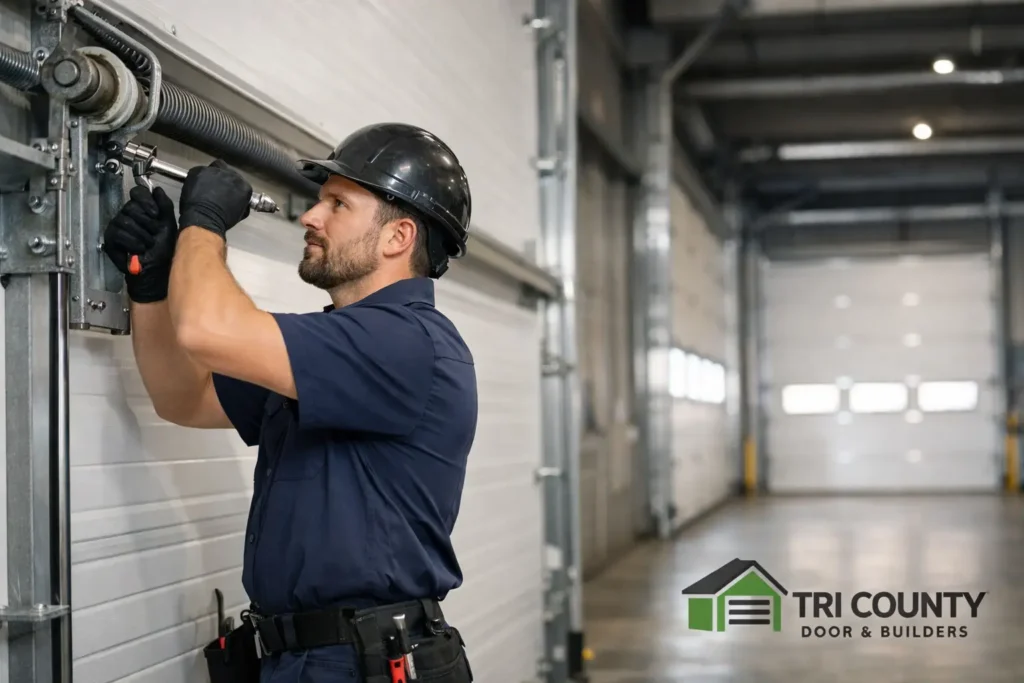
A warehouse door that sticks for even ten minutes can throw off deliveries, delay crews, and create a safety problem fast. That is why commercial garage door service is not something most property owners think about only after a breakdown. The right service plan keeps doors moving, protects equipment, and helps avoid the kind of repair call that comes at the worst possible time.
For commercial properties, garage doors are working components, not just entry points. They open and close repeatedly, deal with changing weather, and take wear from daily traffic. In a shop, farm building, service bay, storage facility, or mixed-use commercial property, door performance affects how the whole building operates. When a door is slow, noisy, off-track, or unreliable, it usually means a larger issue is already developing.
What commercial garage door service actually covers
A good commercial garage door service includes more than replacing a broken spring. It usually starts with inspection and troubleshooting, then moves into repair, adjustment, part replacement, and preventive maintenance. If a door is beyond repair or no longer fits the demands of the building, service may also include a full replacement.
Commercial doors have more moving parts and heavier-duty hardware than many residential systems. That means service work has to account for track alignment, rollers, hinges, cables, drums, springs, operators, safety sensors, seals, and panel condition. If one component fails, the rest of the system often carries extra strain. A quick fix might get the door moving again, but it may not solve the reason it failed in the first place.
That is where experience matters. A knowledgeable technician looks at the whole system, not just the obvious symptom. For a business owner or property manager, that can mean fewer repeat calls and a better return on repair dollars.
Why commercial garage door service matters more than most owners expect
Many commercial doors do not fail all at once. They start with warning signs that are easy to ignore because the door still works. It may drag a little on one side, hesitate when opening, slam shut harder than usual, or make more noise than it did a month ago. These changes often point to wear that will eventually lead to downtime.
The cost of waiting depends on the building and the use case. In a busy service shop, downtime can interrupt scheduling and labor. In a storage or distribution setting, it can affect deliveries and access. In an agricultural building, it may expose equipment or materials to the weather. For small businesses especially, one disabled opening can create a chain reaction across the day.
There is also the safety side. A commercial overhead door is a heavy operating system with tension-loaded parts. If cables fray, springs weaken, or an opener struggles against an unbalanced door, the risk goes up. Service is not just about convenience. It helps protect employees, customers, vehicles, and the building itself.
Signs your building needs commercial garage door service
Some problems are obvious, like a door that will not open. Others are easier to overlook until they become expensive. If the door jerks during travel, leaves gaps when closed, reverses unexpectedly, or requires repeated opener commands, it is time to have it checked. The same goes for bent tracks, worn bottom seals, damaged panels, or hardware that looks loose or rusted.
Temperature and weather also play a role. In Southwestern Pennsylvania, cold snaps, moisture, and seasonal swings can stress metal components and affect door operation. Seals can harden, hardware can corrode, and operator settings may need adjustment as conditions change. A door that worked fine during mild weather may start showing issues when winter or heavy humidity sets in.
If your building relies on insulation, energy control, or weather protection, service should also include checking perimeter seals and the overall fit of the door. An opening that does not close tightly can let in drafts, dust, pests, and water. Over time, that affects comfort, utility costs, and the condition of what is stored inside.
Repair or replacement depends on the door, the damage, and the job it does
Not every worn commercial door needs to be replaced. In many cases, replacing springs, rollers, cables, sections, or an operator can restore reliable performance for a reasonable cost. If the door structure is still sound and the system matches the building’s needs, repair can be the practical move.
But there are times when replacement makes more sense. If the door has recurring issues, outdated hardware, major panel damage, or the wrong rating for the application, continuing to repair it may only delay a bigger expense. The same is true if the business has changed and the door is no longer keeping up with the traffic level or insulation needs of the building.
This is one of those areas where honest guidance matters. A trustworthy service provider should explain the trade-off clearly. A lower repair bill today is not always the cheapest option over the next three years. On the other hand, replacement should not be pushed when a solid repair will do the job.
What to expect from a professional service visit
A professional visit should start with a clear evaluation of the problem and the condition of the system. That includes checking door balance, spring tension, track condition, hardware wear, opener response, and safety features. The goal is to identify both the immediate failure and anything likely to cause the next one.
From there, the recommendation should be straightforward. Property owners do not need a sales pitch. They need to know what failed, what it affects, what the repair involves, and whether there are options. On commercial properties, speed matters, but so does accuracy. Rushing through a repair without correcting alignment or load issues usually leads to another service call.
Good service also means using parts that fit the door and the workload. Commercial applications are not one-size-fits-all. A lightly used storage building door and a busy automotive bay may look similar from a distance, but they do not ask the same thing from springs, operators, or hardware.
Preventive maintenance saves money when doors work hard
For buildings with frequent door cycles, preventive maintenance is often the smartest part of commercial garage door service. It gives owners a chance to catch wear before it turns into an emergency and helps extend the life of major components.
Routine service typically includes lubrication, tightening hardware, testing balance, checking spring and cable wear, inspecting rollers and hinges, adjusting track alignment, and confirming that openers and safety devices are working properly. It is basic work, but it matters. Small corrections made early are usually much cheaper than emergency repairs after a failure.
Maintenance frequency depends on usage. A door opened a few times a week may need less attention than one cycling all day. That is why service plans should be based on how the building actually operates, not a generic calendar recommendation.
Choosing the right company for commercial garage door service
When you are comparing providers, local knowledge matters. A company familiar with regional weather, commercial building types, and the needs of local businesses is more likely to recommend the right door setup and service schedule. That is especially true for owners who manage multiple building systems and need practical answers, not guesswork.
Look for a provider that can handle both installation and repair, because service is better when the company understands the full life cycle of the product. It also helps to work with a team that communicates clearly, shows up when promised, and explains what is worth fixing now versus what can be planned for later.
That dependable, no-nonsense approach is what many business owners want from a local company like Tri County Door & Builders. They are not looking for the cheapest temporary patch. They want the door to work, the building to stay secure, and the repair to hold up.
Commercial garage doors do a lot of heavy lifting for a business, often without much attention until something goes wrong. Giving them timely service is a practical way to protect your schedule, your building, and the people who depend on both. If your door is showing signs of wear, the best time to address it is before it decides for you.