




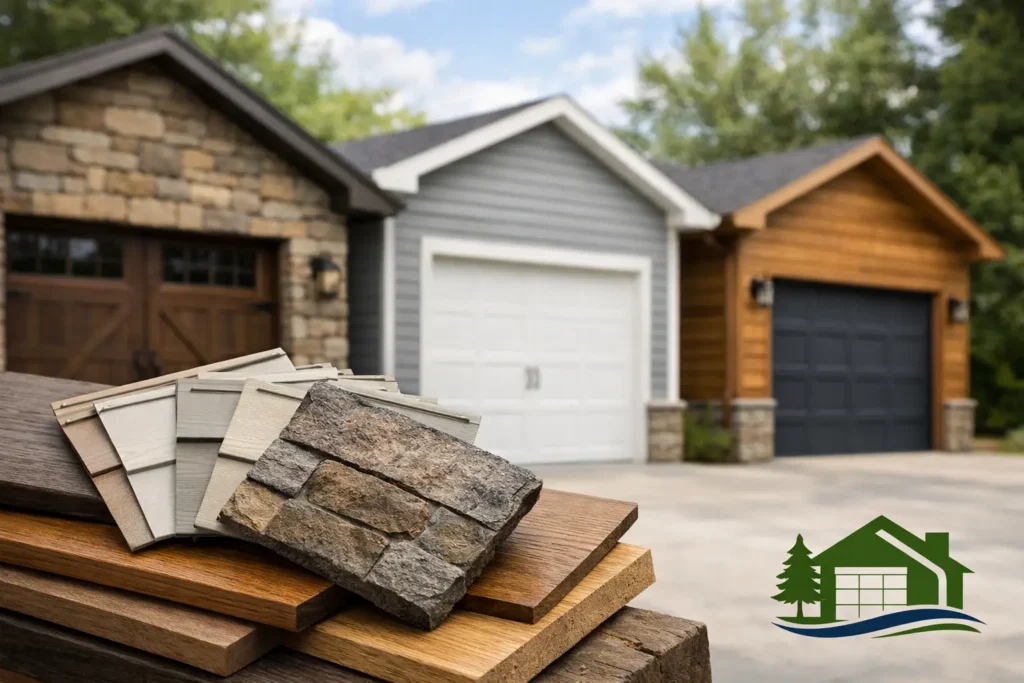
A garage takes a beating in Western Pennsylvania. It sees wind, rain, snow, mud, mower bumps, ladder scrapes, and wide temperature swings that can expose weak materials fast. That is why choosing the best siding materials for garages is not just about curb appeal. It is about protecting the structure, controlling maintenance, and getting a finish that still looks right five or ten years from now.
The right answer depends on how your garage is used. A detached backyard garage has different demands than a workshop, a farm outbuilding, or a garage attached to the house. Budget matters too, but so does the cost of repainting, repairing, or replacing damaged panels later. When customers ask what siding works best, the honest answer is usually this: there is no single best product for every garage, but there are clear winners for certain priorities.
How to compare the best siding materials for garages
Start with four factors: durability, maintenance, appearance, and total cost over time. Initial price matters, but low upfront cost can be misleading if the siding needs frequent paint, is easy to crack, or struggles in rough weather.
It also helps to think about what the garage sits next to. If it is attached to your home, matching the house often matters more than it would on a detached building behind the property. If it is a work garage, storage building, or agricultural structure, performance and easy upkeep usually move to the top of the list.
Metal siding
For many property owners, metal siding is one of the strongest garage options on the board. It is durable, low-maintenance, resistant to pests, and well suited for detached garages, pole buildings, and utility structures. It also makes sense for homeowners who want a clean finish without signing up for regular repainting and patching.
Steel siding in particular performs well where weather can be hard on buildings. It handles moisture better than wood, does not invite insects, and stands up well to normal wear. Quality matters here. Thicker gauges, proper coatings, and correct installation all affect how well the panels resist denting, fading, and corrosion.
The trade-off is appearance preference. Some homeowners like the crisp, practical look of metal, while others want a more traditional residential style. Metal can also dent if it takes a hard impact. Still, for long-term value and minimal upkeep, it is hard to ignore.
For garages used as workshops, equipment storage, or multipurpose buildings, metal is often near the top of the list because it does not ask much from the owner after installation.
Vinyl siding
Vinyl remains a popular choice because it is affordable, widely available, and easy to coordinate with many homes. If your garage is attached or visible from the street, vinyl can create a clean, finished look without pushing the budget too far.
One of vinyl siding’s biggest advantages is low maintenance. It does not need painting and usually cleans up with a simple wash. It also comes in a wide range of colors and profiles, which helps if you are trying to match existing exterior finishes.
Its weak point is impact resistance. In colder temperatures, vinyl can become more brittle, and that matters in a garage setting where bikes, tools, trash cans, or lawn equipment may bump the walls. Lower-grade vinyl can also warp or look loose over time if it is not installed well.
Vinyl works best when appearance and affordability are the top priorities and the garage does not take heavy abuse. For an attached suburban garage, it often makes sense. For a shop building or high-traffic work area, there may be stronger options.
Engineered wood siding
Engineered wood gives you a wood-look finish with less maintenance than traditional wood. For homeowners who want a warmer, more classic appearance but do not want the constant upkeep of real wood, this can be a good middle ground.
It is designed to resist moisture and pests better than standard wood products, and many lines come factory-primed or prefinished. That can make it a smart fit for garages that need to complement a house with a more traditional style.
Still, engineered wood is not maintenance-free. It needs proper installation, paint or finish maintenance, and attention to water management around trim, doors, and the base of the wall. If moisture gets where it should not, problems can develop over time.
This option tends to work well for homeowners who care strongly about appearance and are willing to keep up with the exterior. It is less ideal for owners who want a siding product they can mostly forget about.
Traditional wood siding
Wood siding has natural character that many other materials try to imitate. On the right garage, especially one meant to match an older home or a custom property, wood can look excellent.
But wood asks for commitment. It needs regular painting or staining, careful sealing, and quick repair if boards start to crack, rot, or absorb moisture. Insects can also become an issue. For many garage owners, especially those looking for value and low maintenance, that is more work than they want.
Wood is usually best reserved for projects where appearance is the top priority and the owner understands the upkeep involved. It can be the right choice, but it is rarely the most practical one.
Fiber cement siding
Fiber cement has a strong reputation because it offers a solid, substantial look and generally holds up well against moisture, insects, and fire exposure. It can mimic wood grain nicely while avoiding some of wood’s biggest drawbacks.
For garages, fiber cement can be a very good option when you want durability and a more residential appearance. It is often chosen for attached garages or detached garages built to closely match the house.
The main trade-offs are installation complexity and cost. Fiber cement is heavier than vinyl or many metal products, and proper installation matters. Labor can be higher, and repairs are not always as simple as swapping out a light panel. It also usually needs painting at some point, even if the finish lasts a good while.
If you want a balance between appearance and durability and are comfortable with a higher initial investment, fiber cement deserves a serious look.
T1-11 and panel-style wood products
These panel products are common on sheds, garages, and utility buildings because they are straightforward and relatively budget-friendly. They can go up quickly and provide a simple finished look.
The concern is long-term moisture performance. If edges, seams, and lower sections are not protected well, deterioration can start sooner than expected. In a region with wet weather and freeze-thaw cycles, that matters.
These products can still make sense on lower-budget garages, but they are usually more of a value play than a best-in-class siding solution.
So what are the best siding materials for garages?
If the goal is the best mix of toughness, low upkeep, and long-term value, metal siding is often the front-runner. It makes particular sense for detached garages, workshop buildings, pole buildings, and properties where function matters as much as looks.
If matching the home is the priority and budget matters, vinyl is often the practical choice. If a more upscale residential appearance is important, fiber cement or engineered wood may be the better fit.
That is why the best siding decision usually comes down to use case.
A detached work garage benefits from durability first. A street-facing attached garage may need to blend with the house. A farm or commercial building may put maintenance and lifespan above everything else. A budget project may lean one way at first, but if repairs are likely, spending a little more up front can save money later.
What to watch before you buy
Even the best siding can underperform if the details are wrong. Trim, flashing, fasteners, and installation quality all matter. So does what is behind the siding. Moisture control, insulation choices, and ventilation can affect how well the wall system performs over time.
Color choice matters too, especially on garages that get full sun. Darker finishes can show fading sooner on lower-grade products, and some materials handle expansion and contraction better than others. If the garage stores equipment, chemicals, or vehicles daily, choose something that can handle real-world wear instead of just looking good on day one.
This is also where working with a local supplier or installer helps. In Southwestern Pennsylvania, weather and seasonal movement are real factors, and product recommendations should reflect that instead of relying on a generic national answer.
Tri County Door & Builders works with customers who need practical guidance, not a sales pitch. That matters when you are comparing siding options that may all look decent at first glance but perform very differently over time.
A garage is not a throwaway structure. It protects vehicles, tools, equipment, and often a good part of the daily routine. Choose siding that fits how the building is actually used, and you will be a lot happier with the result a few winters from now.