




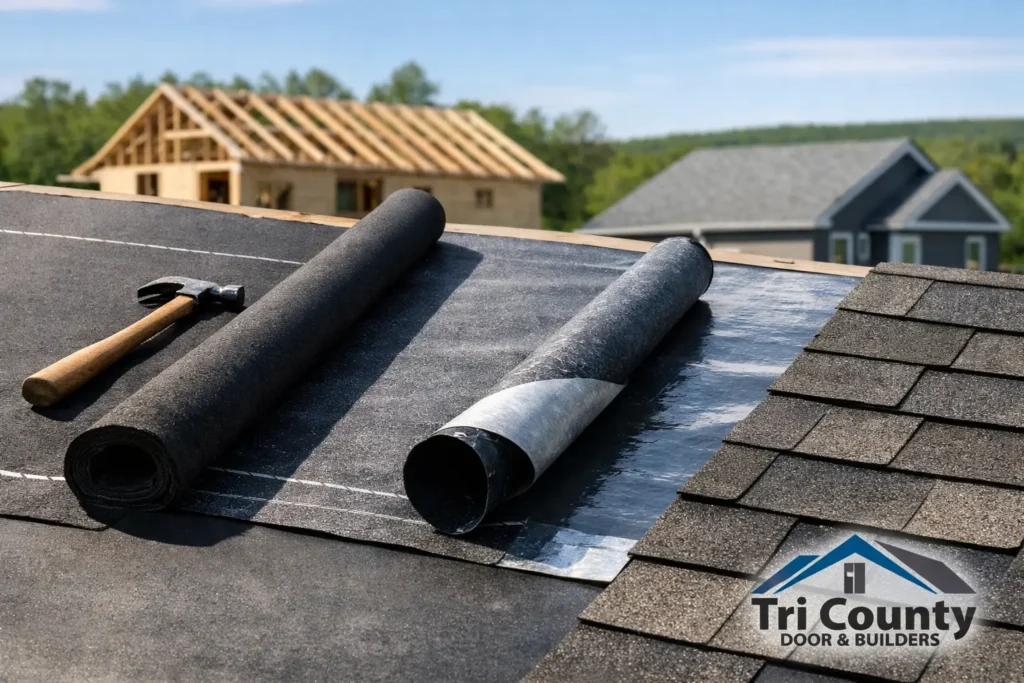
A roof can look great from the street and still fail where you cannot see it. Underlayment is one of those hidden parts that does real work every day, especially in a place like Southwestern Pennsylvania where wind-driven rain, snow, ice, and freeze-thaw cycles put roofing systems to the test. If you are comparing the best roof underlayment options, the right choice depends on your roof material, slope, budget, and how much weather exposure your building is likely to see.
A lot of property owners focus on the visible roofing product first, which makes sense. Shingles, metal panels, and color choices are what most people notice. But underlayment is the layer that helps protect the roof deck when shingles lift in high wind, when fasteners are exposed to moisture, or when ice backs water up at the eaves. Choosing the wrong type can shorten roof life and create leak risks that are expensive to fix later.
What roof underlayment actually does
Roof underlayment is installed directly over the roof deck and beneath the finished roofing material. Its job is to provide a secondary layer of moisture protection. It is not meant to replace the outer roofing system, but it gives your roof an extra line of defense when weather or aging starts to test the surface material.
That matters on homes, garages, pole buildings, and commercial properties alike. Even a well-installed roof can face trouble from driven rain, ice dams, or temporary exposure during installation. Good underlayment helps reduce that risk.
Best roof underlayment options for most projects
There are three main categories most buyers will run into: asphalt-saturated felt, synthetic underlayment, and self-adhered membrane, often called ice and water shield. Each has a place. The best choice is not always the most expensive one. It is the one that fits the roof system and the local conditions.
Asphalt-saturated felt
Felt has been used for decades, and there is a reason it is still around. It is affordable, familiar to many installers, and can perform well when installed correctly. You will usually see it in 15-pound or 30-pound versions, though actual product weights vary by manufacturer today.
For budget-conscious projects, felt can still make sense. It is commonly used under asphalt shingles and works best when installation conditions are dry and the roof will be covered quickly. The trade-off is durability. Felt can wrinkle when wet, tear more easily than synthetic products, and generally does not handle jobsite exposure as well.
If your project is straightforward and cost is a major factor, felt may be enough. But if the roof has a steeper pitch, longer installation window, or more exposure to rough weather, many property owners find that moving up to synthetic is money well spent.
Synthetic underlayment
Synthetic underlayment is often the best all-around option for modern roofing jobs. It is lighter than felt, stronger under foot, and more resistant to tearing, wrinkling, and moisture exposure. For many asphalt shingle roofs and metal roofing systems, this is where performance and value tend to meet.
Synthetic products are especially useful when installation may take more than a day or when weather interruptions are possible. They usually lay flatter, which helps create a cleaner base under the final roofing material. Installers also tend to like them because they are easier to carry and handle on larger jobs.
The main drawback is cost. Synthetic underlayment is more expensive than basic felt. Still, on a full roof replacement, the price difference is often modest compared to the total project cost, especially when you weigh that against better durability and jobsite performance.
Self-adhered ice and water shield
This type of underlayment seals around nails and fasteners and offers the highest level of water protection in vulnerable areas. It is commonly installed along eaves, in valleys, around chimneys, around skylights, and in other leak-prone transitions. In colder climates, it is often required by code at roof edges because of ice dam risk.
For some roof designs, using it only in critical areas is the smartest approach. For other roofs, especially low-slope sections or complex layouts, broader coverage may be worth considering. It costs more than felt or standard synthetic underlayment, so it is usually not the default choice for every square foot unless the roof design calls for it.
This is one area where local weather really matters. In Pennsylvania, winter conditions can make ice barrier protection more than just a nice upgrade.
Matching underlayment to the roof material
The best roof underlayment options also depend on what is going over top of it.
Under asphalt shingles
For shingle roofs, felt and synthetic are both common, with ice and water shield used at eaves and other vulnerable areas. If you are investing in a high-quality shingle system from a major brand, it usually makes sense to avoid cutting corners underneath it. Synthetic underlayment is a strong fit for many homeowners because it adds durability without dramatically changing the total roof budget.
That is especially true when homeowners are already trying to maximize the value of a replacement. If you are taking advantage of a major Owens Corning shingle promotion, for example, it is a good time to think about building the whole system correctly instead of focusing only on the top layer.
Under metal roofing
Metal roofing can last a long time, so the underlayment beneath it needs to support that lifespan. A quality synthetic underlayment is often a smart choice, and in some cases, high-temperature self-adhered products are recommended, particularly where roof surfaces may get hotter or where specific metal systems require them.
This is not a one-size-fits-all category. The panel profile, fastening method, ventilation design, and building use all matter. A barn, garage, residence, and commercial building may all need slightly different solutions even if they are using metal panels.
On low-slope roof sections
Low-slope areas are more demanding because water drains more slowly and has more time to work into weak spots. Standard felt is usually not the first choice here. Self-adhered membranes and specialty products designed for these conditions are more dependable. If your roof has both steep and low-slope sections, it may need more than one underlayment type.
What matters most when choosing
Price matters, but it should not be the only factor. Underlayment is a small percentage of the total roof cost, yet it plays a big role in long-term protection. What usually matters most is how the roof is built and how exposed it is to weather.
If your roof has long valleys, dormers, chimneys, or low-slope transitions, you need stronger leak protection in those areas. If your project is a basic ranch home with a simple roofline, your needs may be more straightforward. If you are roofing a pole building, workshop, or agricultural structure, condensation control and building use may also influence the best setup.
Installation quality is just as important as product choice. Even the best underlayment can underperform if seams are lapped incorrectly, fasteners are misplaced, or the material is left exposed longer than recommended. That is why practical product selection and proper installation should go together.
When spending more makes sense
There are times when paying more for better underlayment is easy to justify. If the roof deck is difficult to access, if the building has valuable contents, or if leak damage would interrupt business operations, better secondary protection is worth serious consideration. The same goes for homes where the owner plans to stay put for years and wants fewer headaches down the road.
On the other hand, not every shed, detached garage, or utility structure needs the highest-end underlayment across the entire roof. Good advice should reflect the building, not just the product catalog.
That practical approach is what many local property owners prefer. They do not want to be sold the most expensive option by default. They want to know what will hold up, what is required, and where upgrades will actually pay off.
A smarter way to decide
If you are weighing the best roof underlayment options, start by looking at four things: the finished roofing material, the roof slope, the complexity of the roofline, and your exposure to snow, ice, and wind-driven rain. From there, the decision gets clearer.
For many homes, synthetic underlayment paired with self-adhered ice and water protection at the eaves and trouble spots is a very solid middle ground. Felt still has a place on tighter budgets and simpler projects. Full self-adhered coverage is often best reserved for specific roof designs and high-risk areas where the added protection justifies the added cost.
A good roof system is not about chasing the most expensive materials on every layer. It is about choosing products that work together and make sense for the building. If you are replacing a roof, building new, or planning a metal or shingle project, this is one of those decisions that is worth getting right before the first piece goes on.