

A roof replacement is not a purchase most property owners make lightly. When shingles are curling, granules are filling the gutters, or a leak appears after a hard Southwestern Pennsylvania storm, the question becomes less about finding the cheapest option and more about choosing a roof that will hold up. GAF roofing is a familiar name for good reason, but the right choice still depends on your building, budget, ventilation, and installer.
For a home in Westmoreland, Somerset, or Fayette County, roofing has to handle more than ordinary rain. It may see heavy snow, freeze-thaw cycles, wind-driven storms, humid summers, and shaded areas that hold moisture longer than they should. A quality shingle matters, but so does every part of the system underneath it.
What GAF Roofing Brings to a Roof Replacement
GAF is one of the largest roofing manufacturers in the United States and offers asphalt shingle lines suited to different price points and appearance preferences. Its architectural shingles are often the practical middle ground for homeowners who want more depth, durability, and wind resistance than a basic three-tab shingle can provide without moving into premium roofing materials.
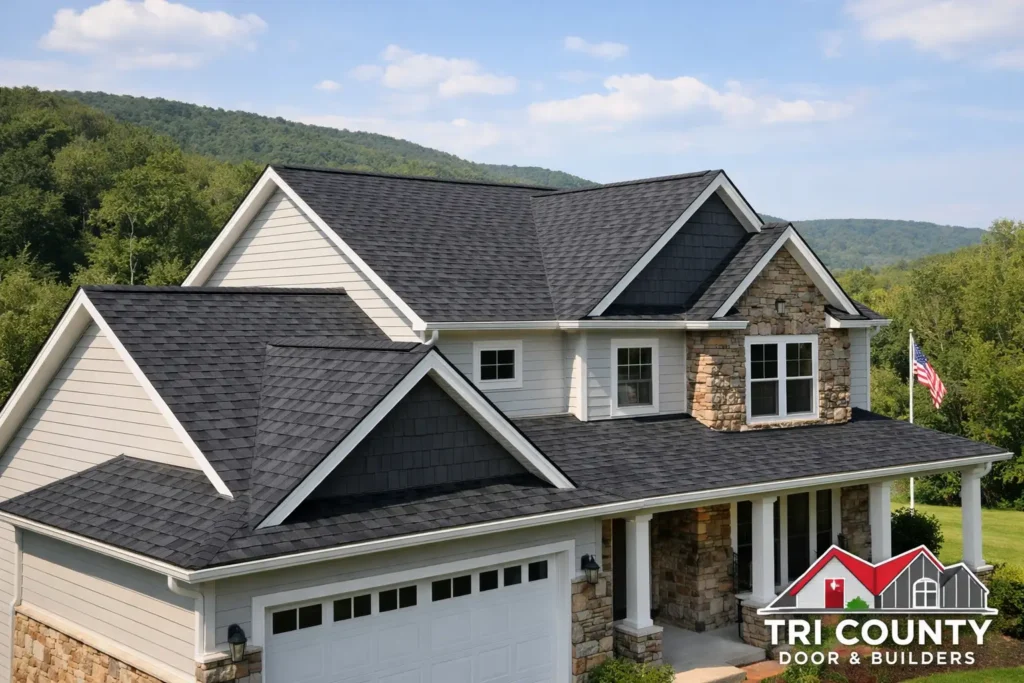
Many homeowners recognize the Timberline name, which is associated with laminated architectural shingles. These shingles create a more dimensional appearance than flat three-tab products and are available in a range of colors. That matters when the roof covers a large portion of the home’s visible exterior. A color that looks good on a small sample can read very differently across a full roofline, especially next to brick, siding, stone, or a detached garage.
The value of a GAF roof is not limited to the top shingle layer. A properly planned installation may also include leak barriers in vulnerable areas, underlayment, starter shingles, ridge cap shingles, and adequate attic ventilation. These components work together to shed water, manage airflow, and protect the areas where roof failures often begin.
That system approach is worth understanding because a premium shingle cannot correct a poor installation or a ventilation problem. If warm, moist air is trapped in the attic, it can contribute to condensation, premature aging, ice dam issues, and higher energy costs. If flashing is poorly installed around chimneys, skylights, walls, or pipe penetrations, water can find its way beneath even an excellent shingle.
Choosing the Right GAF Roofing Shingle
The best shingle is not always the most expensive one. It is the product that fits the property’s needs and is installed with the right supporting materials.
Architectural shingles make sense for many homes because they offer a substantial look and dependable everyday performance. They can be a strong option for homeowners replacing an aging roof, updating curb appeal before a sale, or protecting a long-term family home. If your roof has a steep pitch or is highly visible from the road, upgraded color blends and dimensional styling may carry more visual value.
For commercial-looking structures, garages, workshops, and some agricultural support buildings, the decision may be different. Asphalt shingles can work well on suitable roof slopes, but metal roofing may be the more practical option when low maintenance, long panel lengths, or a specific building design calls for it. There is no one-size-fits-all answer. Roof pitch, drainage, existing framing, intended use, and budget should guide the recommendation.
Color selection also deserves more attention than it usually gets. Darker shingles can provide strong contrast and a classic appearance, while lighter or blended colors may better complement certain siding and masonry. Consider permanent exterior features first. It is much easier to repaint shutters than replace a roof because a color no longer works with the rest of the property.
Pennsylvania Weather Changes the Conversation
A roofing system in this region needs to account for seasonal movement. Snow loads, ice, rain, and temperature swings all test the roof deck and the materials attached to it. That is why the installation details around eaves, valleys, penetrations, and transitions should never be treated as minor add-ons.
Ice dam protection is especially relevant on heated homes. An ice dam forms when snow melts on a warmer portion of the roof, then refreezes near colder eaves. Water can back up behind that ice and work beneath shingles. Proper leak barrier placement, insulation, air sealing, and attic ventilation each play a role in reducing the risk. No shingle brand alone can solve an attic moisture or heat-loss problem.
Wind is another consideration. A roof that has already lost tabs or lifted shingles after storms may have more than a cosmetic issue. Wind can compromise the seal between shingles and expose the roof to water entry. When comparing products, ask how the selected shingle is rated for wind resistance and what installation practices are required to achieve that rating.
Moss and algae can also affect the appearance of roofs in wooded or shaded settings. Streaking is not always a sign that the roof is failing, but it can make a newer roof look older than it is. Ask about available shingle options designed to resist algae discoloration if staining has been a recurring issue on your property.
Questions to Ask Before You Commit
A good roofing conversation should be specific to your property, not limited to a square-foot price. Before choosing GAF roofing or any other brand, ask what the proposal includes beyond the shingles. You should know whether old roofing will be removed, whether the deck will be inspected, how damaged wood is handled, and what type of underlayment and leak protection will be used.
Also ask how ventilation will be evaluated. Ridge vents, intake ventilation, powered vents, and other solutions are not interchangeable in every situation. The right setup depends on the roof design and attic conditions. A contractor who looks at ventilation before installation is helping protect the life of the new roof rather than simply covering the existing problem.
Warranty questions should be equally clear. Manufacturer warranties, enhanced system warranties, and workmanship coverage can all differ. Read what is covered, how long coverage lasts, whether registration is required, and what conditions may limit a claim. A warranty is valuable, but it should not substitute for careful product selection and skilled work.
Finally, compare estimates based on scope, not just the final number. A lower proposal may omit tear-off, proper flashing, deck repairs, disposal, ventilation work, or the accessories needed for a complete system. Those differences can become expensive after work begins.
Installation Quality Is Part of the Product
The roof is only as dependable as the work behind it. Proper nailing patterns, starter placement, flashing, valley treatment, ventilation, and cleanup all affect how the roof performs over time. A contractor should be willing to explain the process in plain language and identify issues that may change the scope before they become surprises.
At Tri County Door & Builders, the focus is on helping local property owners weigh roofing options based on real conditions, not a generic sales pitch. That may mean choosing a GAF shingle system, comparing it with another trusted brand, or determining that metal roofing better suits the building. The goal is a roof that fits the job, the budget, and the years ahead.
If your roof is showing wear, do not wait for a ceiling stain to force the decision. Take a close look after severe weather, check for missing shingles and loose flashing from the ground, and arrange a professional assessment before a small repair turns into interior damage. The right time to plan a roof replacement is while you still have choices.