




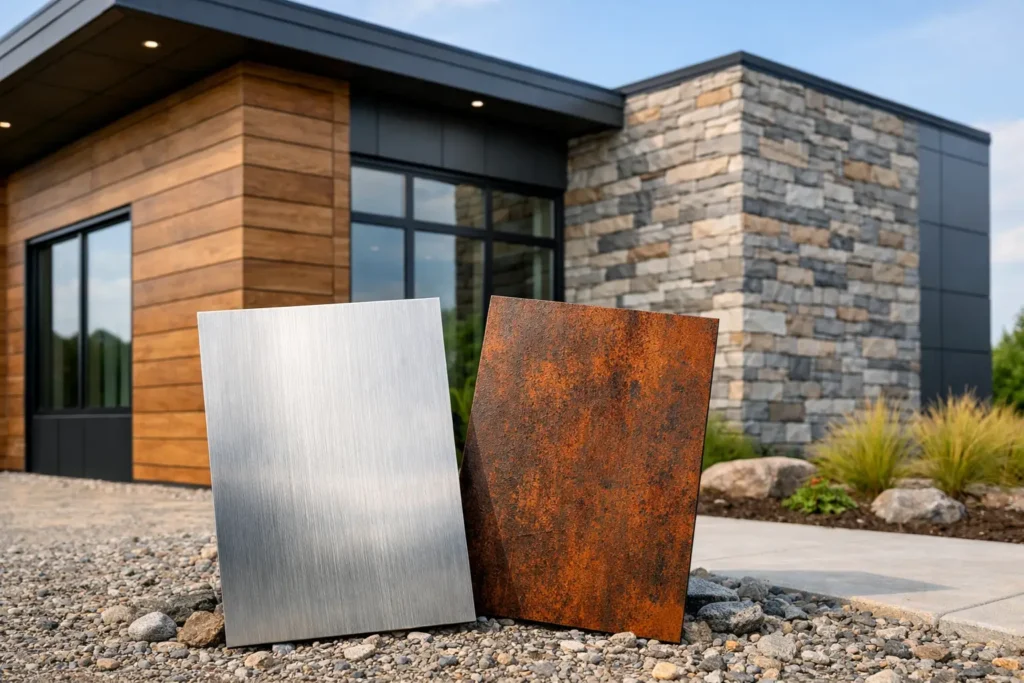
A panel that looks like weathered wood, stone, brick, or a custom finish can change the appearance of a building without giving up the practical advantages of metal. But a printed finish is only one part of the decision. This printed metal panels guide explains what property owners should look at before choosing decorative metal panels for a home, garage, farm structure, storefront, or commercial exterior.
The best choice depends on where the panel will be installed, how much weather it will face, and whether it needs to perform as roofing, siding, a liner panel, or an accent. A good-looking finish matters, but so do panel profile, metal thickness, coating quality, flashing details, and proper installation.
What Are Printed Metal Panels?
Printed metal panels are steel or aluminum panels finished with a decorative pattern, image, or texture effect. The pattern is applied during the coating process or through specialty printing methods, then protected by a clear coating or topcoat. Some panels are designed to closely resemble wood grain, stone, rusted steel, or other architectural materials.
They are different from standard painted metal panels, which typically use one solid color. They are also different from panels with an actual embossed texture. A printed panel may have visual depth without having the physical texture of wood or masonry. That distinction matters when you are comparing samples up close.
For many projects, printed metal is an option worth considering when traditional materials would require more upkeep, add weight, or create a higher installation cost. It can bring a warmer, more customized look to a metal building, but it should be selected with the same care as any exterior cladding.
Where Printed Metal Panels Make Sense
Decorative metal panels are often used on highly visible areas rather than across an entire building. A wood-grain panel can add contrast on a porch ceiling, entry wall, gable, wainscot, garage façade, or commercial accent section. Stone- or masonry-inspired finishes may be useful where a property owner wants visual character without installing a heavier veneer product.
On agricultural and light commercial buildings, printed panels can help a large structure look less plain while keeping the exterior durable and easy to maintain. They may also work well for barndominiums, detached garages, workshops, offices, and retail buildings where the owner wants the performance of metal with a less industrial appearance.
There are trade-offs. A detailed printed finish can cost more than a standard color panel, may have longer lead times, and may not be available in every panel profile or gauge. If the panel will cover a large wall, order enough material from the same production run whenever possible. Slight variation between runs can be more noticeable with patterned finishes than with solid colors.
The Main Factors to Compare
Start With the Panel’s Job
Not every decorative metal panel is intended for every application. Wall panels, roofing panels, soffit panels, and interior liner panels have different profiles and fastening requirements. A panel that looks right on an interior feature wall may not have the water-shedding design needed for a roof.
For exterior siding, ask how the panel handles wind, rain, and thermal movement. For roofing, verify that the profile, coating, fastener system, underlayment, and flashing package are suitable for the roof pitch and local conditions. Southwestern Pennsylvania sees snow, freeze-thaw cycles, heavy rain, and strong seasonal temperature changes. Those conditions make proper detailing more valuable than a quick visual decision at the counter.
Check the Base Metal and Thickness
Steel is commonly used for exterior roofing and siding because it provides strength at a practical price point. Aluminum is lighter and naturally resists corrosion, making it useful in certain environments, though it may not be the best value for every project.
Metal thickness is often discussed as gauge. Lower gauge numbers generally mean thicker metal. The right gauge depends on the panel style, framing spacing, expected exposure, and whether the material is being used on a wall or roof. Thicker is not automatically necessary, but very light material can show oil-canning, dents, or waviness more easily on broad, flat surfaces.
Ask for product specifications rather than choosing by appearance alone. A quality panel should have a clear explanation of its substrate, coating system, recommended use, and warranty coverage.
Look Closely at the Coating System
The coating protects both the print and the metal. For exterior use, UV resistance is especially important. Sun exposure can slowly affect color and pattern definition, particularly on dark finishes or walls facing long hours of direct afternoon sun.
A stronger exterior-grade paint system generally offers better resistance to chalking, fading, and weathering than a basic interior coating. That does not mean the panel will look brand-new forever. All exterior materials age. The goal is predictable, even aging and a finish that continues to protect the metal.
Request a physical sample and view it outdoors. A pattern that looks natural under showroom lighting may look too dark, too orange, or too glossy in direct sunlight. Compare it beside the roof color, windows, doors, trim, masonry, and nearby siding before placing a full order.
Plan the Details, Not Just the Field Panels
Trim pieces are what make an exterior look finished and keep water out of the assembly. Corners, base trim, J-channel, transition flashing, ridge caps, closures, and fasteners should be planned at the same time as the panels.
This is especially important when using a printed finish. Matching trim may be limited, while a complementary solid color can create a cleaner result. In many cases, pairing a wood-grain accent panel with dark bronze, black, charcoal, or a coordinated neutral trim creates a more intentional look than trying to match every piece exactly.
Installation Makes or Breaks the Result
Even a premium panel can fail early if it is installed over an uneven surface, fastened incorrectly, or cut with tools that damage the finish. Panels need accurate layout so the printed pattern aligns consistently and exposed fasteners land where they belong.
Avoid careless handling during delivery and installation. Dragging panels across each other can scratch the surface. Metal shavings left on a panel after cutting can rust and stain the finish. Touch-up paint can help with small field cuts or minor blemishes, but it will not make a deep scratch disappear completely on a patterned surface.
Roof and wall systems also need the correct substrate, ventilation approach, moisture control, and flashing. If a project involves insulation, a retrofit over existing materials, or a transition between metal and another cladding type, get experienced guidance before ordering. The lowest material price can become expensive when installation details are missed.
Maintenance Is Straightforward, Not Zero
Printed metal panels do not need staining, sealing, or repainting on the schedule that wood siding often requires. That is a major advantage. Still, they benefit from basic care.
Wash off dirt, pollen, and surface grime with mild soap and water when needed. Keep gutters and downspouts working so water does not repeatedly spill over the same wall area. Remove leaves and debris that trap moisture against panel edges, especially around roof transitions and lower wall sections.
Do not use harsh abrasives, aggressive solvents, or pressure washing at close range. These can damage the protective finish or force water behind the panels. Inspect annually for loose fasteners, damaged sealant, scratched areas, and flashing issues. Addressing a small problem early protects both the panel and the structure behind it.
Questions to Ask Before You Order
Before committing to a printed metal product, confirm its intended application, available panel lengths, metal thickness, coating warranty, compatible trim, lead time, and installation requirements. Ask whether the pattern direction matters and whether there is a recommended way to blend panels from multiple bundles. These practical details prevent a frustrating surprise once materials arrive.
It is also smart to compare the full installed cost. A printed panel may reduce future maintenance compared with wood or other decorative cladding, but it may carry a higher upfront material cost than standard painted steel. The right decision is the one that fits the building, budget, and expected years of ownership.
For property owners who want clear answers before buying, Tri County Door & Builders can help compare metal panel options with the conditions of the actual project in mind. Bring measurements, photos, and a sample of the colors already on the building. A few careful decisions before ordering can give you an exterior that looks right on day one and continues to earn its keep through many Pennsylvania seasons.