



A roof with exposed screws can perform well for many buildings, but every fastener creates a penetration that must keep water out year after year. Standing seam metal roofing takes a different approach: its panels connect with raised seams, while the fasteners are concealed beneath the finished roof surface. For property owners planning a long-term investment, that design difference is often the reason to consider it.
Standing seam metal is not automatically the right choice for every roof or budget. It usually costs more upfront than exposed-fastener metal panels and conventional shingles. But for homes, commercial properties, agricultural buildings, and projects where appearance and long-term performance matter, it can deliver meaningful value.
What Is Standing Seam Metal Roofing?
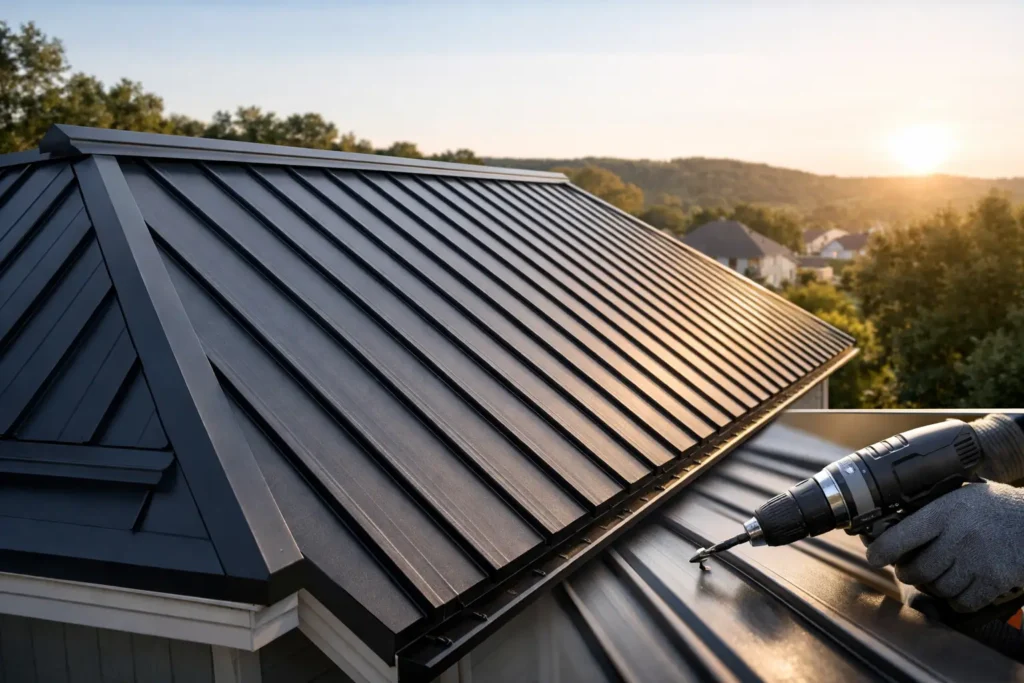
Standing seam metal roofing is made from long metal panels that run from the ridge of the roof to the eaves. The edges of adjacent panels lock together in vertical raised seams. Clips or concealed fasteners hold the panels in place, so the primary roof surface has no visible screws.
The result is a clean, consistent roof profile that sheds rain and snow efficiently. It is commonly manufactured from painted steel, with aluminum available for certain applications. Panel width, seam height, metal thickness, finish, and fastening system can all vary, so two standing seam roofs may look similar while offering different performance levels and price points.
A qualified supplier or installer should help match the panel system to the building instead of treating every roof as the same. Roof pitch, rafter layout, expected snow load, ventilation, and the complexity of the roof all affect the right choice.
Why Concealed Fasteners Matter
Exposed-fastener metal roofing uses screws with sealing washers driven through the face of each panel. It remains a practical, affordable option for many garages, barns, sheds, and agricultural structures. The trade-off is that those washers and fasteners are exposed to years of sunlight, temperature changes, and weather.
With standing seam metal, the fasteners are protected beneath the seams. This reduces the number of potential leak points across the field of the roof and gives the roof a more finished appearance. Because the panels are secured with clips in many systems, they can also expand and contract as temperatures change without placing unnecessary stress on the metal.
That movement matters in Southwestern Pennsylvania. A roof may see freezing conditions, heavy wet snow, spring rain, summer heat, and wind-driven storms in the same year. Metal naturally moves as it warms and cools. A properly designed standing seam system accounts for that movement rather than fighting it.
Where Standing Seam Makes the Most Sense
Standing seam roofing is especially well suited to buildings where long service life, curb appeal, and water management are priorities. It is a strong option for primary residences, custom homes, barndominiums, commercial offices, retail buildings, churches, and high-visibility farm structures.
It can also be a good fit for lower-slope roofs when the correct panel profile and installation details are used. However, low-slope applications require extra care. The roof system must be approved for the pitch, and flashing details around penetrations, valleys, chimneys, skylights, and wall transitions must be handled correctly. The panels alone cannot make up for poor roof preparation or improper trim work.
For a simple equipment shed or a budget-driven detached garage, exposed-fastener metal may be the better value. The goal is not to pay for more roof than the project needs. The goal is to choose a system that fits the structure, expected use, and how long you plan to own it.
The Benefits Property Owners Notice
The first benefit many people notice is appearance. Standing seam panels create straight, uninterrupted lines that work well on modern homes, traditional farmhouses, commercial buildings, and pole-building projects. A quality painted finish offers a broad range of colors, from neutral tones that blend into a rural setting to bolder choices for a commercial property.
Performance is the bigger reason many owners choose it. Since the roof has concealed fasteners, there are fewer exposed components that need attention over time. The raised seams direct water down the roof, and the smooth panel surface helps snow and debris move off more easily than many textured roofing materials.
Metal roofs are also noncombustible, and many systems are designed to stand up to high winds when properly installed. A reflective finish can help reduce heat absorption during warmer months, although the actual energy benefit depends on insulation, attic ventilation, roof color, and the building’s overall construction.
Long-term maintenance is generally straightforward, but it is not zero maintenance. Property owners should periodically check gutters, clear leaves and branches from valleys, inspect flashings after major storms, and make sure no other trades have damaged the panels. If snow slides are a concern above doors, walkways, decks, or mechanical equipment, snow retention should be planned as part of the roof design.
What Affects the Cost of Standing Seam Metal?
Standing seam metal roofing carries a higher initial cost because it uses more specialized panels, concealed clips or fastening systems, detailed trim, and skilled installation. The final price depends on much more than roof square footage.
A straightforward gable roof with long panel runs is usually more efficient to cover than a roof with multiple dormers, valleys, skylights, chimneys, and intersecting sections. Panel gauge, paint finish, roof pitch, tear-off needs, deck repairs, insulation, underlayment, and accessibility also affect the estimate.
Material selection matters. Heavier-gauge steel may be appropriate for buildings that need greater durability or where panel spans and wind conditions call for it. Premium finishes can offer stronger fade and chalk resistance over time. Aluminum may make sense in particular environments, but it is not necessary for every Pennsylvania project.
Be cautious with estimates that compare only the cost per square. A lower number may leave out underlayment, closures, ridge ventilation, flashing, snow retention, or removal of the existing roof. A complete proposal should identify what is included, what is excluded, and how the installer will handle critical areas where leaks are most likely to start.
Installation Details That Protect the Investment
Standing seam roofing is only as dependable as the work beneath and around it. The roof deck needs to be sound and reasonably flat. Damaged sheathing should be repaired before the metal goes on, because panels can show irregularities in the surface below.
Underlayment is another important part of the assembly. The appropriate product depends on the roof design and local conditions, but it provides a secondary layer of protection beneath the panels. At eaves and other vulnerable areas, ice and water protection may be necessary based on the building design and code requirements.
Flashing deserves close attention. Pipe boots, chimneys, skylights, sidewalls, headwalls, valleys, and transitions to other roof materials need purpose-made details. These are not areas for shortcuts or improvised fixes. A roof can have excellent panels and still develop problems if its penetrations and trim are handled poorly.
You may also hear the term oil canning. This describes a slight visible waviness in flat metal panels, usually caused by natural stresses in the material, reflected light, or changes in temperature. It does not necessarily indicate a defective roof. Proper panel selection, careful handling, and realistic expectations are the best way to address it before installation.
Choosing the Right Partner for the Job
A standing seam roof is a system, not just a stack of panels. Before ordering material, discuss the building’s use, roof pitch, drainage, ventilation, insulation plans, snow concerns, and desired appearance. That conversation can prevent costly changes after the project is underway.
For homeowners and property owners in Westmoreland, Somerset, and Fayette Counties, working with a local team also means working with people familiar with the weather patterns and building needs common to the region. Tri County Door & Builders can help customers compare metal roofing options, select the right components, and build a practical plan around the project rather than a one-size-fits-all package.
The best roof choice is the one that protects the building without stretching the budget for features you will never need. If standing seam metal fits your goals, take the time to specify the panel system, underlayment, trim, and installation details correctly. Those decisions are what turn a good-looking roof into one that earns its keep through every season.