




Metal siding earns its reputation by standing up to hard weather, but it is not maintenance-free. Knowing how to maintain metal siding helps you catch small issues before they become stained panels, corrosion, water intrusion, or costly replacement work. For homes, garages, farm buildings, and commercial properties in Southwestern Pennsylvania, a little routine care goes a long way through wet springs, humid summers, falling leaves, and freeze-thaw winters.
How to Maintain Metal Siding With Regular Inspections
A visual inspection twice a year is the best starting point. Walk around the building in spring and fall, then take another look after a major windstorm, hail event, or branch strike. You do not need to climb a ladder for every inspection. Start from the ground and use binoculars or a phone camera zoom for upper wall areas.
Look for loose screws, missing fasteners, bent trim, dents, scratches that expose bare metal, and panels that no longer sit flat. Pay close attention to corners, the bottom edge of the siding, window and door trim, and places where siding meets roofing or masonry. These transition points are more likely to collect water and debris.
Also look for staining or streaks. A small amount of dirt is normal, especially on light-colored siding. Rust-colored streaks, bubbling paint, chalky finish, or discolored areas around fasteners deserve a closer look. They can point to trapped moisture, a failed fastener seal, contact with another metal, or damage to the protective coating.
Keep Dirt, Pollen, and Debris From Building Up
Most metal siding only needs a gentle wash once a year. Properties near trees, gravel roads, agricultural activity, or busy roads may need cleaning more often. Pollen, dust, leaf residue, and airborne grime can hold moisture against the finish and make an otherwise well-kept building look neglected.
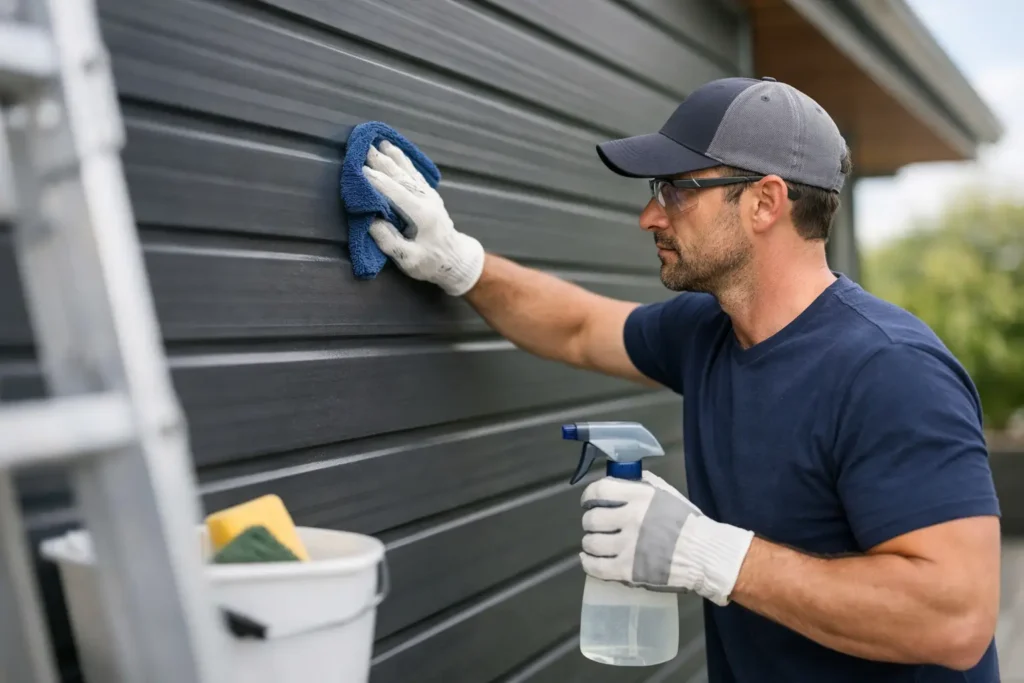
Use a garden hose with a standard spray nozzle and work from the top down. For stubborn dirt, mix mild dish soap with water and apply it with a soft cloth, sponge, or soft-bristle brush. Rinse thoroughly so soap residue does not dry on the panels.
Avoid abrasive pads, harsh solvents, wire brushes, and highly acidic or alkaline cleaners. These can scratch or dull the factory finish. Pressure washers require caution. If one is used, keep the pressure low, hold the nozzle at a safe distance, and aim downward rather than forcing water up behind laps, trim, or panel seams. When in doubt, the hose-and-soft-brush approach is the safer choice.
Clear Vegetation and Ground Contact
Metal siding needs room to dry. Keep shrubs, vines, stacked firewood, mulch, and stored materials away from the wall. Plants can trap moisture, rub against the finish in the wind, and hide early signs of damage. Vines may look harmless at first, but they can work into seams and make inspections difficult.
The bottom of the siding should not sit in standing water, wet soil, or heavy mulch. Check that the ground slopes away from the building and that downspouts carry runoff far enough away to prevent splashing and puddling. This is especially important around garages, pole buildings, and agricultural structures where runoff can create muddy areas along the perimeter.
If a panel is repeatedly getting splashed by roof runoff, do not just clean the stain and move on. Correct the drainage issue. Extending a downspout, adjusting a gutter, or improving the grade may protect the siding better than repeated washing ever will.
Check Gutters, Flashing, and Caulking
Siding maintenance is closely tied to roof drainage. Clogged gutters can overflow and repeatedly soak trim, fascia, and wall panels. Clean gutters regularly and make sure they are securely fastened and pitched correctly. A gutter that pulls away from the building can direct water exactly where it does not belong.
Inspect flashing around windows, doors, roof-to-wall areas, vents, and additions. Flashing should lie flat and direct water outward. If you see loose edges, deteriorated sealant, or gaps where water can enter, address them promptly.
Caulk is useful in the right places, but more is not always better. Metal siding systems are designed to expand and contract with temperature changes. Do not fill intended drainage paths or panel laps with caulk unless the manufacturer specifically calls for it. Use a quality exterior sealant where trim, flashing, or penetrations require it, and replace cracking or separated caulk before water gets behind the siding.
Address Scratches, Dents, and Loose Fasteners Early
A scratch through the finish is more than a cosmetic concern. The paint system and galvanized or coated metal beneath it are designed to resist corrosion. When bare metal is exposed, moisture can eventually create rust, particularly in shaded areas that stay damp.
Clean the damaged spot, let it dry fully, and use a manufacturer-approved touch-up paint that matches the panel color. Apply it carefully in thin coats. Touch-up paint is meant for small repairs, not for repainting a large section of siding. A broad damaged area, peeling finish, or rust that has spread beneath the coating may call for panel replacement instead.
Loose or backed-out screws should be replaced with compatible fasteners that have the proper washer and finish. Do not mix random hardware with metal siding components. The wrong fastener can leak, corrode, or react with the siding material over time. Overtightening is also a problem because it can deform the panel or squeeze the washer out of place.
Dents are a judgment call. A shallow dent that has not broken the coating may be mostly cosmetic. A deep dent near a seam, trim piece, or fastener can affect water shedding and should be evaluated. Trying to force a dent back out can crease the panel or damage the finish, so replacement is often the cleaner repair.
Prevent Corrosion From Dissimilar Metals
Not all metals work well together. When certain metals come into direct contact, moisture can create a reaction that speeds up corrosion. Copper, untreated lumber preservatives, and incompatible fasteners are common concerns around exterior building projects.
If you add fixtures, utility brackets, lighting, hose reels, or other attachments to a metal-sided building, use compatible materials and proper separation where needed. Avoid drilling unnecessary holes. Every penetration needs a clear purpose, a correct fastener, and reliable sealing.
This is also a good reason to be cautious when making do-it-yourself alterations. A small accessory installation can turn into a leak source if it is mounted through a panel seam or without proper flashing. For larger additions, ask a building materials professional which components are designed to work with your siding profile.
Prepare Metal Siding for Each Season
Seasonal care is practical protection, not busywork. In spring, wash away winter grime, inspect for damage from snow removal or ice, and confirm that gutters and downspouts are flowing freely. Summer is a good time to trim vegetation and handle touch-up work because surfaces are dry and temperatures are more favorable.
In fall, remove leaves from gutters and from behind stored items near the building. Check that snowplows, tractors, lawn equipment, and firewood stacks will not be pushed against the siding during winter. Before freezing weather arrives, correct drainage problems that could create ice buildup along the wall.
During winter, avoid chipping ice directly off metal panels with shovels or sharp tools. If snow piles up against the wall, remove it carefully without scraping the finish. Keep deicing chemicals away from siding whenever possible, since runoff and repeated splashing can leave residue and affect nearby materials.
Know When a Repair Needs Professional Help
Some problems are simple maintenance tasks. Others should be handled before they affect the wall system behind the panels. Call for an evaluation if you find widespread rust, soft or stained material inside the building, repeated leaks around doors or windows, panels pulling loose, storm damage, or trim that has separated from the wall.
For a building with aging siding, it may also make financial sense to compare targeted repairs with replacement of damaged sections. The right answer depends on the panel profile, the condition of the substrate, matching availability, and whether water has reached insulation or framing. A local supplier can help identify compatible materials instead of leaving you to guess at a big-box aisle.
Metal siding rewards consistent, straightforward care. Keep it clean, keep water moving away from the building, and repair small coating or fastener problems while they are still small. If you need help assessing damage or finding matching components, Tri County Door & Builders can provide practical guidance for properties across the region.