




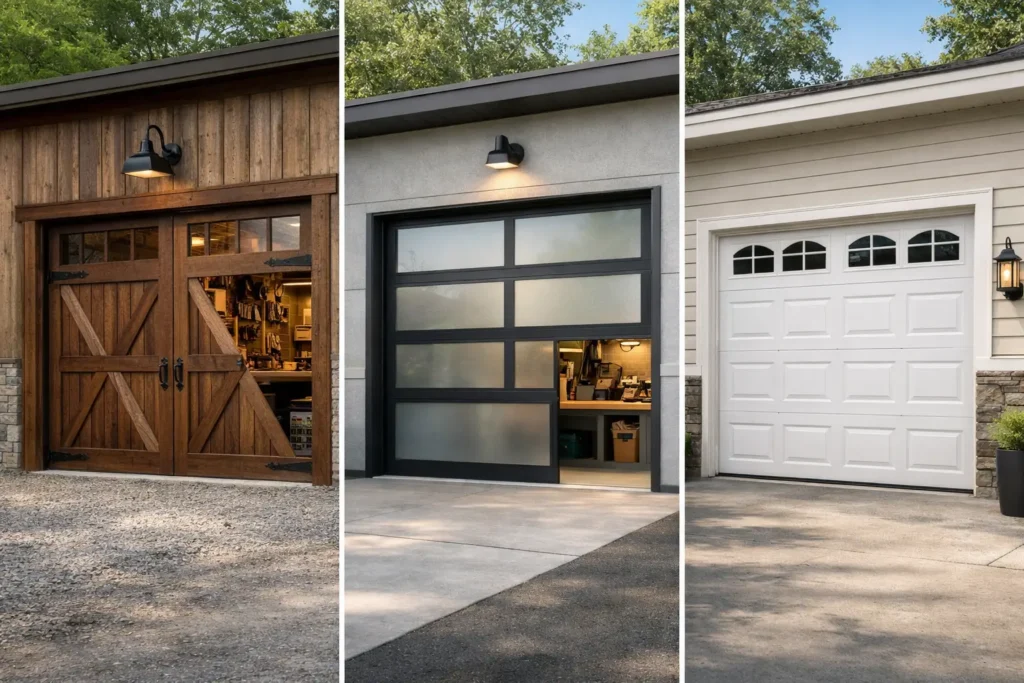
A workshop door gets used differently than a standard garage door. It may open ten times a day for tools, deliveries, equipment, and vehicles, or it may stay shut for long stretches while you heat the space and focus on the job. That is why choosing the best garage door styles for workshops is less about curb appeal alone and more about how the door works with your space, your budget, and the way you actually use the building.
For some owners, the right answer is a heavy-duty insulated sectional door that keeps temperatures stable through a Pennsylvania winter. For others, it is a roll-up steel door that takes abuse and keeps maintenance simple. The style matters because the wrong door can cost you in lost space, drafts, noise, and repairs.
What makes a workshop garage door different?
A workshop has different demands than a typical home garage. You may be running power tools, storing valuable equipment, moving trailers in and out, or trying to keep sawdust and weather under control. If the building doubles as a farm shop, contractor bay, hobby space, or small business workspace, the door becomes part of how efficiently the whole building functions.
That means the best choice usually comes down to five things: durability, insulation, clearance, security, and ease of operation. A door that looks good but rattles in the wind or leaks cold air around the frame will wear thin fast. On the other hand, the toughest industrial-style option is not always necessary if you use the shop lightly and want a quieter, better-insulated setup.
Best garage door styles for workshops
Sectional garage doors
For many property owners, sectional doors are the best all-around option. These doors open vertically in panels and track along the ceiling, which makes them practical for detached workshops, pole buildings, and mixed-use garages.
Their biggest advantage is balance. A sectional door can be insulated, fitted with windows, built in a range of sizes, and tailored for manual or automatic operation. If you want a workshop that feels comfortable year-round, this style gives you the most flexibility.
Insulated sectional doors are especially useful if you heat the building, work with temperature-sensitive materials, or spend long hours inside during cold weather. They also tend to seal better than simpler door types when installed correctly. That matters in areas like Westmoreland, Somerset, and Fayette counties, where winter wind and temperature swings can make an uninsulated shop hard to use.
The trade-off is ceiling space. Because the door tracks overhead, you need room above and inside the opening. If your workshop uses ceiling-mounted storage, a lift, or overhead equipment, that can affect your layout.
Roll-up steel doors
Roll-up doors are a strong choice when toughness and simplicity matter more than appearance. Instead of sliding along horizontal tracks, the curtain coils above the opening. That makes them common in commercial buildings, storage bays, and hard-working shops.
If your workshop sees frequent use, larger equipment, or a rougher environment, a roll-up steel door is worth serious consideration. These doors handle wear well and generally have fewer exposed moving parts than many residential-style setups. They are also useful where interior side room is limited.
The downside is that they often look more commercial than residential, and basic models may not offer the same insulation performance as a well-built sectional door. If comfort inside the shop is a priority, make sure you compare insulated options rather than assuming all steel doors perform the same.
Side-hinged garage doors
Side-hinged doors are less common, but in the right workshop they can be a smart fit. These doors swing open from the center like large barn-style doors instead of traveling upward.
They work well in shops where overhead clearance is a concern or where owners want quick walk-in access without lifting the whole door. If you are moving smaller tools, lawn equipment, or supplies in and out all day, a side-hinged setup can be convenient.
That said, this style needs clear space in front of the building for the doors to swing open. Snow, gravel buildup, parked vehicles, or a sloped driveway can make daily use frustrating. For Southwestern Pennsylvania properties, that seasonal limitation matters more than many buyers first realize.
Full-view or glass-panel doors
Some workshop owners want more daylight, especially for woodworking, detailing, fabrication, or any task where visibility matters. Full-view doors or sectional doors with large glass panels can brighten the space and reduce dependence on artificial lighting during the day.
These are often seen in modern workspaces and mixed-use buildings, and they can look sharp. But they are not the best fit for every shop. More glass usually means less privacy, and depending on the product, insulation values may not match solid steel insulated doors.
If appearance and natural light matter, this style can work well. If your workshop stores expensive tools or needs stronger thermal performance, a solid insulated door with a few placed windows may be the better compromise.
How to choose the right workshop door
Think about how the shop is used
Start with the real job of the building. A hobby shop used on weekends has different needs than a contractor garage, equipment bay, or working farm building. If you open and close the door constantly, durability and opener quality should move up the list. If you spend hours inside in winter, insulation should.
It also helps to think about what needs to pass through the opening. Pickup trucks, trailers, tractors, lifts, and material deliveries all influence width and height. A door style that works fine for storage may not work for a true active workshop.
Don’t underestimate insulation
Insulation is one of the biggest dividing lines between a garage that stores equipment and a workshop people actually want to work in. If the space is heated even occasionally, an insulated door can help hold temperatures more steadily and reduce drafts.
This is not just about comfort. Better insulation can also help protect tools, finishes, adhesives, paint, and other materials affected by cold or humidity changes. In many cases, paying more for the right insulated door up front is cheaper than fighting heat loss for years.
Consider maintenance and long-term value
Every door style has a price tag, but the better question is what it costs over time. A cheaper door that dents easily, seals poorly, or struggles through repeated cycles may not stay cheap for long.
Steel doors are popular because they offer a good balance of strength and value. Heavier-duty hardware, quality tracks, and reliable springs matter just as much as the door itself, especially in a busy shop. This is one reason many owners prefer working with a local supplier and installer who can match the product to the building instead of pushing a standard package.
Features that are worth paying for
Some upgrades are optional. Others make daily life easier from day one. For workshop use, insulation, durable hardware, weather sealing, and a properly sized opener usually earn their keep.
Windows can be worthwhile if the layout benefits from daylight, but they should be chosen carefully based on privacy and security. High-lift or specialty track options may also make sense if the building has tall walls or unique interior clearance needs.
If security is a concern, ask about stronger locking options, reinforced panels, and opener systems designed for heavier-use environments. A workshop often holds more value than a standard garage, so the door should reflect that.
When one style clearly makes more sense
If you want the most balanced option for comfort, appearance, and flexibility, a sectional insulated door is usually the safest bet. If your workshop is more industrial, sees hard daily use, or needs a straightforward heavy-duty solution, a roll-up steel door often makes more sense.
If overhead clearance is limited, side-hinged doors deserve a look, but only if your site conditions support them. If natural light is a priority, glass-forward designs can work, though they are rarely the first recommendation where insulation and privacy lead the list.
That is really the key point. The best garage door styles for workshops depend on how the building functions, not just what looks good in a photo.
A good workshop door should make the space easier to use every season, not give you something else to work around. If you are building new or replacing an older door, take the time to match the style to the way you work. That decision tends to pay off every single day the shop is in use.