




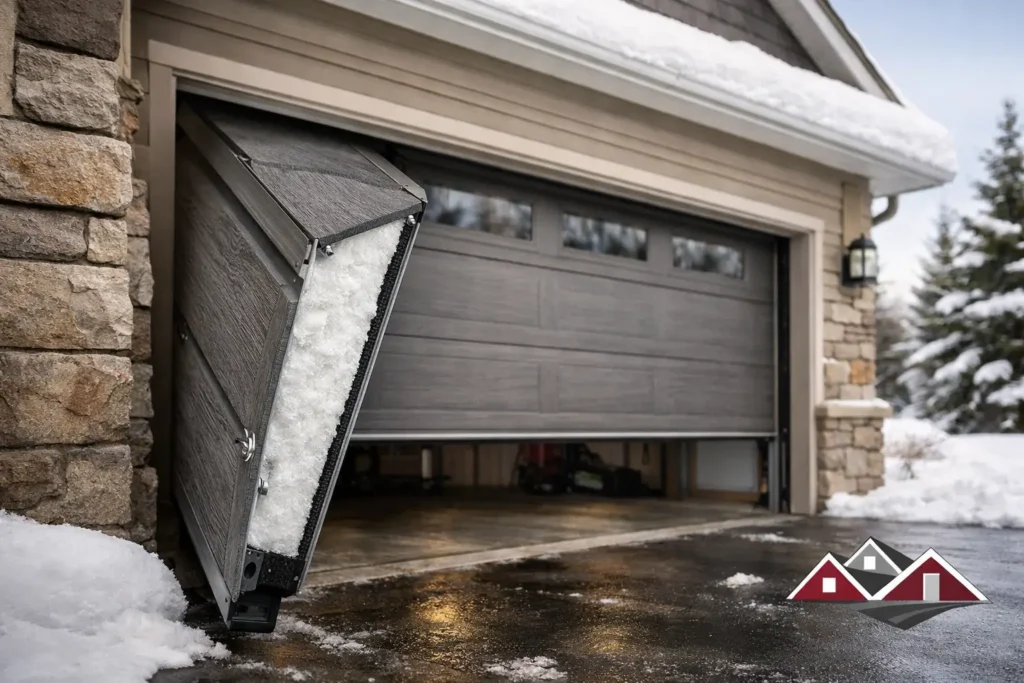
If your garage turns bitterly cold in January and traps heat all summer, the problem often starts with the door. The best insulated garage doors help control temperature swings, cut down on outside noise, and make the whole building feel more solid and secure. For many property owners, that matters just as much as curb appeal.
In Southwestern Pennsylvania, garage doors take a beating. Cold snaps, humid summers, wind, rain, and frequent use all put pressure on the door, the hardware, and the opening system. That is why insulation is not just a nice upgrade. In many cases, it is the difference between a garage that works for your property and one that stays uncomfortable year-round.
What makes the best insulated garage doors worth it
An insulated garage door does more than help with energy efficiency. It also changes how the door feels and performs day to day. A well-built insulated door is usually quieter, sturdier, and less prone to rattling than a basic non-insulated model. If you have living space next to or above the garage, that difference is even more noticeable.
This matters for homeowners who use the garage as an entry point, a workshop, a storage area, or a place to keep equipment from freezing. It also matters for farmers, contractors, and small business owners who store tools, inventory, or vehicles in detached buildings where temperature swings can affect both comfort and materials.
That said, not every insulated door delivers the same result. Some are lightly insulated and mainly intended to improve noise control and basic comfort. Others are built for stronger thermal performance and a more durable overall structure. The best choice depends on how you use the building, how often the door opens, and whether the garage is attached, detached, heated, or somewhere in between.
Best insulated garage doors: what to compare first
The first thing most buyers notice is the R-value, which measures how well a door resists heat transfer. Higher R-values generally mean better insulation, but that number should not be the only thing driving the decision. The construction of the door matters too.
A single-layer steel door with a thin insulation insert will not perform the same way as a multi-layer steel-backed door filled with insulation. In practical terms, thicker, better-constructed doors tend to hold up better, reduce vibration, and provide a more finished feel. If you want a door that feels solid when it opens and closes, construction quality matters as much as the insulation rating on paper.
The two most common insulation types are polystyrene and polyurethane. Polystyrene is a rigid panel insulation that can improve performance at a lower price point. Polyurethane is foam-injected and usually offers better thermal performance because it fills the cavity more completely. It also adds strength to the door. If budget is the main concern, polystyrene can still be a smart step up from a non-insulated door. If comfort, noise reduction, and long-term performance are higher priorities, polyurethane is often the better investment.
Weather sealing is another piece buyers sometimes overlook. Even a well-insulated door can underperform if the bottom seal, perimeter seal, and panel joints allow outside air to move freely into the garage. In areas that see cold wind and wet weather, sealing details matter.
Choosing the right door for your garage
The best insulated garage doors are not always the highest-rated or most expensive models. They are the ones that fit the building and the way you use it.
For an attached garage, insulation becomes more important because the garage sits directly against conditioned living space. If there is a bedroom above the garage or a family room on the other side of the wall, a better-insulated door can help reduce drafts, outside noise, and temperature transfer. In that situation, a multi-layer steel door with polyurethane insulation is usually worth serious consideration.
For a detached garage that is mainly used for parking and basic storage, a mid-range insulated door may be enough. You may not need the highest R-value available, but you still benefit from a stronger door and a more moderate interior environment. That can help protect tools, supplies, lawn equipment, and vehicles from more extreme temperature swings.
For workshops, farm buildings, and light commercial spaces, insulation needs can vary a lot. If people work inside regularly or if the building has some level of heating, a stronger insulated door often pays off. If the door opens and closes many times a day, durability and hardware quality should be part of the conversation too. A door that insulates well but cannot keep up with daily use is not really the right solution.
Material and style still matter
Steel remains the most practical choice for many insulated garage doors because it balances cost, durability, and low maintenance. It also offers a wide range of styles, from traditional raised panel doors to carriage-house looks with modern finishes. For most residential and light commercial applications, insulated steel is the standard for a reason.
Wood-look doors can give you more character, but they usually come at a higher cost. Real wood can be attractive, though it also brings more maintenance and more exposure to moisture-related wear. For many property owners, a steel door with an insulated core and a clean, durable finish is the better long-term value.
Glass-panel garage doors are another option, especially for modern homes or commercial storefront-style spaces. They can look sharp, but they are not always the top choice if insulation is the main goal. Some insulated glass options perform well, but in general, a solid insulated steel door is the better fit for maximum thermal performance.
Common mistakes buyers make
One common mistake is buying based on appearance alone. A good-looking door that is lightly built may not hold up the way you expect, especially in a region with changing weather and regular seasonal stress. Another is focusing only on the insulation number while ignoring the rest of the system.
The opener, track, springs, and seals all affect how the door performs. Installation matters just as much. Even one of the best insulated garage doors can fall short if it is not properly fitted to the opening. Gaps, poor alignment, and weak sealing can reduce the benefits quickly.
Some buyers also overbuy. If your garage is detached, unheated, and used only for vehicle storage, you may not need the highest-end insulated model available. On the other hand, if your garage shares walls with your home and gets used every day, choosing the cheapest option often leads to regret.
How to tell which insulation level makes sense
A simple way to think about it is to match the door to the role the garage plays on your property. If the garage is part of your daily living environment, go higher on insulation and construction quality. If it is a utility space with limited climate concerns, a moderate insulated door may be the smarter value.
It also helps to think beyond energy bills. People often expect insulation to deliver dramatic utility savings on its own, but that depends on the rest of the building. Garage wall insulation, air leakage, window quality, and how often the door opens all play a role. What many owners notice first is improved comfort and a quieter, more stable space.
For customers comparing options, the most useful approach is usually to look at three things together: insulation type, door construction, and expected use. That gives a clearer picture than shopping by price alone.
Why local guidance helps with garage door selection
Garage doors are one of those products where a brochure can only tell you so much. A door that looks good on paper may not be the right fit for your opening, your building use, or your budget. Working with a local supplier and installer who understands regional weather, common building types, and service needs can save time and prevent expensive guesswork.
That is especially true when you are balancing durability, insulation, and affordability. A no-nonsense conversation about how you actually use the garage is usually the fastest way to narrow the field. Tri County Door & Builders works with customers who want that kind of practical guidance instead of a one-size-fits-all sales pitch.
Best insulated garage doors for long-term value
If your goal is long-term value, the sweet spot is often a well-built steel door with layered construction, reliable weather sealing, and insulation that matches the building. Not the cheapest door on the lot, and not automatically the most expensive one either. Just the right door for the job.
That kind of decision pays off over time. The garage feels less drafty. The door runs with less noise. The building is more comfortable to use. And the door itself is more likely to stand up to daily wear.
When you are comparing the best insulated garage doors, think about how the space functions now and how you may use it a few years from today. A garage door is not just a finish detail. It is a working part of the building, and choosing the right one can make the entire space better to live with.