



A barn roof or wall system usually looks simple from the road. Up close, the wrong panel choice shows itself fast – loose fasteners, fading color, oil canning, rust at cut edges, or sheets that were never a good match for the building’s job in the first place. If you are trying to choose the best metal panels for barns, the real question is not just which panel looks good. It is which panel will hold up to your weather, your use, and your budget for the long haul.
For most barn owners, there is no single best panel for every project. A horse barn, equipment shed, hay storage building, and hobby farm outbuilding can all need different things. The right answer depends on span, exposure, maintenance expectations, and whether appearance matters as much as raw function.
What makes the best metal panels for barns?
The best barn panel is usually the one that balances strength, weather resistance, installation quality, and cost. That balance matters more than marketing terms. A lower-cost panel may work well on a storage barn with wide-open access and limited insulation needs. A heavier panel with a better paint system may be the smarter investment on a visible barn that takes hard weather year after year.
In practical terms, most buyers should look at four things first: panel profile, steel gauge, coating system, and fastener style. Those are the details that affect how the building performs after the newness wears off.
Panel profile matters more than many buyers expect
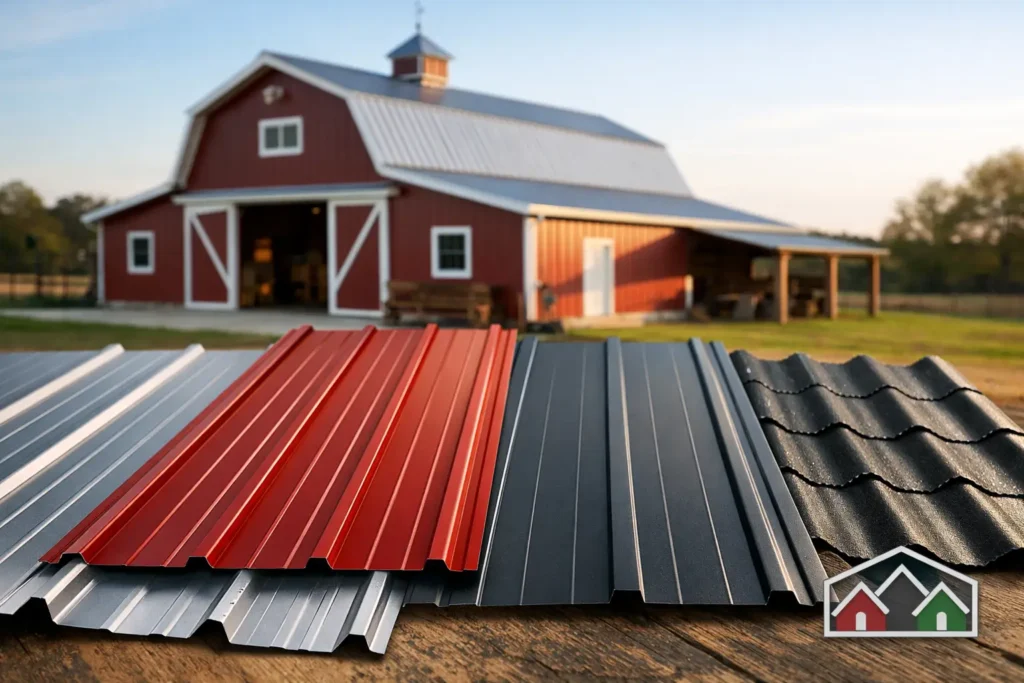
For barns, exposed fastener panels are still the most common choice, and for good reason. They are cost-effective, widely used, and dependable when installed correctly. Corrugated and ribbed panels are popular because they shed water well and give the structure the traditional metal barn look many owners want.
R-panel and similar ribbed profiles are often a strong fit for larger agricultural or utility buildings. They offer a clean appearance and solid strength for both roofing and siding applications. Classic rib panels are also common on pole buildings and smaller barns because they are affordable and easy to source.
Standing seam can be an option, but it is usually chosen more for premium appearance or higher-end performance goals than for basic farm utility. It costs more, requires more precision, and is not always necessary for a standard barn. If your building is highly visible or part of a barndominium-style project, it may be worth considering. For a straightforward livestock or equipment structure, exposed fastener panels often make better financial sense.
Gauge affects strength, but thicker is not always the automatic winner
A lot of people shop by gauge alone, assuming thicker steel always means better value. Thicker panels can offer better resistance to denting and can feel more substantial, but the best choice still depends on the building.
For many barns, 29-gauge panels are a common and budget-friendly option. They can perform well when paired with a quality substrate, proper spacing, and good installation. On the other hand, 26-gauge panels are often the better choice when you want more durability, improved rigidity, and stronger long-term performance in areas that see rough weather or heavier use.
If your barn is in an exposed location, takes frequent wind, or protects valuable equipment, moving up in gauge can be money well spent. If the structure is smaller and mainly used for general storage, lighter panels may be perfectly reasonable. The key is matching the panel to the job instead of paying for features you may not need.
Best metal roof panels for barns versus wall panels
Roof panels take more punishment than wall panels. They deal with rain, snow load, ice, sun exposure, and temperature swings all year. Because of that, the best metal roof panels for barns are often chosen with more attention to coating quality and water shedding performance.
For roofing, ribbed steel panels with reliable overlap design and properly placed fasteners are the standard choice on many barns. They offer a good mix of affordability and proven field performance. If condensation is a concern, especially in livestock buildings or barns with temperature swings, it also helps to plan for insulation, ventilation, or a condensation control system from the beginning.
Wall panels can be a little more flexible. You may choose the same profile for roof and walls for a consistent look, or use a panel that fits your siding goals. Barn walls still need durability, especially near grade, doors, and equipment traffic, but they do not face water in the same way a roof does. That can make budgeting a little easier.
Paint system and coating are where long-term value shows up
A metal panel is only as good as its protection against corrosion and fading. This is where many cheaper products start to separate from better ones.
Galvanized and Galvalume steel are both common, but the quality of the coating and the paint finish matter a great deal. In many cases, a better paint system is worth paying for if the barn is visible from the road, tied to a residence, or expected to look good for years. Lower-end finishes may save money upfront, but they can chalk, fade, or wear unevenly sooner than expected.
If your barn is mainly a working building, appearance may not be the first priority. Even then, long-term surface protection still matters. A panel that resists corrosion better can help you avoid repairs and replacement costs down the road.
Fasteners and trim can make or break the system
It is easy to focus on the panel and forget the accessories. That is a mistake. Even the best metal panels for barns will underperform if the fasteners, closures, trim, and flashing are poor quality or installed incorrectly.
Exposed fastener systems rely on screws and washers doing their job for years. Cheap fasteners can fail early, back out, or create leak points. Good trim details around ridge caps, eaves, corners, and openings are just as important. A barn is a system, not just a stack of steel sheets.
How to choose the right barn panel for your property
Start with the use of the building. If the barn stores tractors, hay, and tools, your priorities may be strength, weather resistance, and price. If it houses animals, ventilation and condensation control become more important. If it is part of a residential property or visible from the main road, color retention and appearance may deserve more weight.
Next, think about local weather. In Southwestern Pennsylvania, barns can see heavy rain, snow, humidity, freeze-thaw cycles, and windy conditions depending on exposure. That makes panel fit, fastening, and coating quality more than just nice extras. They are part of what keeps the building sound through season after season.
Then look at lifespan expectations. Some owners want the most economical option that gets the job done now. Others want to build once and avoid revisiting the roof or siding for a long time. Neither approach is wrong, but they lead to different recommendations.
Common mistakes when picking barn panels
One common mistake is buying on price alone. Lower pricing can be attractive, especially on large buildings, but the cheapest panel is not always the least expensive over time. Premature fading, leaks, or panel movement can cost more than the initial savings.
Another mistake is overlooking installation. A quality panel installed poorly will not perform like it should. Screw placement, panel alignment, trim fit, and substrate preparation all matter. So does ordering the right lengths and making sure the panel profile suits the structure.
Some buyers also choose based only on appearance. Color and profile do matter, but barns are work buildings first. The best-looking panel is not the best choice if it does not fit the demands of the site.
When a custom recommendation is the better route
There is a reason experienced local suppliers spend time asking questions before quoting a barn package. A one-size-fits-all answer usually misses something important. The roof pitch, panel length, building use, wind exposure, and framing layout all affect what will work best.
That is especially true when you are building new, replacing an older roof, or trying to match an existing structure. In those cases, product knowledge saves time and prevents costly changes later. That practical guidance is where a local company like Tri County Door & Builders can make the process a lot easier, especially for property owners who want straight answers instead of a hard sell.
The best metal panels for barns are the ones that fit the building, the budget, and the way you expect that barn to perform over the next decade and beyond. If you choose with that in mind, you are much more likely to end up with a building that works hard, looks right, and stays dependable when the weather turns.