




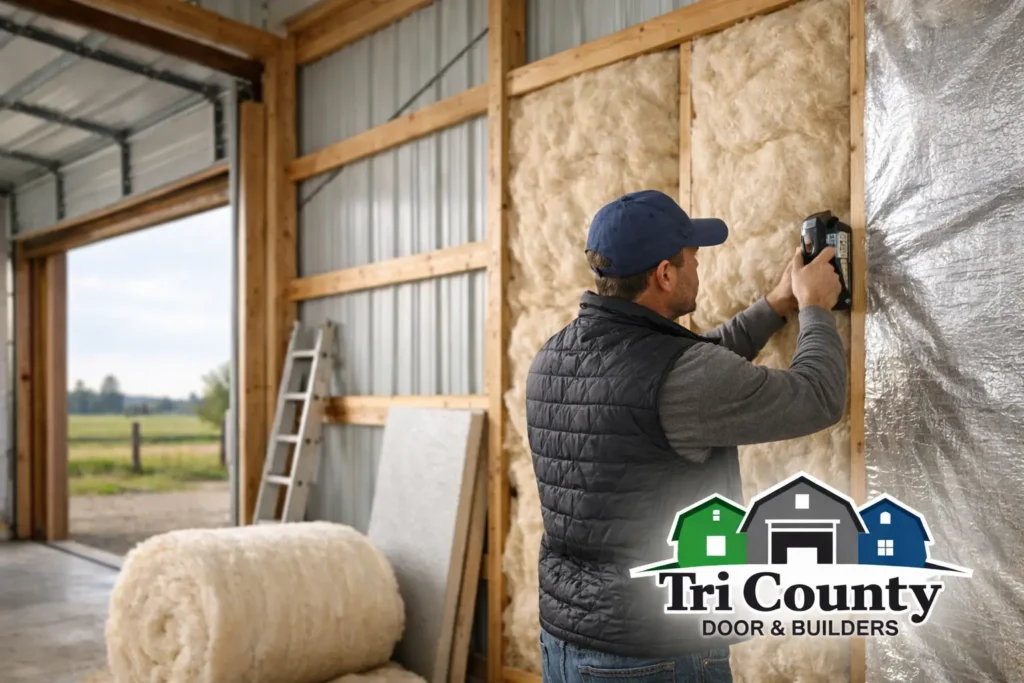
If your pole barn is sweating in summer, freezing in winter, or impossible to keep comfortable during work hours, the question usually comes up fast – can you insulate pole barn spaces effectively? Yes, you can. The better question is how to insulate it for the way you actually use the building, because a workshop, horse barn, storage building, and barndominium all need different answers.
That is where many property owners get tripped up. Insulation is not just about making a building warmer. In a pole barn, it also affects condensation, energy costs, noise, and how well your building holds up over time. If you get the system wrong, you can spend money and still end up with moisture problems or poor performance.
Can you insulate pole barn buildings after they are built?
Yes, both new and existing pole barns can be insulated. New construction is usually easier and more cost-effective because you can plan for vapor control, ventilation, and interior finishes before the metal goes on. Existing buildings can still be improved, but the right method depends on what is already there.
A basic cold-storage pole barn may have exposed framing and metal panels with no housewrap, no vapor barrier, and no finished interior. That setup changes your options. A fully enclosed barn with framed interior walls gives you more flexibility. Before choosing insulation, it helps to look at three things first: how the barn is used, whether moisture is already a problem, and whether you want a finished interior.
If the building is only for equipment storage, full insulation may not make financial sense. If you use it as a shop, garage, livestock area, or conditioned living space, insulation quickly becomes more worthwhile.
What insulation does for a pole barn
The biggest benefit is temperature control, but that is only part of the story. Metal buildings are especially prone to condensation when warm, moist air hits cooler roof or wall panels. That can lead to dripping, damp insulation, rust, and a building that never quite feels dry.
Good insulation helps slow heat transfer, but a complete system also manages air movement and moisture. In Southwestern Pennsylvania, where temperatures swing and humidity can hang around, that matters. A pole barn that is comfortable in October but drips in February is not really performing the way it should.
Insulation can also make the space quieter. Rain on a metal roof is part of the character for some owners, but if the barn is a workshop or gathering space, reducing noise can be a real benefit.
The best insulation options depend on the building
There is no one-size-fits-all answer. The best insulation for a pole barn depends on your budget, the building design, and how finished you want the space to feel.
Fiberglass insulation
Fiberglass is one of the most common and affordable options. It can work well in pole barns when it is installed correctly and paired with proper vapor control. In finished walls or ceilings, fiberglass batts or blown-in systems can be a practical choice.
The catch is that fiberglass does not perform well when moisture gets into it. If condensation is already an issue, or if the building is not properly sealed, fiberglass can sag, trap moisture, and lose effectiveness. It is often a good fit when the barn has a liner panel, drywall, or another interior finish that helps protect the insulation.
Spray foam insulation
Spray foam is popular in pole barns because it insulates and air seals at the same time. Closed-cell spray foam, in particular, is useful where condensation control is a priority. It adheres directly to metal and can help reduce the air leaks that make buildings hard to heat and cool.
The downside is cost. Spray foam usually has a higher upfront price than fiberglass or other systems. It can be worth it in a shop, garage, or conditioned building where comfort and moisture control matter, but it may be more than you need for a simple storage barn.
Reflective insulation and radiant barriers
These products are often used in metal buildings, especially during new construction. They can help reduce radiant heat gain and may serve as part of a condensation-control system. But they are often misunderstood.
A reflective layer alone is not the same as a full insulation package. It may help under a roof, but it usually will not provide enough thermal resistance for a barn you plan to heat regularly in winter. It is best viewed as one part of the system, not the entire answer.
Rigid foam board
Rigid foam board can be useful in some wall and ceiling assemblies, especially when you want a clean, continuous layer of insulation. It can also help reduce thermal bridging. Depending on the product, it offers decent moisture resistance.
Installation details matter here. Gaps, seams, and fire-code considerations all need attention. For some pole barns, rigid foam makes sense as part of a layered approach rather than the only insulation method.
Roof insulation is usually where the real problems show up
When owners ask if they can insulate a pole barn, they are often thinking about comfort. In practice, the roof is usually the first place to address because that is where condensation and heat gain become most obvious.
A metal roof without proper underlayment or condensation control can sweat heavily. If you add insulation below it without thinking through ventilation and vapor movement, you can make things worse instead of better.
For some buildings, a spray foam application to the underside of the roof is the cleanest fix. In others, a ceiling can be added and insulated above or within the cavity. The right path depends on whether the barn has attic space, open framing, or a finished interior plan.
This is one reason planning ahead during construction saves money. It is much easier to build in the right layers from the start than to retrofit them later.
Wall insulation has its own challenges
Pole barn walls are not always framed like a standard house wall. Post-frame construction can leave wider spacing, exposed girts, and details that change how insulation fits. That does not mean wall insulation is difficult, but it does mean product choice and installation method matter.
If you want a finished shop or garage interior, you may need to create a cavity system that supports the insulation and interior liner. If the walls already take on moisture or air leakage, simply stuffing batts between framing members will not solve the real problem.
A good wall assembly should account for thermal performance, interior finish, and how the wall dries if moisture gets in. In many cases, the cheapest material is not the cheapest job once you factor in labor and long-term performance.
Should every pole barn be insulated?
No. Some should, some should not, and some only need partial insulation.
If the building is used for cold storage only, insulation may not provide enough value to justify the cost. If you are storing tractors, hay, or materials that do not need temperature control, your money may be better spent on ventilation, weather sealing, or other upgrades.
But if you work in the building, heat it, cool it, protect tools, store temperature-sensitive items, or use it as a living or commercial space, insulation becomes much more important. The more hours you spend inside, the easier the return on that investment is to see.
Common mistakes to avoid
The most common mistake is treating insulation like a single product decision instead of a building-system decision. People ask for the highest R-value they can afford, but ignore air sealing, vapor control, and ventilation. That can lead to mold, trapped moisture, or disappointing comfort.
Another mistake is insulating only the walls and ignoring the roof. Heat and moisture do not care where your budget line was. If the roof remains the weak point, the building may still feel uncomfortable.
It is also easy to overbuild. Not every pole barn needs premium spray foam from floor to ceiling. If your use is limited and your expectations are realistic, a more modest insulation plan may be the smarter investment.
How to decide what makes sense for your barn
Start with use. Are you trying to take the edge off in winter, maintain a stable work environment, or fully condition the building year-round? Then look at the building itself. Is it new or existing? Are there signs of sweating, dripping, or drafts? Do you want exposed framing or a finished interior?
Once those answers are clear, the insulation choice gets easier. A local supplier or installer who understands metal buildings and post-frame construction can help you avoid mismatched products and costly rework. That kind of guidance matters more than chasing the most advertised insulation on the market.
At Tri County Door & Builders, that practical approach is what matters most – helping property owners choose a solution that fits the building, the budget, and the way the space will actually be used.
If you are asking can you insulate pole barn structures, the answer is yes. The smarter move is making sure you insulate it with a plan, not just a product, so the building works better for years instead of just looking improved for one season.