




A sticking door at a warehouse or service bay is more than an inconvenience. It slows deliveries, creates safety concerns, and can leave your building exposed when you need it secured. That is why choosing the right commercial overhead doors matters from the start, especially for property owners who need dependable performance through daily use, changing weather, and tight operating schedules.
For many businesses, the door gets attention only when it stops working. By that point, the damage is already done – lost time, frustrated staff, delayed customers, and sometimes a costly emergency repair. A better approach is to treat your overhead door as a working part of the building, not just an opening in the wall. The right system can improve efficiency, reduce service issues, and hold up better over the long haul.
What commercial overhead doors need to do well
A commercial door has a harder job than a typical residential garage door. It may open dozens of times a day, serve larger vehicles, handle heavier wind loads, or help control temperature in a building where every energy dollar counts. In some settings, it also needs to support security, visibility, noise control, or fire protection.
That is why there is no one-size-fits-all answer. A farm equipment building, an auto shop, a storage facility, and a distribution center may all need overhead doors, but they do not need the same kind. The best choice depends on how the opening is used, how often the door cycles, what kind of traffic moves through it, and what the building demands in terms of insulation and durability.
For property owners in Southwestern Pennsylvania, weather is part of that conversation too. Cold winters, moisture, and seasonal swings can put extra stress on moving parts and on the building envelope itself. If a door is poorly fitted, lightly built, or not suited to the opening, those conditions tend to show the weaknesses fast.
Choosing the right type of commercial overhead doors
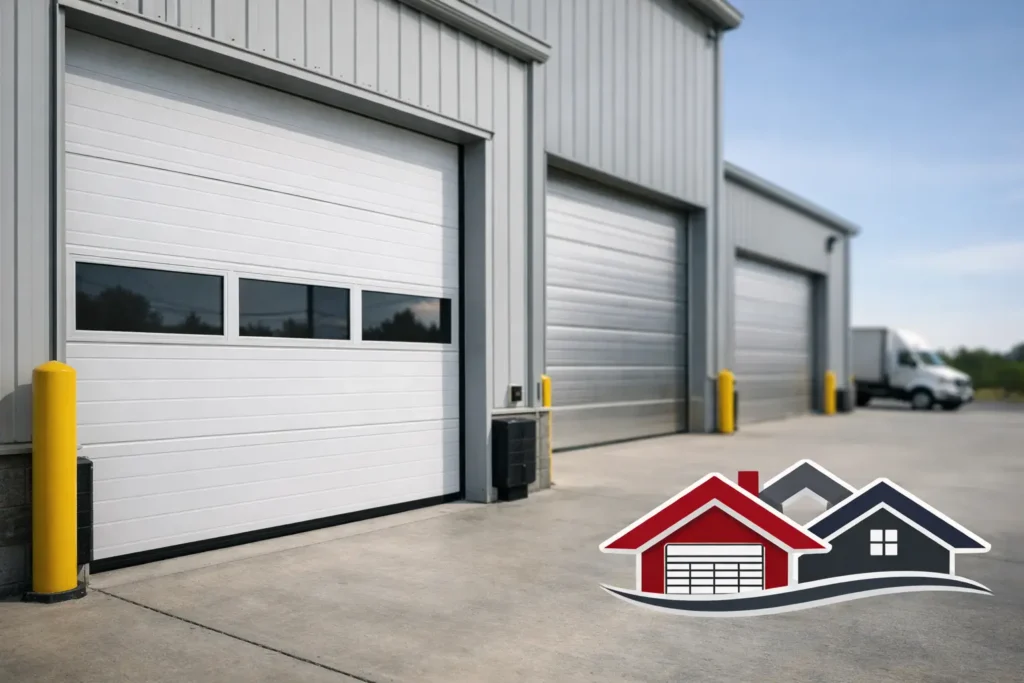
The most common sectional overhead doors are a solid fit for many commercial buildings because they are durable, widely available, and adaptable. They open vertically, save space, and can be built in insulated or non-insulated models. For shops, service garages, and mixed-use commercial buildings, sectional doors often strike the best balance between price and performance.
Rolling steel doors are a different category and usually make more sense when security and compact operation are top priorities. They coil above the opening instead of tracking back into the building, which can help in tighter interior layouts. They are often used in loading areas, storage facilities, and certain industrial settings, though they may not offer the same appearance options or thermal performance as insulated sectional doors.
High-speed doors serve another purpose entirely. These are designed for facilities where speed, traffic flow, or environmental separation matters. They can be useful in operations that move people or equipment in and out constantly, but they come at a higher upfront cost and are not necessary for every property.
This is where honest guidance matters. Paying for a higher-end system you do not need is no better than buying a lower-cost door that cannot keep up with the job. Good recommendations start with the opening, the use case, and the building itself.
Material, insulation, and strength all matter
Steel is the standard for most commercial overhead applications because it offers strength, long service life, and straightforward maintenance. Thicker gauge doors generally hold up better under frequent use and rougher conditions, but the trade-off is added weight and, in some cases, higher cost. The right balance depends on how demanding the application is.
Insulation is another area where it depends. If the building is heated, stores products sensitive to temperature, or houses employees who work near the door throughout the day, an insulated door usually makes sense. It can help with energy efficiency, interior comfort, and noise reduction. If the opening serves a cold storage space, a conditioned shop, or a building with attached office space, insulation moves from a nice extra to a real practical benefit.
On the other hand, not every detached storage or equipment building needs a premium insulated model. In some cases, a well-built non-insulated door is the smarter investment. The key is knowing whether insulation will actually improve how the building performs.
Wind resistance should not be overlooked either. Larger openings and exposed sites can put a lot of pressure on a door system. Reinforcement options, stronger tracks, and proper installation all play a role in making sure the door can handle local conditions without premature wear.
The opener and hardware are part of the system
People often focus on the door panels and forget the rest of the system. Tracks, springs, rollers, hinges, seals, and openers all affect how well the door performs. A quality door paired with underbuilt hardware is asking for trouble.
For commercial settings, the opener needs to match the size, weight, and cycle demands of the door. A low-traffic storage building has different needs than a service garage where the door opens repeatedly through the day. Operators that are not rated for the workload tend to wear out faster, and that usually shows up at the worst possible time.
Safety features matter just as much. Photo eyes, sensing edges, manual release systems, and proper control placement help protect both people and equipment. For business owners and property managers, these are not add-ons to think about later. They are part of making the building safer and keeping operations moving.
Installation has a direct impact on lifespan
Even a well-made door can underperform if the installation is off. A door opening has to be measured correctly, the tracks need to be aligned, spring tension must be set properly, and the operator has to be adjusted for smooth, safe travel. Small mistakes during installation often turn into bigger repair bills later.
That is one reason local experience matters. Buildings are not all framed the same way, and older structures often come with quirks that need to be addressed before a new system goes in. An installer who understands the building conditions in this region is more likely to catch issues early and recommend a setup that actually works with the structure instead of forcing a standard package into a nonstandard opening.
At Tri County Door & Builders, that practical approach is part of the job. Customers want straight answers, fair pricing, and a door that works the way it should, not a sales pitch built around features they may never use.
Repair or replace?
This is one of the most common questions, and the answer depends on the age of the door, the condition of the hardware, and the cost of keeping it in service. If a newer door has one broken spring, damaged rollers, or an opener issue, repair is often the right move. If the door is older, poorly insulated, visibly worn, and starting to have repeated failures, replacement may save money over time.
There is also the question of downtime. A repair that gets you by for a few more months may still be the wrong choice if your operation cannot risk another interruption. For a busy commercial property, reliability often has more value than squeezing the last bit of life out of a failing door.
Warning signs usually show up before a full breakdown. Uneven movement, loud operation, delayed response, gaps around the perimeter, bent tracks, and visible wear on cables or rollers all deserve attention. Ignoring those signs tends to turn a scheduled service call into an urgent one.
What to ask before you buy
Before choosing a new door, it helps to ask a few basic questions. How many times will it open per day? Does the building need insulation? What size vehicles or equipment use the opening? How important are security, visibility, and noise control? Will the door be exposed to wind, moisture, or heavy wear?
Those answers shape the recommendation more than any brochure ever will. They also help avoid two common mistakes: overspending on features that do not fit the job, or buying the cheapest option and replacing it sooner than expected.
A good commercial overhead door should fit the building, the workload, and the budget. It should also come with clear expectations about maintenance, service life, and repair support. That is the kind of decision that protects your property and keeps your business moving.
When you are weighing options, think beyond the price tag. The better question is whether the door will still be doing its job reliably a few years from now, through daily use, bad weather, and the normal wear that comes with running a building. That is usually where the real value shows up.