




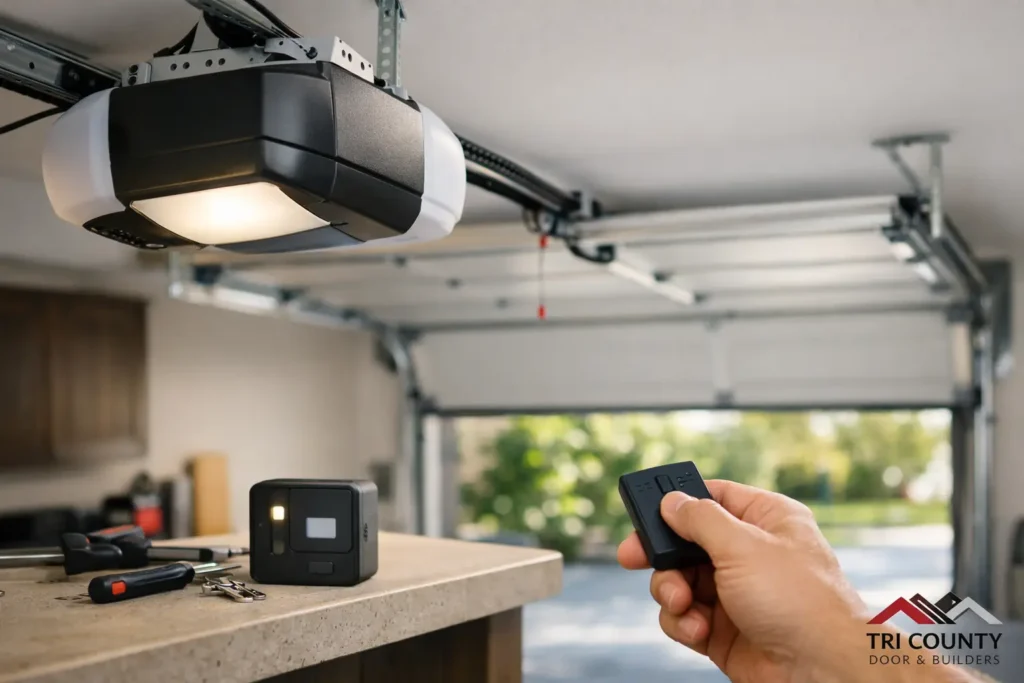
That old opener usually gives you plenty of warning before it quits. It gets louder. It hesitates in cold weather. The remote works only when it feels like it. A good garage door opener guide starts there – not with fancy features, but with the real question property owners ask every day: what will work reliably for my door, my building, and my budget?
If you are replacing an opener for a home garage, detached shop, or light commercial space, the right choice depends on more than horsepower and price. Door size, door weight, noise level, ceiling height, daily use, and even winter conditions all matter. The best opener is not always the biggest or most expensive one. It is the one that fits the door and does its job without becoming another repair call six months from now.
What this garage door opener guide should help you decide
Most buyers are trying to answer three things. First, will the opener lift the door safely and consistently? Second, how loud will it be? Third, is it worth paying more for features like battery backup, smartphone control, or a wall-mounted setup?
Those are fair questions, especially if your garage sits under a bedroom, opens ten times a day, or serves as the main entrance to the house. For a workshop, farm outbuilding, or commercial bay, reliability and cycle demand often matter more than quiet operation. The opener has to match the way the building is actually used.
Start with the door, not the opener
A common mistake is shopping for the opener before looking closely at the garage door itself. The opener is not meant to do all the heavy lifting on its own. A properly balanced garage door should open with manageable resistance by hand. If the door is heavy, jerky, or out of balance, even a strong opener will wear down faster.
That is why spring condition, track alignment, roller wear, and overall door condition matter. If the door is older or has been repaired several times, replacing only the opener may not solve the bigger problem. In some cases, it makes more sense to address the door system first so the new opener is not compensating for worn parts.
This is especially true for larger insulated doors and wide two-car doors. They put more demand on the system, and a bargain opener can quickly turn into an expensive shortcut.
Chain, belt, screw, and jackshaft openers
The drive type affects noise, maintenance, and price more than most people expect.
Chain-drive openers
Chain-drive units are proven, widely available, and often the most affordable option. They are a practical fit for detached garages, workshops, and buildings where noise is not a major concern. They tend to hold up well, but they are usually louder than other styles.
For many property owners, that trade-off is perfectly acceptable. If the garage is separate from the house or used more like a utility space, a chain drive can be the right value.
Belt-drive openers
Belt-drive systems run more quietly, which makes a real difference when the garage is attached to the home. If there is a bedroom or living space above or beside the garage, paying more for a quieter opener is often money well spent.
They are popular for residential use because they offer a good mix of smooth operation and dependable performance. The cost is usually higher than chain drive, but many homeowners feel the lower noise level justifies it.
Screw-drive openers
Screw-drive models have fewer moving parts in the rail system, which can appeal to buyers looking for a simpler design. They can perform well, but climate and maintenance still matter. In areas with temperature swings, performance can vary depending on the model and installation quality.
They are not the first choice for every property, but they can be a solid middle-ground option in the right setup.
Jackshaft or wall-mounted openers
Wall-mounted openers free up ceiling space and work well in garages with high or unusual ceilings. They are also useful when overhead room is needed for storage, lighting, car lifts, or specialty layouts.
They usually cost more and are not right for every door configuration. Still, for some residential garages and many commercial or shop applications, they solve layout problems a standard ceiling-mounted opener cannot.
How much power do you really need?
Horsepower gets a lot of attention, but bigger is not automatically better. For a standard single garage door, a lower-powered opener may be completely adequate if the door is in good condition and properly balanced. For heavier insulated doors, oversized doors, or doors that see frequent daily use, stepping up in power makes sense.
If you have a double-wide door, a carriage-style door, or a solid wood door, underbuying can lead to strain, slower operation, and shorter opener life. On the other hand, buying extra power for a light door does not fix installation issues or poor balance.
This is where honest guidance matters. The right recommendation depends on the actual door, not a one-size-fits-all sales pitch.
Safety features are not optional
Every opener should include modern safety sensors that stop and reverse the door if something crosses the path. Auto-reverse functionality, secure remote programming, and rolling-code technology also matter. These features are standard for a reason.
If you are replacing an opener that is older, the difference in safety and convenience can be significant. Families with kids, pets, or a busy household should pay close attention here. For small businesses and farms, safety matters just as much, especially when multiple people are using the same bay door throughout the day.
Battery backup is another feature worth considering. If the power goes out during a storm, you still need access to the garage. In areas where winter weather can create outages, that is more than a convenience.
Smart features: useful or just extra cost?
Smartphone control, app alerts, remote monitoring, and voice assistant compatibility can be genuinely helpful, but not every buyer needs them.
If you travel often, manage a rental property, or simply want to confirm the door closed after you left, smart features add peace of mind. They can also be useful for small business owners who want better visibility into building access.
If you prefer simple, dependable operation and do not want another app to manage, a standard opener may be the better fit. Smart features are valuable when they solve a real problem. They are less valuable when they add cost without changing how you use the garage.
Installation quality matters as much as the opener itself
Even a good opener can become a headache if it is installed poorly. Improper rail alignment, weak mounting, incorrect force settings, and bad sensor placement all create problems that look like product failure but are really installation issues.
That is one reason many property owners prefer working with a local supplier and installer that understands both the product and the door system. An opener should be sized correctly, mounted securely, tested for safe travel limits, and adjusted for smooth operation. That is how you get long-term value instead of short-term frustration.
For DIY buyers, the same rule applies. Follow manufacturer specifications carefully, and do not guess on spring work or safety adjustments. Some parts of a garage door system are not worth experimenting with.
Choosing an opener for home, farm, or business use
Residential garages usually prioritize quiet operation, everyday convenience, and safety. A belt-drive opener with battery backup and basic smart control is often a strong fit for an attached garage.
A detached garage or pole building may lean toward a chain-drive opener where noise is less important and value matters more. For a shop or agricultural building, the decision may center on door size, cycle frequency, and available ceiling space.
Commercial and mixed-use spaces often need a tougher solution entirely. Higher cycle demands, larger doors, and more frequent access can require heavier-duty operators than a standard residential unit can provide. In those cases, buying residential-grade equipment to save money usually costs more in downtime and repairs.
In Southwestern Pennsylvania, weather and seasonal shifts also affect opener performance. Cold snaps, moisture, and repeated freeze-thaw cycles can expose weak components fast. That makes durable hardware and proper setup more than a nice extra.
When to repair and when to replace
If the opener is relatively new and the issue is limited to remotes, sensors, gears, or settings, repair may be the smart move. If the motor is aging, parts are getting harder to find, or the unit struggles with normal operation, replacement is often the better investment.
The same goes for openers that are simply too loud, lack current safety features, or cannot keep up with the door they are connected to. At some point, continuing to patch an old unit becomes more expensive than replacing it with something that fits the building properly.
Tri County Door & Builders works with property owners who want a straight answer on that question, not pressure to replace equipment that still has useful life left.
A better way to buy
The best garage door opener guide is the one that helps you avoid guessing. Match the opener to the door, think honestly about noise and daily use, and do not overlook installation quality. A dependable opener should feel boring in the best possible way – it works when you need it, in every season, without demanding your attention. That is usually the right sign you bought well.