



A metal roof can be one of the longest-lasting upgrades you make to a home, farm building, garage, or commercial property. But the material alone is not the whole answer. A qualified metal roofer must understand how panels, fasteners, flashing, ventilation, trim, and roof transitions work together. A roof can look good from the road and still develop leaks around a chimney, valley, or pipe boot if the details are handled poorly.
For property owners in Southwestern Pennsylvania, that workmanship matters. Heavy rain, snow loads, freeze-thaw cycles, wind, and falling branches all put roofing systems to work. Choosing the right contractor means looking beyond the lowest price and asking practical questions about materials, installation methods, and local experience.
What a Metal Roofer Actually Does
Metal roofing is not simply a matter of fastening panels to a roof deck. A proper installation begins with an inspection of the existing roof structure. The roofer should identify soft decking, sagging areas, damaged fascia, poor ventilation, and transitions where water is likely to collect or move sideways.
From there, the installer needs to choose the right system for the building. An agricultural structure, detached garage, residential home, and low-slope commercial building may all need different panel profiles, underlayment approaches, trim packages, and fastening methods. The best choice depends on roof pitch, building use, budget, appearance goals, and whether the roof has penetrations such as skylights, vents, or chimneys.
A dependable metal roofer also handles the less visible work that protects the finished roof: underlayment, ice and water protection where needed, closures, ridge ventilation, flashing, and properly formed trim. These pieces are not extras. They are what help keep wind-driven rain, pests, and drifting snow from finding a way underneath the panels.
Start With the Right Metal Roofing System
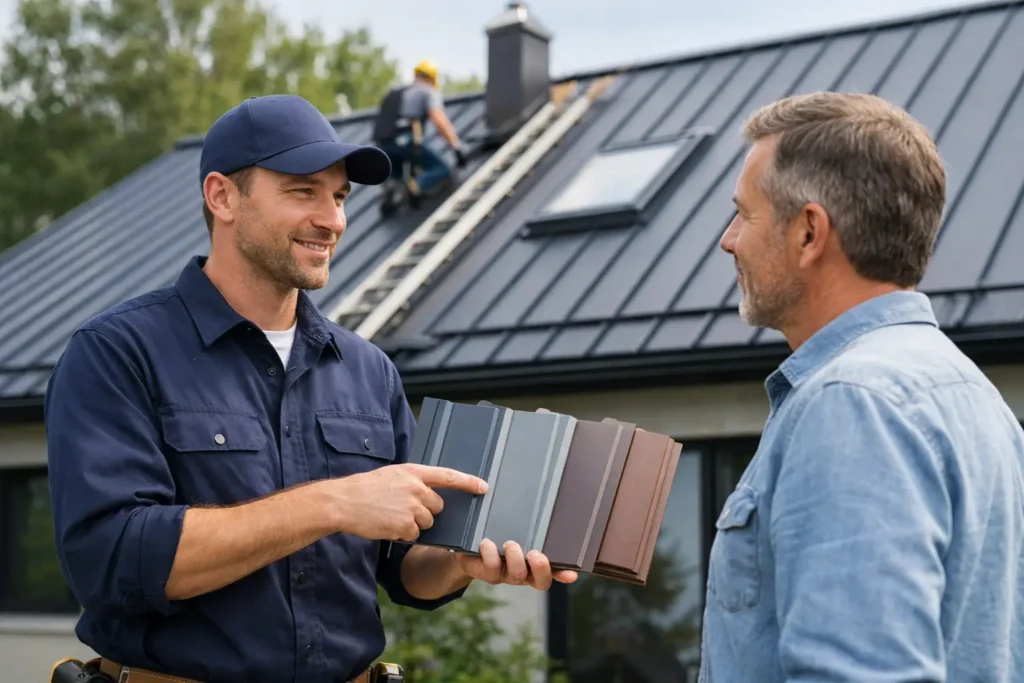
Not every metal roof is built the same, and the lowest-cost panel is not automatically the best value for every project. Exposed-fastener panels are a common, practical choice for garages, barns, workshops, and many residential applications. Fasteners remain visible on the face of the panel, making the system more affordable and straightforward to install. However, the screws and washers should be inspected over time because they are exposed to weather and movement.
Standing seam roofing conceals the fasteners beneath interlocking seams. It provides a clean appearance and can be a strong option for homes where long-term appearance and weather performance are priorities. It usually costs more than exposed-fastener metal, particularly when the roof has multiple valleys, dormers, or difficult transitions.
Panel gauge, paint finish, and substrate also deserve attention. Thicker material can offer more resistance to denting and movement, but it comes at a higher price. A quality finish helps the roof keep its color and resist chalking over the years. The right balance is usually based on the building, not on a one-size-fits-all recommendation.
A Roof’s Shape Changes the Job
A simple gable roof is generally faster and more economical to cover than a roof with several intersecting slopes. Valleys, hips, chimneys, skylights, pipe boots, and walls create more places where water must be directed carefully. A detailed roof is not a reason to avoid metal roofing, but it is a reason to hire an installer who can explain the flashing plan before work begins.
Be cautious if a contractor provides a quick price without asking about roof pitch, square footage, tear-off needs, attic conditions, or penetrations. Those details directly affect labor, materials, and the chance of hidden repairs.
Questions to Ask Before Hiring a Metal Roofer
The conversation with a roofer should be clear and specific. Ask what type of metal panel is being proposed, what gauge and finish will be used, and how the installer plans to handle valleys, eaves, ridges, and roof penetrations. You should also ask whether damaged decking will be replaced if it is found during the project and how that cost will be handled.
It is also reasonable to ask who will perform the installation. Some companies sell materials but rely entirely on unknown subcontractors. Others use experienced installation crews and have a clearer process for scheduling, cleanup, and follow-up. Neither approach is automatically wrong, but you should know who is responsible for the finished work.
A written estimate should separate the major parts of the job. It does not need to be overly complicated, but it should identify the roofing system, trim, underlayment, removal of old materials if applicable, disposal, and any expected repairs or exclusions. A vague estimate makes it hard to compare proposals fairly.
Look for a contractor willing to discuss warranty coverage in plain language. Manufacturer warranties may cover the panel finish or material, while workmanship coverage relates to installation. They are different protections. If a leak develops because flashing was installed incorrectly, a material warranty may not solve the problem.
Local Weather Experience Is Worth More Than a Quick Quote
Pennsylvania roofs face conditions that can expose weak installation practices quickly. Snow may remain on a roof for extended periods, then thaw and refreeze at the eaves. Spring storms can drive rain sideways under poorly fitted trim. Summer heat causes materials to expand, while winter temperatures bring contraction.
A local installer should understand where ice barriers may be useful, how ventilation affects the roof system, and why proper eave and ridge details matter. They should also be familiar with the practical needs of rural and agricultural properties, including wide spans, equipment access, and buildings that may not have the same insulation or interior climate control as a house.
This local knowledge should not be confused with overselling. Metal roofing is durable, but it is not maintenance-free and it is not always the right answer. A roof with extensive structural damage may need repairs before metal can be installed. A homeowner who prefers the look of architectural shingles or wants the lowest upfront cost may be better served by a shingle roof. The right contractor explains the trade-offs honestly.
Watch for These Warning Signs
Price matters, especially on a major property investment, but an unusually low bid can signal missing materials, rushed labor, or a contractor who has not accounted for the full scope of work. If one estimate is far below the others, compare panel thickness, underlayment, trim details, tear-off, and decking repairs before assuming it is the better deal.
Poor communication is another concern. If the contractor cannot answer basic questions before the project begins, it rarely becomes easier once materials arrive. You should know the anticipated start time, how long the work may take, where materials will be placed, and how nails and debris will be cleaned up.
Finally, avoid treating a roof installation as a materials-only purchase. Even premium panels can fail to perform as intended if they are cut carelessly, fastened incorrectly, or flashed without attention to water flow. The installation is part of the roofing system, not an afterthought.
Plan for the Roof You Will Need Years From Now
Before making a final decision, think about how the building will be used over the next decade. A garage may later become a workshop. A farm structure may need better insulation. A commercial property may require additional rooftop equipment. Planning around those possibilities can influence panel choice, ventilation, insulation, and the way penetrations are handled.
Tri County Door & Builders helps property owners weigh those decisions with practical product knowledge, quality materials, and service shaped by the conditions found across Westmoreland, Somerset, and Fayette counties. The goal is not to push the same roof on every customer, but to match the system to the building and budget.
A good roof should give you confidence when the forecast calls for hard rain, heavy snow, or another long Pennsylvania winter. Take the time to choose a metal roofer who looks past the panels and pays attention to every detail that keeps the building protected.