




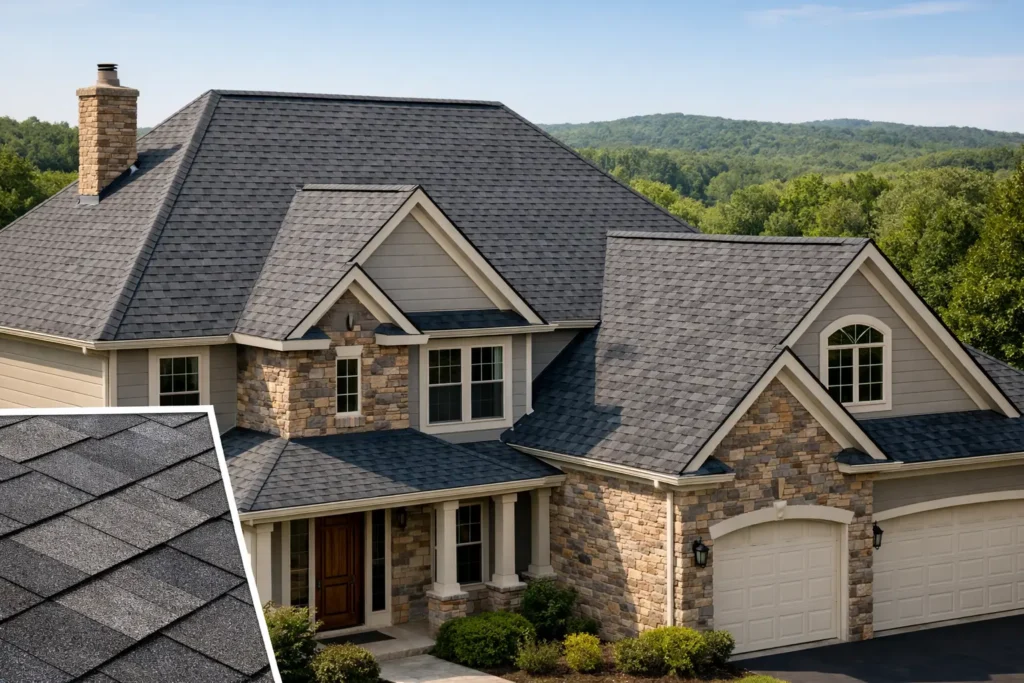
A roof replacement is not the place to pay for features you will never use, but it is also not the place to choose strictly by the lowest number on a quote. In this Owens Corning Oakridge review, we look at where this architectural shingle delivers practical value, where it has limits, and why installation matters as much as the shingle itself for homes in Southwestern Pennsylvania.
Oakridge is a familiar choice for homeowners who want the dimensional appearance of an architectural shingle without moving into a premium designer roofing line. It is built for everyday homes, detached garages, rental properties, and many light commercial applications where appearance, weather resistance, and budget all need to stay in balance.
What Is Owens Corning Oakridge?
Owens Corning Oakridge is a laminated architectural asphalt shingle. Unlike older three-tab shingles, it uses layered construction to create shadow lines and a thicker-looking roof profile. That gives a home more visual depth while generally providing a stronger, more substantial shingle than a basic strip shingle.
Oakridge sits in the value-focused architectural category. It is not Owens Corning’s highest-end option, and it is not trying to be. Homeowners comparing it with products such as Duration should expect a more accessible price point, fewer premium performance features, and a solid look that works well on a wide range of roof styles.
For many property owners, that position is exactly the appeal. A good roof does not have to be the most expensive roof on the market. It has to fit the building, the local weather, the installation details, and the years you expect to own the property.
Owens Corning Oakridge Review: The Main Advantages
Oakridge earns consideration because it addresses the needs most homeowners bring to a roof project: dependable protection, an architectural look, recognizable manufacturer backing, and manageable cost.
Architectural style without premium pricing
The dimensional profile is one of Oakridge’s strongest selling points. It provides more character than a flat-looking three-tab roof and can improve curb appeal without requiring a designer shingle budget. Its blended color patterns also help break up the uniform appearance of a large roof plane.
Color selection matters more than people sometimes expect. A roof covers a major portion of what people see from the street. Choosing a color that works with brick, siding, stone, shutters, and trim can make a modest exterior update feel more complete. A local supplier can help narrow the choices before material is ordered, especially when a sample looks different outdoors than it does under showroom lighting.
Useful wind protection when installed correctly
Oakridge shingles use Owens Corning’s SureNail Technology, which provides a reinforced nailing area intended to improve fastening performance. Proper nail placement is critical. A quality shingle cannot compensate for nails driven too high, too low, too deep, or at an angle.
Wind ratings and warranty coverage can depend on the installation method, number of fasteners, roof deck condition, and the full roofing system used. Ask your contractor how the roof will be installed and what wind coverage applies to your specific project. This is especially worthwhile on open rural properties, ridge-top homes, and buildings exposed to frequent wind.
A practical choice for typical Pennsylvania weather
Western Pennsylvania roofs see heavy rain, snow loads, freeze-thaw cycles, gusty storms, and summer heat. Oakridge is designed for the kind of regular weather exposure a residential roof faces, provided the entire system is addressed correctly.
That means examining ventilation, ice and water protection in vulnerable areas, underlayment, flashing, pipe boots, drip edge, and attic moisture. Most roof failures do not start in the middle of an intact shingle field. They begin at transitions, penetrations, valleys, sidewalls, chimneys, or poorly managed ventilation.
Where Oakridge May Not Be the Best Fit
A straightforward review should include the trade-offs. Oakridge is a strong value option, but it is not automatically the right shingle for every roof.
If your home is in a highly exposed location, has a very steep roof, or has complicated valleys and dormers, spending more on a higher-tier shingle and a carefully designed roofing system may be worthwhile. The labor required for a complex roof is substantial regardless of shingle grade. In some cases, choosing a more advanced shingle makes sense because the roof is already a long-term investment.
Homeowners who want the heaviest visual texture, specialty colors, enhanced impact resistance, or premium algae-resistance options should also compare higher product lines. Those upgrades can be valuable, but only when they solve a real need. Paying extra simply because a product is positioned as premium does not always create better value.
Oakridge is also not a replacement for correct roof preparation. If decking is soft, flashing is failing, or attic ventilation is inadequate, installing new shingles over those issues can shorten the service life of any roof. The right estimate should identify those conditions before work begins, not after the old roof comes off.
How Oakridge Compares With Other Common Shingle Choices
Compared with a basic three-tab shingle, Oakridge provides a more dimensional appearance and generally represents a meaningful step up in overall curb appeal. For homeowners replacing an older three-tab roof, the difference is easy to see.
Compared with higher-end architectural shingles, Oakridge usually offers a more budget-conscious route to a dependable laminated roof. Premium lines may provide enhanced fastening zones, greater visual contrast, additional color options, or specialized performance features. Whether those differences justify the price depends on your roof design, exposure, and plans for the property.
It is also helpful to compare the complete installed system instead of only comparing shingle bundles. One quote may appear lower because it excludes key details such as tear-off, deck repairs, upgraded underlayment, ridge vent, flashing work, or disposal. Another may include everything needed for a sound installation. Ask what is included, what is excluded, and how unexpected deck repairs will be handled.
Installation Is the Deciding Factor
Even an excellent shingle can underperform when the roof is installed carelessly. The crew should protect landscaping where practical, remove old material as specified, inspect the deck, address rotten wood, install the proper underlayment and ice protection, and flash every transition correctly.
Ventilation deserves special attention. A poorly ventilated attic can trap heat and moisture, contributing to premature aging, condensation, mold concerns, and ice dam problems. The right approach depends on the home. Ridge vents, soffit intake, gable ventilation, and powered ventilation are not interchangeable answers for every building.
For homes in Fayette, Somerset, and Westmoreland counties, local experience can make the quote process more useful. A contractor who understands older housing stock, snow-prone areas, rural wind exposure, and common chimney or porch-roof details is more likely to spot issues early.
Is Oakridge a Good Value During a Roof Replacement?
For many homeowners, yes. Oakridge is a sensible choice when the goal is a reputable architectural shingle at a price that leaves room for proper installation and necessary roof repairs. It is particularly well suited to homeowners who want a noticeable improvement over entry-level shingles without paying for features their roof does not require.
The best value is not just the lowest upfront material cost. It is a roof installed with the correct components, clear workmanship expectations, and an honest discussion about condition issues that may affect the final price. Tri County Door & Builders is currently offering 30% off Owens Corning shingles, giving local property owners a chance to avoid the Pittsburgh markup while planning a new shingle roof.
Before choosing a color or signing a contract, ask for a clear scope of work, confirmation of the shingle system being used, ventilation recommendations, and a written explanation of warranty options. Oakridge can be a dependable roof for years, but the right decision begins with an installer who looks at the whole building rather than treating every roof as the same.