



A cold upstairs bedroom, uneven temperatures between floors, and an HVAC system that seems to run without a break often point to the attic before they point anywhere else. This pro cat insulation review looks at what Owens Corning ProCat blown-in fiberglass insulation does well, where it may not be the right answer by itself, and what Southwestern Pennsylvania property owners should consider before scheduling installation.
What Is ProCat Insulation?
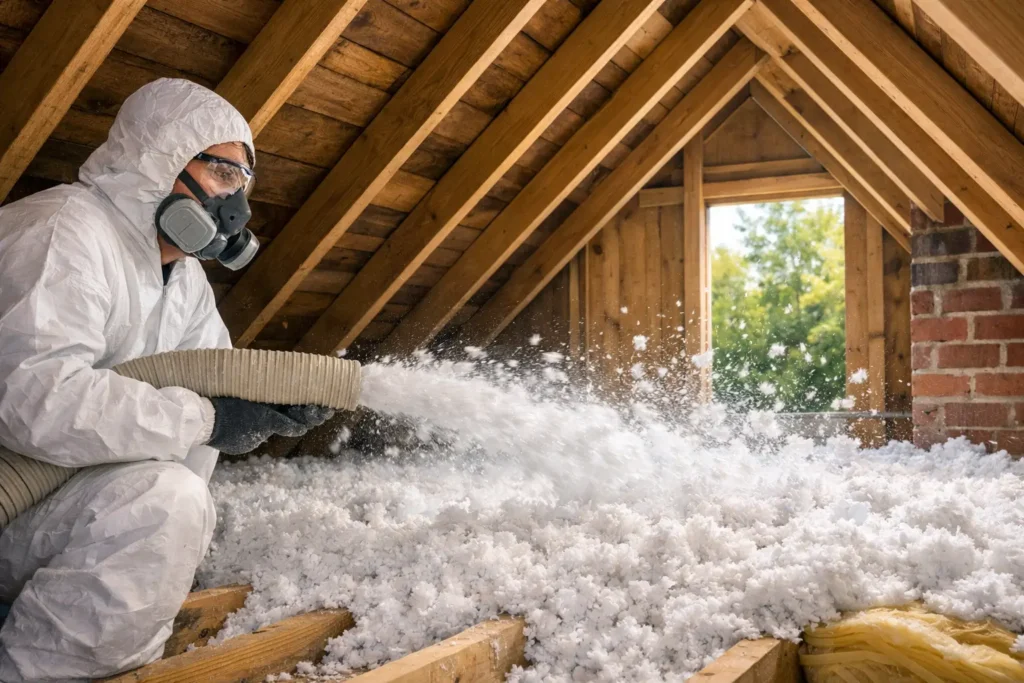
ProCat is a loose-fill fiberglass insulation installed with specialized blowing equipment. Rather than laying down rolls or batts by hand, an installer blows the material across attic floors and into appropriate open cavities to create an even blanket of insulation.
That installation method is the main reason homeowners consider it. Attics are rarely simple, open rectangles. They have joists, wiring, plumbing vents, recessed areas, and tight edges that can make batt insulation difficult to fit correctly. Blown-in insulation can cover these irregular areas more consistently when the crew prepares the space and installs it to the intended depth.
For many homes, ProCat is most practical as an attic-floor insulation upgrade. It can also be used in certain wall or enclosed-cavity applications, but the right approach depends on the construction of the building and access to the space. A detached garage, farm office, pole building addition, and older home may each call for a different insulation plan.
Pro Cat Insulation Review: The Real Benefits
The strongest case for ProCat is not that it is a miracle product. It is that it solves a common, expensive problem in a direct and proven way: too little insulation in an attic.
It can improve whole-home comfort
Heat naturally moves toward colder areas. During a Pennsylvania winter, that often means heated indoor air is working its way toward a cold attic. In summer, attic heat can push down into the living space below. Increasing attic insulation helps slow that heat transfer, which can make rooms feel more consistent from one end of the home to the other.
The improvement is especially noticeable in homes with thin, uneven, compressed, or aging attic insulation. A homeowner may not suddenly set the thermostat several degrees lower or higher, but the home can feel less drafty and less prone to sharp temperature swings.
It works well around attic obstructions
Batts can perform well when they are the correct size, installed flat, and carefully cut around obstacles. In a typical attic, that level of fit takes time and attention. Blown-in fiberglass reaches around framing members and other obstructions without leaving the same number of gaps.
Coverage matters. Insulation that is missing in small sections, packed down by storage items, or unevenly distributed may not deliver the performance the homeowner expects. ProCat is designed to create a more uniform layer across an attic floor.
It supports higher R-values without major reconstruction
R-value measures a material’s resistance to heat flow. The higher the installed R-value, the greater the resistance. Many homes in this region benefit from attic insulation levels in the R-49 to R-60 range, though the best target depends on the home, local conditions, existing insulation, and the specific area being insulated.
Because loose-fill insulation is installed by depth, it is often a practical way to add enough material to reach a recommended level without removing ceilings or rebuilding the attic. The installer should leave a coverage chart or other documentation showing the installed depth and expected R-value.
Fiberglass is a familiar, dependable choice
Fiberglass has been used in residential and commercial insulation for decades. For property owners who want a widely used material from a recognized manufacturer, ProCat offers a straightforward option. It does not require a complicated maintenance routine after installation, although attic access and future work should be handled carefully to avoid disturbing coverage.
Where ProCat Has Limits
A useful insulation review should be honest about what the product cannot do. ProCat can be an excellent insulation upgrade, but insulation alone does not correct every source of discomfort or energy loss.
It is not a substitute for air sealing
Small openings around wiring, plumbing penetrations, attic hatches, top plates, and duct chases can allow air to move between the house and attic. Blown-in fiberglass helps resist heat flow, but it is not an air-sealing material.
If warm indoor air is leaking into the attic during winter, simply adding insulation over the top may not address the full issue. Proper air sealing should be evaluated before insulation is installed, particularly in older homes. This step can also help reduce the chance of warm, moist indoor air reaching cold attic surfaces.
Moisture and roof issues need attention first
No insulation product should be used to cover up an active roof leak, wet sheathing, mold growth, or a serious ventilation issue. Those conditions need to be identified and corrected before adding material to the attic.
A roof that is nearing the end of its service life deserves special consideration. If substantial roofing work is planned soon, coordinate the insulation work with that project when possible. This can prevent duplicated labor and gives the contractor a clearer view of the building’s condition.
Storage needs may change the plan
Blown-in insulation is ideal for attic areas that are not intended for regular storage. If you need a large attic platform for boxes, seasonal equipment, or access to mechanical systems, the project may require raised decking, protected walkways, or a different insulation arrangement.
Compressing fiberglass reduces its insulating effectiveness. Homeowners should not assume they can place plywood and stored items directly on top of a newly insulated attic floor without affecting performance.
Installation Quality Matters as Much as the Product
The difference between a good insulation job and a disappointing one is often preparation. A professional installer should inspect the attic, identify obvious air leaks or moisture concerns, check existing insulation, protect access points, and make sure baffles or ventilation paths are not blocked.
The crew should also account for recessed lighting, chimneys, flues, and other areas that may require clearance or approved protective measures. This is not a place for guesswork. Building conditions, fixture ratings, and safety requirements all matter.
Once the attic is prepared, the installer blows the insulation to the planned depth as evenly as possible. Coverage markers help verify depth after installation. The goal is not simply to make the attic look full. The goal is to achieve consistent coverage and the intended thermal performance across the entire insulated area.
At Tri County Door & Builders, we believe homeowners deserve a practical explanation before work begins: what is being installed, where it will go, what conditions should be corrected first, and what results are realistic for the property.
Is ProCat a Good Fit for Your Property?
ProCat is often a strong choice if your attic is accessible, the existing insulation is below a useful level, and you want a cost-conscious way to improve comfort without opening walls or ceilings. It is particularly worth considering when rooms below the attic are difficult to heat in winter or stay warm in summer.
It may be less straightforward when the attic has major water damage, a complicated storage setup, active pest concerns, or extensive air leakage that has not been addressed. Homes with cathedral ceilings, finished attic rooms, or limited access may need a more specialized evaluation.
For commercial and agricultural buildings, the decision depends heavily on how the structure is used. A conditioned office inside a larger building has different needs than an unheated equipment area. The right insulation location may be the ceiling, walls, roofline, or a combination of those areas.
Questions to Ask Before You Approve an Insulation Estimate
A good estimate should make the scope clear. Ask what R-value is being targeted, whether existing insulation will remain, and whether air sealing is included or recommended separately. You should also ask how attic ventilation, access hatches, recessed fixtures, and storage areas will be handled.
If the estimate is based only on attic square footage with no inspection of the space, request more detail. Every attic has its own obstacles, and the lowest price is not always the best value if it leaves gaps, ignores moisture concerns, or fails to reach the stated depth.
For homeowners in Westmoreland, Somerset, and Fayette counties, a well-planned blown-in insulation project can be one of the more sensible upgrades for an underperforming attic. Start with the condition of the space, not a product label alone. When ProCat is matched to a dry, properly prepared attic and installed to the right depth, it can provide the steady, practical comfort improvement a home needs.