




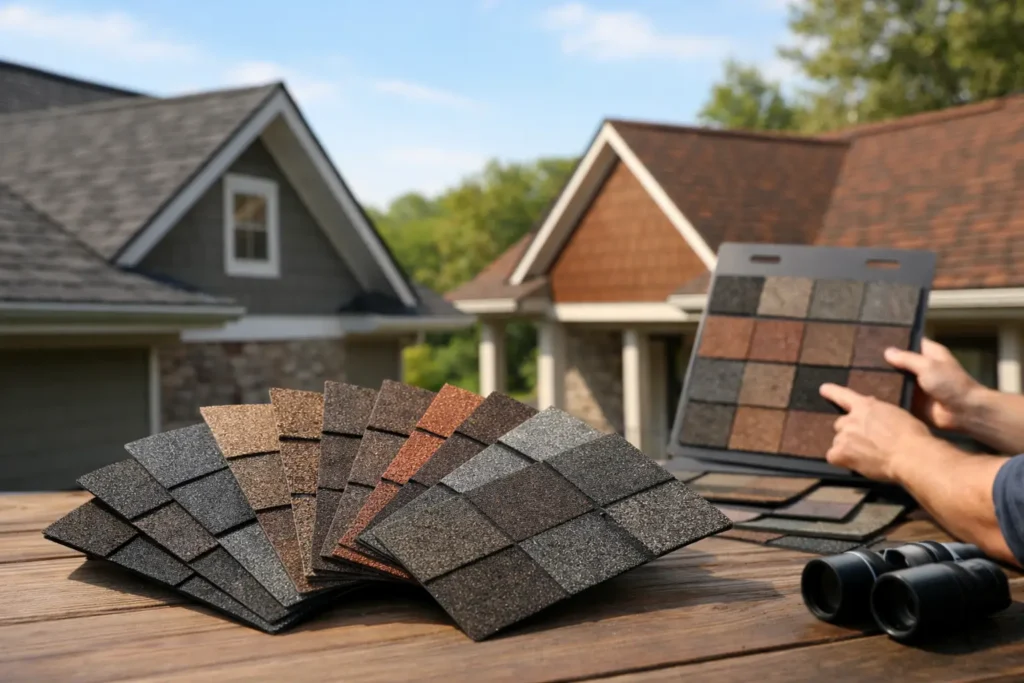
A roof color can make a well-kept home look finished or make every other exterior choice feel slightly off. TAMKO shingle colors give homeowners a broad range of neutral, warm, and high-contrast options, but the right choice is not simply the color that looks best on a small sample. It is the one that works with your siding, masonry, trim, sunlight, and long-term plans for the property.
For homeowners replacing an aging roof, color is one of the few decisions that remains visible every day for years. Taking a practical approach before installation helps prevent the common regret of choosing a color that looked right indoors but feels too light, too dark, too blue, or too brown once it is covering the entire roof.
Start With the Fixed Exterior Materials
The best place to begin is with the parts of your home that are not likely to change soon. Brick, stone, foundation veneer, permanent siding, and window trim all have undertones that should guide the roofing decision. A roof does not need to match these materials exactly, but it should look intentional beside them.
Red or rust-colored brick often works well with warmer brown, weathered wood, and blended earth-tone shingles. Gray stone and cool-toned siding can support charcoal, black, and cooler gray blends. Homes with tan vinyl siding or beige masonry generally have flexibility, but a gray-brown blend is often safer than a sharply blue-gray roof.
Look beyond the main color. Many bricks that appear red from the street include brown, charcoal, cream, or gray flecks. Pulling one of those secondary tones into the roof creates a coordinated look without making the exterior feel overly matched.
Watch for Warm and Cool Undertones
Two shingles may both be called gray, yet they can look completely different on a home. One may carry brown or taupe tones, while another may have a blue or slate cast. The same is true of black shingles, which can lean charcoal, brown-black, or deep blue-black depending on the blend.
This matters most when your siding has a clear temperature. Cream, ivory, tan, and warm beige usually pair more naturally with warm grays and brown-black blends. Crisp white, light gray, blue, and cool stone can handle a cooler charcoal or slate-inspired option. If the exterior has both warm and cool materials, a balanced weathered blend is often the better middle ground.
View TAMKO Shingle Colors Outside, Not Under Store Lighting
A printed brochure, phone screen, or showroom board is useful for narrowing the choices, but it should not make the final decision. Roofing colors change substantially in natural light. Morning sun can bring out warm highlights; a cloudy afternoon can make the same roof look flatter and darker; late-day light can emphasize red or gold tones you did not notice at first.
Ask to see a full-size sample or several actual shingles whenever possible. Take them outside and hold them against the siding, brick, and trim. View them from the curb as well as from a few feet away. Roofing is seen from a distance, where the blended granules read as one overall color rather than a collection of individual specks.
Also consider the direction your home faces. A front elevation that receives strong afternoon sun may make a medium gray look lighter than expected. A heavily shaded roof beneath mature trees can make the same shingle look darker and cooler. In Southwestern Pennsylvania, where overcast days, wooded lots, and changing seasons are common, this step is worth the extra time.
Decide How Much Contrast You Want
There is no single right contrast level. It depends on the style of the house, the roof shape, and whether you want the roof to blend in or stand out.
A dark roof on light siding creates a classic, defined look. It can make a simple ranch, cape, or farmhouse appear more grounded, and it gives white trim a clean outline. The trade-off is that dark roofs are visually prominent. On a home with multiple rooflines, dormers, or busy exterior details, a very dark color can make the roof feel heavier.
A medium brown, gray, or weathered blend is often more forgiving. These colors tend to soften transitions between brick, siding, and trim, and they can hide minor dirt, pollen, and staining better than very light shades. They are a practical choice for homeowners who want broad appeal without committing to a dramatic exterior contrast.
Lighter shingles can work well on certain homes, particularly where the siding, stone, and trim are all light or warm. Still, light roofing generally shows organic debris and discoloration more readily. Consider nearby trees, chimney soot, and the amount of shade before choosing the lightest available option.
Match the Color to the Home’s Style
The architectural style should influence the choice, but it does not have to limit it. A traditional colonial or two-story home often suits charcoal, black, weathered wood, or classic brown blends because those colors support a formal, balanced exterior. Farmhouses and country homes can handle warmer weathered tones, deep black, or blended grays depending on the siding and metal accents.
Ranch homes benefit from color choices that give the long roofline some definition. A darker roof can add contrast to light siding, while a dimensional blend can keep a large, low-pitched roof from looking flat. Homes with stone fronts often look strongest when the roof repeats a secondary stone color rather than the dominant face color.
For a commercial building, garage, or outbuilding near the home, consider the full property. The roof does not have to match every structure perfectly, but conflicting blacks, browns, and grays can make a property look pieced together. Coordinating the main undertone across visible buildings creates a cleaner result.
Consider Resale Without Designing for Everyone Else
If you plan to sell in the next few years, neutral TAMKO shingle colors are usually the safest choice. Charcoal, black, weathered gray, and brown blends have wide appeal because they work with many siding colors and allow future buyers to update trim or exterior paint more easily.
That does not mean every roof should be gray. If your brick, stone, or siding clearly favors a warm palette, forcing a cool gray roof onto the home can look less appealing than a well-chosen brown blend. Resale value comes from a roof that looks appropriate, professionally installed, and consistent with the property, not from following a color trend without context.
Confirm Availability Before You Fall in Love With a Color
Color selections can vary by shingle line, distributor inventory, and local availability. Before finalizing your project, confirm that your preferred color is available in the specific TAMKO product line that fits your budget and performance needs. Do not assume every color shown in a general brochure is stocked locally or offered in every shingle style.
It is also smart to verify whether matching ridge cap shingles, starter materials, and other visible accessories are available. A roof looks more complete when the finishing components coordinate with the field shingles. If a preferred shade would create delays or require substitutions, compare the practical alternatives before scheduling installation.
Avoid These Common Roof Color Mistakes
The most common mistake is selecting from a digital image alone. Screen brightness and photography can shift the appearance of a shingle dramatically. Another frequent mistake is matching the roof only to siding while ignoring brick, stone, or permanent trim.
Homeowners also sometimes choose an extreme color based on a nearby house. What looks sharp on a neighbor’s home may not suit your roof pitch, lot shade, exterior materials, or window color. Finally, do not choose based only on the condition of the old roof. A faded or stained roof may have changed your perception of what the house should look like.
A roofing conversation should include more than a color card. Bring a few exterior photos, identify materials you may replace later, and discuss how the home looks in sun and shade. At Tri County Door & Builders, local product guidance is most useful when it helps you narrow the options to a roof color that looks right on your property, not just on a sample board.
The best final check is simple: place your leading samples against the home, step back to the street, and give yourself a day or two before deciding. A roof is a long-term investment, and the right color should still feel right after the first impression has worn off.