

A new roof is not a purchase most property owners want to make twice. When comparing TAMKO versus Owens Corning shingles, the better choice usually comes down to your budget, the roof’s exposure to wind and weather, the look you want, and the quality of the installation. Both brands offer dependable asphalt shingle systems, but they approach value, design, and premium features a little differently.
For homes across Southwestern Pennsylvania, that distinction matters. Our roofs see snow, wind, heavy rain, temperature swings, and long stretches of shade that can encourage algae staining. A good shingle is only part of the answer. The right product needs to be matched with sound ventilation, proper underlayment, flashing, and installation practices.
TAMKO Versus Owens Corning Shingles at a Glance
TAMKO and Owens Corning are established American roofing brands with product lines ranging from economical architectural shingles to more feature-rich options. Neither is automatically right for every home.
TAMKO often appeals to homeowners who want a solid architectural shingle at a competitive material price. Its Heritage line is widely recognized, while higher-performance options such as Titan XT are designed for homeowners who place more emphasis on wind performance and installation features.
Owens Corning is known for architectural shingle lines such as TruDefinition Duration, which combine dimensional appearance with its SureNail reinforcement technology. The brand also offers a broad selection of colors and coordinating roofing components, which can be helpful when building a complete roof system.
The practical comparison is straightforward: TAMKO can be a strong value-focused choice, while Owens Corning is often selected for its established system approach, design options, and premium shingle features. The actual gap in price and performance depends on the exact product line, roof layout, and installation scope.
Price: Look Beyond the Bundle Cost
Shingle pricing is important, but material cost is only one part of a reroofing project. Tear-off, decking repairs, ice and water protection, underlayment, ventilation, flashing, disposal, and labor can make a major difference in the final number. A lower-priced shingle does not always create the lowest installed roof price, especially if one roof needs more repair work than another.
TAMKO is frequently considered when a homeowner needs dependable architectural shingles without paying for features they may not need. That can make it a sensible fit for rental properties, garages, outbuildings, and budget-conscious residential projects.
Owens Corning can cost more depending on the line selected, but pricing should be considered in light of the entire roofing package. A homeowner may decide that a specific color, enhanced wind rating, available warranty option, or trusted installation system is worth the difference.
Tri County Door & Builders is currently offering 30% off Owens Corning shingles, helping local customers avoid the Pittsburgh markup often added to roofing materials. For some projects, that promotion can narrow the price difference between product options considerably. Ask for a quote based on your roof’s actual measurements and needed components rather than comparing a single bundle price.
Wind and Weather Performance
Western Pennsylvania weather is a reason to pay close attention to shingle specifications. Wind does not affect every home the same way. A house on an exposed ridge, a farm property with open fields, or a roof with steep slopes and multiple valleys may need a different solution than a sheltered ranch home.
Owens Corning Duration shingles are commonly chosen for their SureNail technology, which uses a reinforced nailing area intended to help improve fastening performance. TAMKO Titan XT shingles also include features designed to support wind resistance and installation accuracy. Both brands have products with enhanced wind coverage when installed according to the manufacturer’s requirements.
That last point is not fine print. Wind ratings depend on the exact shingle, the number and placement of fasteners, deck condition, starter shingles, edge treatment, roof geometry, and local installation conditions. A high-performing shingle cannot make up for shortcuts in the roof system.
For snow and rain, the shingle is the outer layer of defense, not the only layer. Ice and water barrier in vulnerable areas, properly installed valley protection, correctly integrated flashing, and adequate attic ventilation all help reduce the chance of leaks and premature wear.
Color, Curb Appeal, and Architectural Style
A roof covers a large portion of your home. The color choice can either support the property’s appearance or make siding, brick, stone, and trim feel mismatched.
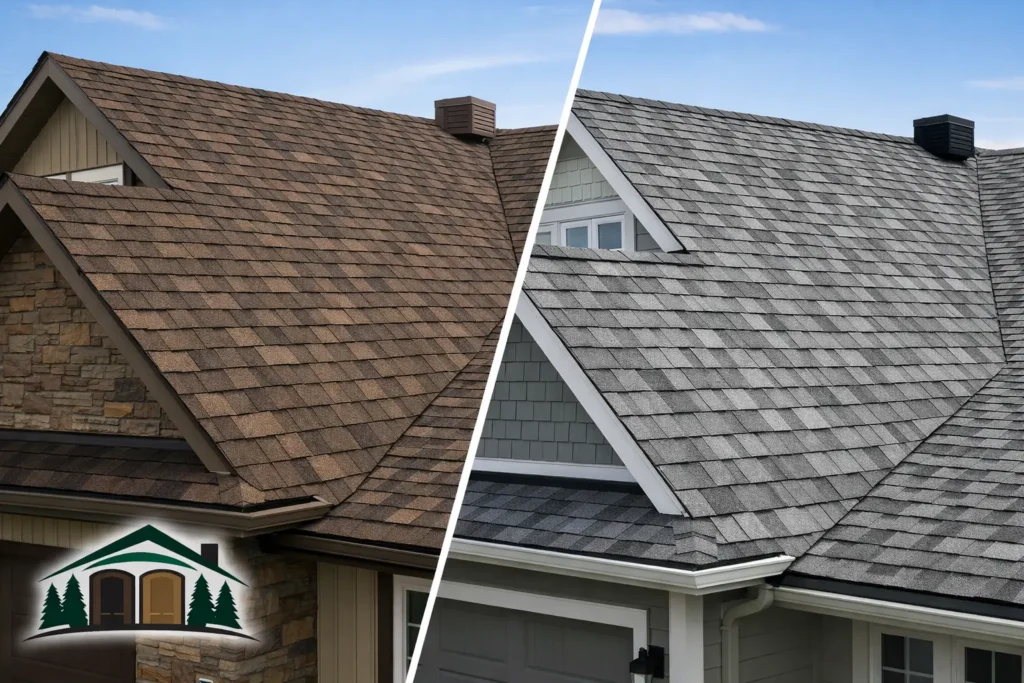
Owens Corning generally offers a wide palette across its architectural lines, making it a good option for homeowners who are particular about color blending. Its dimensional shingles can work well on homes where curb appeal is a major part of the project, including properties being prepared for sale.
TAMKO also offers a range of blended colors and architectural profiles that give a roof more depth than basic three-tab shingles. For many homeowners, the available TAMKO colors provide the look they need without requiring a premium-level material selection.
Before making a final decision, view full-size samples outdoors. A color that looks charcoal under indoor lighting can read blue, brown, or much lighter in direct sunlight. Also consider the roof’s direction and surrounding tree cover. A north-facing slope may look different from the front elevation even when the shingles are identical.
Warranties Need a Clear Reading
Warranty language should support your decision, not replace a good installation decision. Both TAMKO and Owens Corning offer manufacturer warranties that vary by product line and may include different levels of coverage for manufacturing defects, wind, algae resistance, and system components.
The terms matter. Some coverage may be limited after an initial period, some enhanced protection may require qualifying components, and certain warranty programs may require installation by an authorized contractor. Transferability, registration requirements, exclusions, and labor coverage should also be reviewed before signing a contract.
A trustworthy roofer should explain what warranty applies to the shingles being installed and what workmanship coverage they provide separately. Manufacturer coverage addresses the product under specified conditions. Workmanship coverage addresses the installation. They are not the same thing.
Which Shingle Is Better for Your Project?
Choose TAMKO when material value is a leading priority and the available color and performance level fit the property. It can be a practical choice for homeowners who want architectural shingles from a recognized manufacturer while keeping the project budget under control.
Choose Owens Corning when you value the particular look of its color line, want features found in products such as Duration, or prefer building a coordinated roofing system from one manufacturer. Current promotional pricing can also make Owens Corning especially compelling when the installed cost is close to a more economical alternative.
For either brand, consider upgrading the roof system when conditions call for it. Homes with complicated valleys, low-slope transitions, skylights, chimneys, exposed locations, or aging decking need more planning than a simple rectangular roof. The best shingle on the wrong roof system is still a compromised investment.
Is TAMKO lower quality than Owens Corning?
Not necessarily. The two brands have different product lines at different price points, so compare specific shingles rather than judging only by the name on the bundle. A higher-tier TAMKO product may be more appropriate than an entry-level option from another manufacturer, and the reverse can also be true.
Are architectural shingles worth the added cost?
For most residential reroofing projects, yes. Architectural shingles generally provide a more dimensional appearance than traditional three-tab shingles and are commonly available with stronger performance features. The value is especially noticeable on a visible roofline or a home you plan to keep for years.
Does the installer matter as much as the shingle brand?
Yes. Proper deck preparation, flashing, ventilation, fastener placement, and cleanup affect how the roof performs over time. Select a contractor who can explain the full scope of work, identify existing issues, and provide a written proposal that names the materials being used.
A roof quote should leave you feeling informed, not pressured. Compare the exact shingle line, the system components, the warranty details, and the installation scope. Then choose the roof that fits your property, your budget, and the weather it will face year after year.