




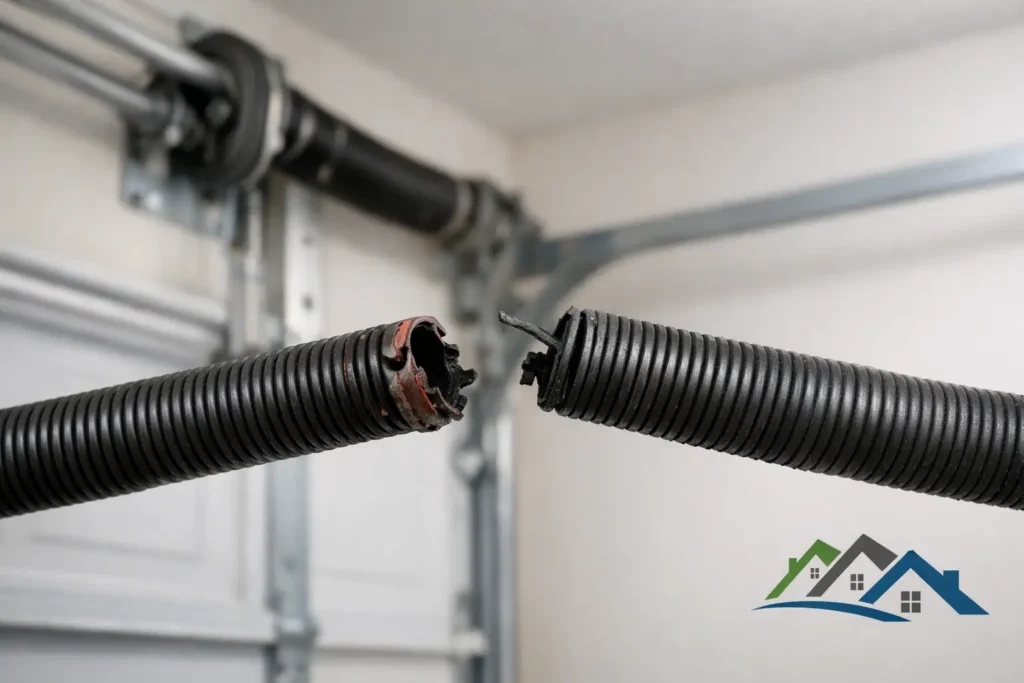
You usually know the moment a spring gives out. The garage door suddenly feels impossibly heavy, the opener strains, or you hear a sharp bang from the garage that sounds a lot bigger than the part that failed. If you are wondering what causes garage door springs to break, the short answer is wear. The real answer is usually a mix of age, use, weather, corrosion, and setup issues that build up over time.
Garage door springs do one hard job every day. They carry most of the door’s weight so the opener does not have to. When the springs are in good shape, the door opens smoothly and stays balanced. When they are worn or damaged, everything about the system starts working harder than it should.
What causes garage door springs to break over time?
Most spring failures are not random. They are the result of repeated stress. Every time the door opens and closes, the spring goes through a cycle of tension and release. Standard springs are built for a set number of cycles, and once that number is reached, failure becomes much more likely.
For a busy household, those cycles add up fast. A family that uses the garage as the main entrance may run through several cycles a day without thinking about it. Over years of daily use, the metal gradually weakens. Even a quality spring has a limit.
That is why spring breakage often seems sudden to the property owner, even though the actual cause has been developing for a long time. The spring may have looked fine from the outside, but the metal was already nearing the end of its service life.
Cycle life matters more than calendar age
People often ask how many years a garage door spring should last. That depends on usage more than the calendar. A spring on a lightly used detached garage may last much longer than one on a home where the garage door opens six or eight times a day.
This is also why two neighboring homes with similar doors can have very different repair timelines. One family may use the front door most of the time, while the other treats the garage like the main entry point. Same hardware, very different workload.
Rust and corrosion speed up spring failure
Rust is one of the biggest reasons springs wear out early. When corrosion forms on the coils, it creates extra friction as the spring expands and contracts. That friction increases stress on the metal and can shorten the life of the spring.
In Southwestern Pennsylvania, changing temperatures and moisture can be hard on metal components. Garages are not always climate controlled, and damp conditions can encourage corrosion, especially if the spring has not been maintained. Salt, humidity, and general exposure all make a difference.
A lightly rusted spring is not always an emergency, but it is a warning sign. Once corrosion starts, the spring is more vulnerable to cracking or snapping under normal use.
Cold weather can push a weak spring over the edge
A lot of spring failures happen in colder months, and that is not a coincidence. Low temperatures can make metal more brittle. If a spring is already worn, winter weather may be the thing that finally causes it to break.
Cold weather does not usually destroy a healthy spring by itself. More often, it exposes an existing weakness. That is why a door may seem fine in the fall and then fail on the first stretch of freezing mornings.
For homeowners and business owners dealing with Pennsylvania winters, this is one reason seasonal inspection matters. A spring that is close to failure in mild weather is not likely to improve once temperatures drop.
Poor spring sizing creates extra strain
Not every broken spring failed because it was simply old. In some cases, the wrong spring was installed in the first place. Garage doors need springs that match the door’s weight, height, and track setup. If the spring is undersized, oversized, or otherwise mismatched, the system may never operate correctly.
A spring that is not properly matched can wear out faster because it is carrying the wrong amount of tension. The opener may also struggle, and the door may feel unbalanced or jerky during operation. Sometimes the problem starts after a previous repair where the cheapest available spring was used instead of the right one.
This is one of those areas where doing it right the first time matters. A lower upfront price does not save money if the spring fails early and puts added stress on the rest of the door system.
Lack of maintenance adds preventable wear
Garage doors do not need constant attention, but they do benefit from occasional maintenance. Springs, rollers, hinges, and tracks all work together. When one part is neglected, other parts can start taking on more stress.
A spring that is dry, dirty, or exposed to corrosion may wear faster than one that is periodically inspected and serviced. Balance also matters. If the door is out of alignment or not moving evenly, the springs can be forced to work harder than they were designed to.
Maintenance does not stop eventual spring failure forever. Springs are wear items. But regular service can help catch problems early and reduce the kind of extra strain that shortens lifespan.
The opener can hide a spring problem for a while
One reason spring issues go unnoticed is that the opener keeps the door moving until the problem gets worse. People assume the motor is doing all the lifting, but the springs are supposed to handle most of the weight. The opener is really there to guide the motion.
If a spring weakens, the opener may compensate for a while. That can make the system seem functional even as the strain increases. Then one day the spring breaks, and the opener suddenly cannot manage the load.
This is why a garage door that looks like an opener problem often turns out to be a spring problem instead. If the opener sounds strained, the door lifts unevenly, or it reverses unexpectedly, the springs should be checked.
When one spring breaks, the other may not be far behind
Many double garage doors use a two-spring system. If one spring breaks, the other spring has usually gone through nearly the same number of cycles. Even if it has not snapped yet, it may be close.
That is why professionals often recommend replacing both springs at the same time. It is not about selling extra parts. It is about preventing a second failure soon after the first and restoring proper balance to the system.
There are cases where only one spring needs replacement, especially on a newer system. But when both springs are the same age, replacing them as a pair is often the more practical option.
Warning signs before a garage door spring breaks
Some springs fail without much warning, but many doors give clues ahead of time. The door may feel heavier than usual. It may open a few inches and stop, slam shut, or sit unevenly when raised. You might notice gaps in the spring, squeaking, or a door that no longer stays in place when opened manually.
These signs do not always mean the spring will break tomorrow, but they do mean the system needs attention. Waiting too long can turn a smaller repair into a more urgent service call.
If the spring has already broken, do not try to force the door open unless it is absolutely necessary and you understand the risks. Garage doors are heavy, and spring systems are under significant tension. This is not a place for guesswork.
Why spring repair is not a casual DIY job
People who are comfortable with home repairs sometimes assume a broken spring is just another hardware swap. It is not. Torsion and extension springs store a large amount of energy, and improper handling can lead to serious injury or property damage.
There is also the issue of correct sizing, balancing, and safe adjustment. Replacing a spring is not just about getting the door moving again. It is about making sure the entire system operates the way it should afterward.
That is why most property owners are better served by calling a qualified garage door technician. A proper repair should include checking the spring type, door balance, hardware condition, and opener strain, not just replacing the broken part and leaving.
A broken spring rarely comes out of nowhere. It is usually the result of years of use, weather exposure, rust, or a door system that has been working harder than it should. If your garage door is showing signs of trouble, it is worth addressing it before a small part failure turns into a bigger interruption. For homeowners and businesses that value dependable service, practical advice, and repairs done right, that early call can save both time and money.