




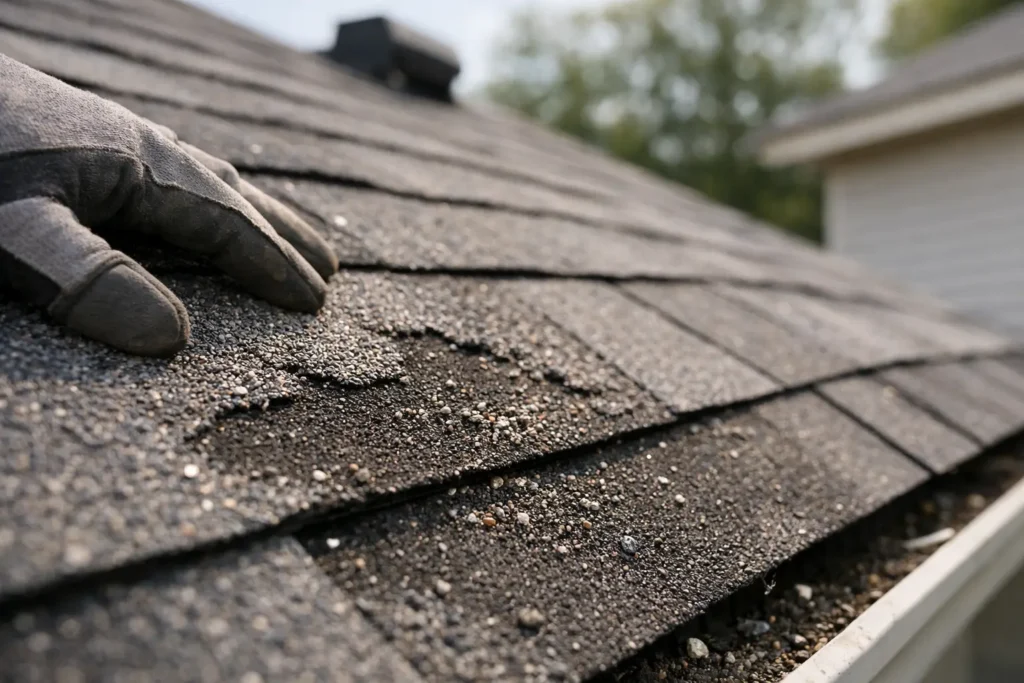
A few loose granules in a gutter can be normal. A thick, sand-like layer after every rainstorm is not. Homeowners often ask what causes shingle granule loss because those small mineral particles are more than a cosmetic coating. They protect asphalt shingles from sunlight, weather, and everyday wear. Knowing the difference between normal shedding and a developing roofing problem can help you plan repairs before a small concern becomes a leak.
What Are Shingle Granules Supposed to Do?
Asphalt shingles are made with a waterproof asphalt layer, a reinforcing base, and a surface layer of mineral granules. Those granules give shingles their color and provide protection against ultraviolet rays, rain, snow, and light physical impact. Without that protective layer, the asphalt beneath can dry out, crack, and age faster.
Granules also help shingles handle Southwestern Pennsylvania weather. Our roofs see strong summer sun, heavy rain, freeze-thaw cycles, wind, and snow loads. A roof does not need to look damaged to be losing protection, which is why checking gutters, downspouts, and the ground around the home matters.
What Causes Shingle Granule Loss?
Granule loss has several causes. Some are part of a roof’s normal aging process, while others point to installation issues, storm damage, or a shingle product nearing the end of its service life. The pattern and amount of loss are usually more telling than a few individual granules.
Normal shedding on a new roof
New asphalt shingles can release excess granules left over from manufacturing and installation. You may notice them in gutters during the first few heavy rains after a roof replacement. This is usually temporary and should not leave obvious bare spots on the shingles.
If large amounts continue to collect for months, or shingles appear patchy from the ground, it is worth having the roof reviewed. A quality installation should give you confidence that the roofing system is performing as intended.
Age and long-term weather exposure
Most roofs gradually lose granules as they age. Years of sunlight, rain, temperature changes, and winter conditions slowly wear down the surface. Asphalt becomes less flexible over time, making it easier for granules to break loose.
This process can speed up on roof areas that get the most direct sunlight or where water regularly sits longer after a storm. South- and west-facing slopes often show wear first, but every home is different based on tree cover, roof pitch, ventilation, and drainage.
Hail and wind damage
Hail can knock granules loose even when shingles are not punctured. The damage may look like dark, circular bruises or scattered spots where the shingle surface has been disturbed. Granules may also collect heavily in gutters shortly after a hailstorm.
High winds create a different problem. Wind can lift, bend, or flutter shingles, loosening granules along exposed edges and tabs. Sometimes the shingle settles back into place, leaving the damage easy to miss from the ground. After a significant storm, a professional inspection can identify whether the roof suffered a cosmetic issue or damage that could shorten its lifespan.
Poor attic ventilation
A roof is a system, not just a layer of shingles. When the attic is too hot or poorly ventilated, heat can build up beneath the roof deck. That excess heat can bake shingles from below, causing the asphalt to age prematurely and release granules sooner.
In winter, poor ventilation can also contribute to uneven roof temperatures and ice dams. When snow melts, refreezes at the eaves, and forces water backward under shingles, the roof can be exposed to conditions it was not designed to handle. Proper insulation and ventilation work together to keep attic temperatures more consistent and protect the roofing system.
Improper installation or mismatched materials
Installation details matter. Shingles need the correct underlayment, fastener placement, flashing, starter strip, and ventilation setup to perform well. If shingles are nailed too high, too low, or overdriven, they may be more vulnerable to wind damage. Incorrect installation can also affect how the shingles seal and shed water.
Roof layers matter as well. Installing new shingles over an old roof may be allowed in certain situations, but it is not always the best choice. Existing unevenness, trapped heat, or hidden deck problems can reduce the lifespan of the new shingles. A contractor should evaluate the condition of the roof deck and the entire system before recommending the right approach.
Pressure washing and aggressive cleaning
Pressure washing is one of the fastest ways to remove granules from asphalt shingles. The force can strip away the protective surface, even if the roof looks cleaner for a short time. Harsh scrubbing and some chemical treatments can also damage shingles or shorten their life.
Moss, algae, and staining should be handled with roofing-safe methods. The right cleaning method depends on the roof’s condition, the type of growth present, and the shingle manufacturer’s guidance. If a roof is already losing granules heavily, cleaning may not solve the real problem.
Foot traffic and physical damage
Walking on a roof can dislodge granules, particularly in hot weather when shingles are softer, or in cold weather when they are more brittle. Necessary access for chimney, siding, skylight, or gutter work should be limited and performed carefully.
Falling branches, animal activity, and debris dragged across the roof can also scrape granules away. Trim overhanging limbs where practical, especially branches that rub against the roof during windstorms.
When Is Granule Loss a Warning Sign?
A small amount of loose material is not automatically a reason to replace a roof. The concern rises when granule loss appears alongside visible aging or water-management issues. Look for dark or shiny bare spots, curled or cracked shingles, bald areas along shingle edges, exposed fiberglass mat, loose shingles, or piles of granules at downspout outlets.
Inside the home, water stains on ceilings, damp attic insulation, musty odors, or visible daylight in the attic deserve prompt attention. Granule loss does not always mean a leak has started, but it can mean the roof has less protection against the next severe storm.
It also matters whether the loss is isolated or widespread. A few damaged shingles from a branch may be repairable. Broad, consistent loss across multiple roof slopes often indicates age-related wear and may make replacement the more practical long-term investment.
What Homeowners Should Do Next
Start from the ground. Check gutters after heavy rain, look for unusually large collections of granules, and scan roof slopes with binoculars if needed. Avoid climbing onto a steep, wet, icy, or visibly damaged roof. What looks like a minor issue from a ladder can become a serious safety risk quickly.
Keep gutters clear so water can move away from the roof edge. Clear loose branches and leaves from valleys when it can be done safely, and make sure downspouts direct water away from the foundation. These basic steps help reduce moisture-related stress on the roofing system.
When you see bald spots, storm damage, repeated granule buildup, or signs of a leak, schedule a professional roof inspection. An experienced roofer can assess the shingles, flashing, roof deck, ventilation, and drainage rather than focusing only on the visible surface. That complete evaluation is especially valuable before committing to a repair or replacement.
For homeowners weighing replacement, shingle selection should be based on more than color and price. Consider the roof’s pitch, exposure to wind and sun, attic ventilation, warranty requirements, and the quality of installation. Tri County Door & Builders helps property owners choose dependable roofing materials that fit their home and budget, including Owens Corning shingles currently available at 30% off to help customers avoid the Pittsburgh markup.
A roof does not need to be leaking before it needs attention. Addressing unusual granule loss early gives you more options, more time to plan, and a better chance of protecting the home beneath it.