




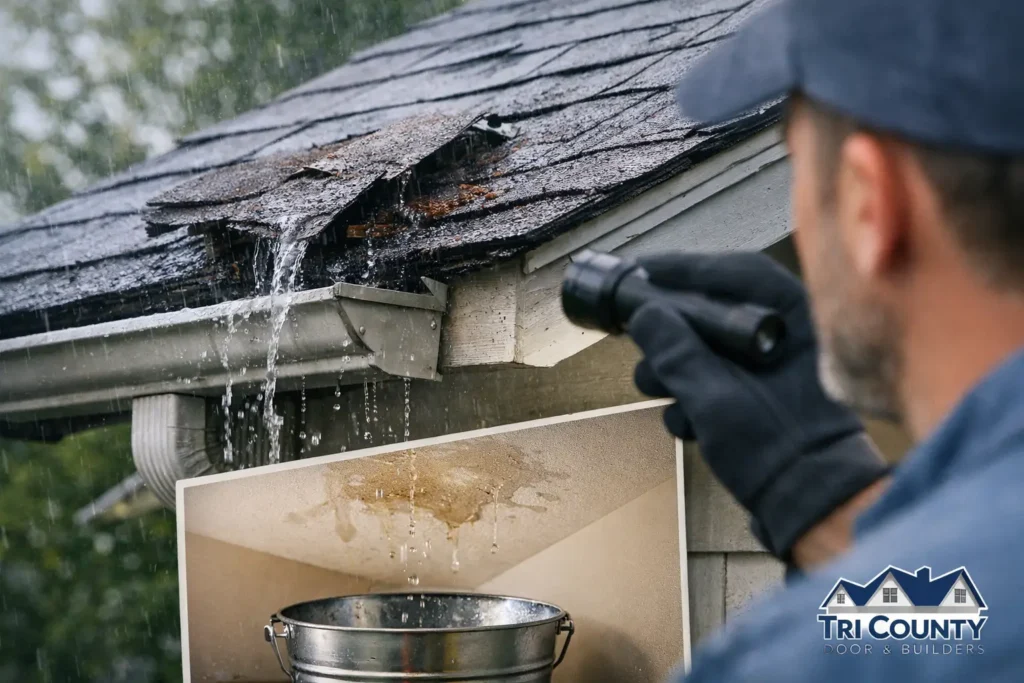
A roof leak usually shows up at the worst possible time – during a hard rain, after a freeze-thaw cycle, or when you finally notice a stain spreading across the ceiling. If you’re asking, why is my roof leaking, the answer is not always as simple as a few missing shingles. Water travels, and the spot where you see damage inside is often not the place where the roof actually failed.
That is what makes roof leaks frustrating for homeowners, business owners, and property managers alike. The good news is that most leaks follow a pattern. Once you know the likely causes, you can act faster, limit interior damage, and make a smarter decision about repair versus replacement.
Why is my roof leaking even if it looks fine?
One of the biggest misconceptions about roofing is that if the roof looks mostly intact from the ground, it must be in good shape. In reality, small failures can let in a surprising amount of water. A cracked boot around a vent pipe, lifted flashing near a chimney, exposed fasteners on a metal panel, or a single damaged shingle tab can all open the door to leaks.
Age matters too. Roofing materials wear down gradually. Granules come off asphalt shingles, sealants dry out, metal fasteners loosen, and flashing can separate over time. You may not notice anything dramatic until a storm pushes the roof past the point where it can still shed water properly.
Weather in Southwestern Pennsylvania can speed that process up. Heavy rain, wind, ice, snow load, and repeated freezing and thawing all put stress on roofing systems. A roof that made it through one season without a problem may start leaking the next if underlying weak spots were already developing.
The most common causes of a leaking roof
In many cases, leaks come back to flashing. Flashing is the material installed around roof penetrations and transitions, including chimneys, valleys, skylights, dormers, and wall intersections. These are the vulnerable points where water is naturally directed or where the roof surface is interrupted. If flashing is bent, rusted, loose, or poorly installed, water can work underneath the roofing materials.
Damaged or missing shingles are another frequent cause. Wind can lift shingles and break their seal. Hail can bruise them. Older shingles can curl, crack, or lose enough granules that they no longer protect the roof deck well. When that happens, water can seep beneath the surface and start affecting underlayment and decking.
Roof valleys deserve special attention. A valley handles a high volume of runoff because it is where two roof slopes meet. If debris builds up there, or if the valley materials have worn out, water can back up and find its way into the structure.
Plumbing vent boots are a smaller detail that cause a lot of trouble. These boots seal around vent pipes that come through the roof. The rubber collar can crack from age and sun exposure, and once it does, water can enter around the pipe during rain.
For metal roofing, leaks often come from seams, fasteners, and flashing details rather than the panel field itself. A quality metal roof can last a long time, but like any system, it depends on proper installation and maintenance. Exposed fasteners may back out. Washers can fail. If the roof was installed with poor alignment or inadequate sealing at penetrations, those weak points usually show up before the panels themselves wear out.
Sometimes the problem is not the roof covering
If you are wondering why is my roof leaking, it is worth looking beyond shingles or metal panels. Gutters and drainage play a major role in roof performance. When gutters clog, water can back up under the roof edge. In winter, that can contribute to ice damming, where melted snow refreezes at the eaves and forces water back beneath the roofing materials.
Attic ventilation and insulation can also contribute to leaks or leak-like symptoms. Poor ventilation can create condensation that drips inside and gets mistaken for a roof leak. Inadequate insulation can increase the chance of uneven roof temperatures and ice dams. This is one of those situations where the fix is not always on top of the roof. Sometimes the real issue is inside the attic system.
That is why a proper inspection matters. Treating every interior stain as a simple shingle problem can lead to repeat leaks and wasted money.
Where roof leaks usually appear inside
Ceiling stains are the most obvious sign, but they are not the only one. You may notice peeling paint, damp drywall, bubbling texture, moldy smells, wet insulation, or discoloration around window trim and upper walls. In commercial or agricultural buildings, leaks may show up as dripping around fasteners, damp purlins, rust, or wet spots along seams.
The visible water mark can be misleading. Water often enters near one part of the roof, runs along decking or framing, and then appears several feet away. That is why spot repairs based only on the indoor stain can miss the actual source.
Leaks around chimneys, skylights, and vent penetrations are especially prone to this kind of misdirection. The leak may seem random inside, but outside, it often traces back to a failed detail.
What to check first when your roof starts leaking
Start with safety. If water is actively coming in, protect floors, furniture, inventory, or equipment, and relieve any bulging ceiling areas carefully if water is pooling. Then try to document what you are seeing. Note when the leak appears, whether it only happens during wind-driven rain, and if it gets worse after snow or ice.
From the ground, look for obvious signs such as missing shingles, bent flashing, sagging gutters, tree damage, or debris buildup. If you can safely inspect the attic, look for wet insulation, darkened wood, water trails, or daylight coming through the roof boards. Those clues help narrow down the source.
What you should not do is climb onto a wet or storm-damaged roof without proper equipment and experience. Temporary tarping has its place, but so does knowing when a roof is unsafe to walk.
Repair or replacement depends on the bigger picture
Not every leak means you need a full roof replacement. If the roof is relatively new and the issue is isolated to flashing, a vent boot, or a limited section of storm damage, a targeted repair may make sense. That is often the most cost-effective route when the rest of the roofing system is still sound.
On the other hand, repeated leaks usually point to broader wear. If the roof is nearing the end of its service life, if multiple areas are failing, or if the decking has started to rot, patching one spot can turn into a cycle of temporary fixes. In that case, replacement often saves money over time and protects the building better.
Material choice matters here too. Homeowners may prefer architectural shingles for appearance and value, while some agricultural, garage, or commercial structures benefit from metal roofing for durability and low maintenance. It depends on the building, the budget, and how long you plan to keep the property.
For property owners weighing that decision, it helps to work with a local supplier and installer that knows how roofs perform in this region. Companies like Tri County Door & Builders see the same weather patterns, ventilation issues, and installation failures that affect homes and buildings across this part of Pennsylvania, so the diagnosis tends to be more practical and less guesswork.
Why quick action matters
A small leak rarely stays small. Water damage spreads into insulation, drywall, framing, ceilings, and sometimes electrical systems. Mold risk increases. In pole buildings, garages, and commercial spaces, leaks can also damage tools, equipment, products, and stored materials.
There is also the issue of timing. It is easier and usually cheaper to address a roof problem before the next major storm exposes it further. Waiting can turn a manageable repair into structural work, interior restoration, or a full replacement that could have been delayed with earlier intervention.
If your roof is leaking after a storm, after ice buildup, or seemingly for no clear reason, the best next step is a professional inspection that looks at the full system – roofing material, flashing, drainage, ventilation, and attic conditions. That is how you get an answer that actually solves the problem.
When a roof starts letting water in, the real goal is not just stopping the drip you see today. It is fixing the cause in a way that protects your home or building through the next season, the next storm, and the years after that.