




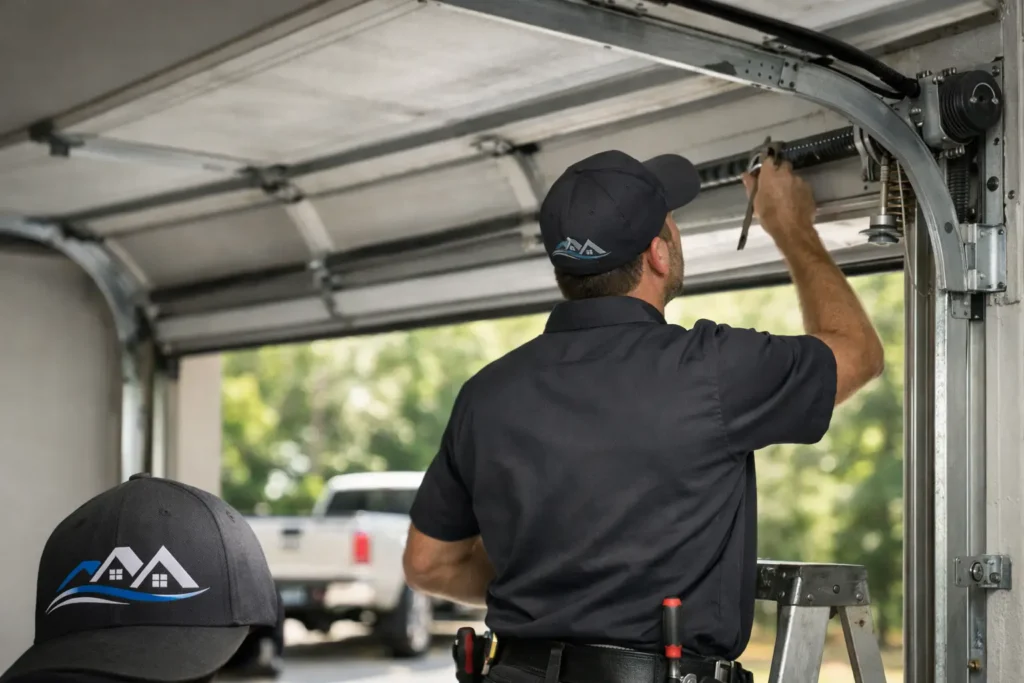
A garage door that sticks halfway open at 6:30 in the morning is not a minor inconvenience. It can leave your car trapped, your building unsecured, and your day behind schedule before it even starts. That is why good garage door service is not just about showing up fast. It is about finding the real cause, fixing it safely, and making sure the same problem does not come back a few weeks later.
For homeowners, farmers, small business owners, and property managers, garage doors do a lot of heavy lifting. They protect vehicles, tools, inventory, equipment, and access points you use every day. When one starts acting up, the right response depends on what failed, how old the system is, and whether a repair still makes financial sense.
What garage door service should actually include
A lot of people think of garage door service as a quick spring replacement or track adjustment. Sometimes that is all it takes. Often, though, the visible problem is only part of the story.
A door that will not close evenly may have worn rollers, a bent track, a cable issue, or an opener setting that is out of adjustment. A loud door may need lubrication, but it could also be warning you about failing bearings, loose hardware, or spring wear. If a technician only treats the symptom, you may get a temporary improvement without solving the underlying issue.
A thorough service call should look at the full operating system. That includes springs, cables, rollers, hinges, tracks, opener function, safety sensors, weather seal, panel condition, and overall balance. On commercial and agricultural buildings, it also means looking at cycle demand, door size, wind exposure, and whether the hardware matches the way the door is being used.
That broader approach matters because garage doors are not one-part machines. They are systems under tension. When one component starts to fail, it often puts extra strain on the rest.
Common problems that call for garage door service
Some issues are obvious. Others start small and get expensive when they are ignored.
Broken springs are one of the most common service calls, and for good reason. Springs carry the weight of the door, so when one breaks, the opener may struggle or stop working altogether. The door can feel unusually heavy, lift unevenly, or slam shut. This is not a safe DIY repair.
Cables are another major trouble spot. Frayed or off-drum cables can make a door crooked, unstable, or stuck in place. Rollers wear down over time, especially on doors that see constant use. Tracks can shift out of alignment from impact, loose mounting, or gradual wear. Openers can fail electrically, mechanically, or simply because they are no longer sized right for the door they are lifting.
Then there are the smaller service needs that still matter. Weather seals crack. Hinges loosen. Safety sensors get bumped out of line. Remote systems stop responding consistently. These are not always urgent on day one, but they can turn into bigger problems if the door keeps operating under strain.
In Southwestern Pennsylvania, weather adds another layer. Temperature swings, moisture, and seasonal freeze-thaw conditions can affect metal components, seals, and door movement. A system that seemed fine in mild weather can start binding or failing when winter sets in.
Repair or replacement depends on more than age
People often ask the same question first – should I fix this door or replace it?
The honest answer is that it depends. Age matters, but not by itself. A well-built door with a sound structure may be worth repairing if the problem is limited to springs, rollers, or opener components. On the other hand, if the door has multiple failing parts, damaged panels, poor insulation, or repeated service history, replacement may be the smarter investment.
Cost is part of the equation, but so is reliability. If a repair gets you back up and running for a reasonable price and the rest of the system is in good shape, repair usually makes sense. If you are spending money every few months on an older door that still performs poorly, replacement can save money over time.
Appearance and efficiency matter too. For homeowners, a new garage door can improve curb appeal and insulation. For commercial or farm use, the decision may come down to durability, clearance needs, security, and downtime. A busy building with frequent traffic may need heavier-duty hardware or a different door configuration than what was installed years ago.
This is where local, practical guidance matters. A good provider should help you compare options based on real use, not push the most expensive route by default.
Why proper diagnosis matters more than a fast guess
There is a difference between a quick repair and a correct repair.
If a garage door opener burns out because the springs were worn and the door was too heavy to lift, replacing the opener alone does not solve the full problem. If rollers keep wearing out because the track is slightly twisted, new rollers are only a short-term fix. If the door keeps reversing because the floor shifted and sensor alignment was never addressed, the problem will keep returning.
That is why diagnosis matters. Good garage door service starts with asking how the problem showed up, how often the door is used, whether there were recent impacts or power issues, and whether the system has had repeat failures before. It also means testing the door manually, checking balance, inspecting wear points, and confirming safety features work as they should.
That extra attention saves time and money because it reduces repeat calls. It also helps prevent avoidable safety risks.
Residential and commercial needs are not the same
A lot of service companies talk about garage doors like every building uses them the same way. That is not realistic.
A residential garage door may open a handful of times per day. A commercial service bay, storage building, or farm structure may cycle far more often and under harder conditions. Door size, insulation needs, opener type, hardware grade, and maintenance schedule should reflect that difference.
For residential customers, priorities often include quiet operation, appearance, insulation, and dependable daily use. For commercial and agricultural properties, the bigger concerns are usually durability, security, speed, and minimizing interruptions. The right repair or replacement plan should match the building and the workload.
That is one reason many property owners prefer working with a company that understands both products and installation, not just basic repairs. If a part fails repeatedly, it may be because the original setup was not the best fit in the first place.
What to expect from a dependable service provider
When you schedule garage door service, you should expect clear communication and straight answers. That means someone explains what failed, what can be repaired, what should be monitored, and what replacement would cost if repair is no longer the smart choice.
You should also expect practical recommendations. Not every door needs to be replaced. Not every problem should be patched just to get one more season out of it either. The right advice usually lands somewhere in the middle – fix what is worth fixing, replace what is worn beyond reason, and choose parts that match the demands of the building.
Dependability also shows up after the repair. The door should operate smoothly, the safety features should be tested, and you should know what signs to watch for going forward. If you are in a region like Fayette, Somerset, or Westmoreland County, local experience is a real advantage because weather, terrain, and building types all influence how these systems wear over time.
Tri County Door & Builders has built its reputation on that kind of straightforward service – helping customers get the right solution for the property instead of forcing a one-size-fits-all answer.
When to call before the problem gets worse
You do not need to wait for a complete breakdown to schedule service. In fact, calling earlier usually gives you more repair options and lowers the chance of collateral damage.
If your door is getting louder, moving unevenly, hesitating, reversing unexpectedly, or showing visible wear on cables and rollers, it is time to have it checked. The same goes for doors that feel heavier than usual when operated manually or openers that suddenly seem strained.
Those warning signs rarely fix themselves. More often, they mean a part is nearing failure and putting added stress on the rest of the system. Catching that early can mean a simpler repair instead of a larger replacement.
A garage door is one of the hardest-working moving parts on most properties. Give it the same attention you would any other critical system, and it will usually return the favor with safer, more reliable operation when you need it most.