



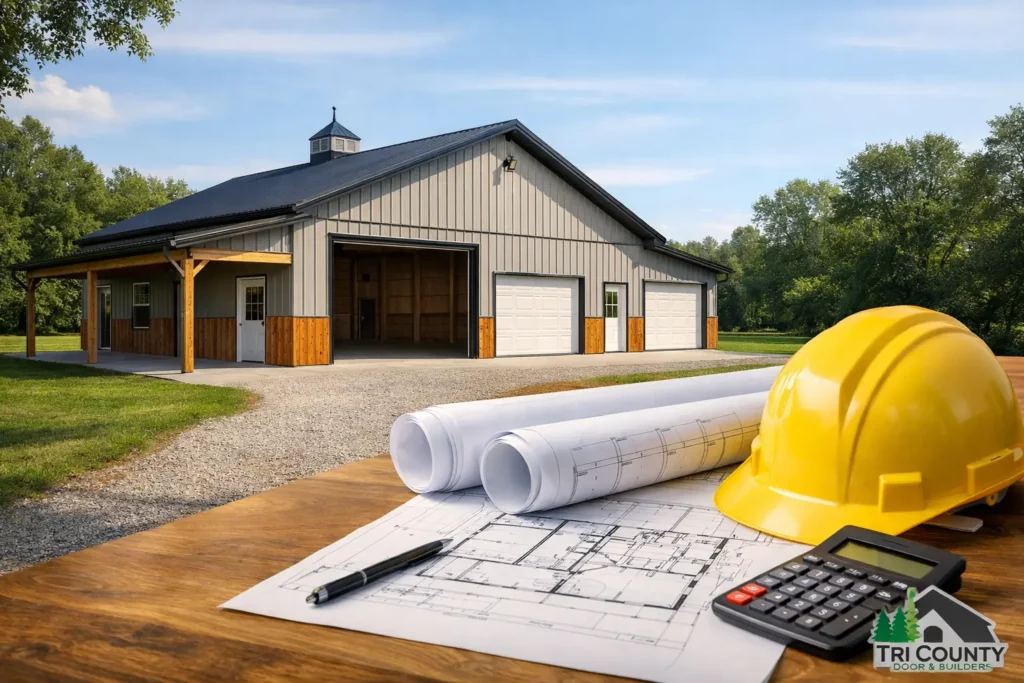
A pole barn usually looks simple from the road. Four walls, a roof, a big door, done. But once you start pricing one for your property, the questions stack up fast. This pole barn buyer guide is built to help you sort through the decisions that actually affect cost, durability, and day-to-day use – before you spend money on the wrong building.
For some buyers, a pole barn is a place to store equipment and keep it out of the weather. For others, it is a workshop, a garage, a horse barn, a retail storage space, or the shell for a future barndominium. The right plan depends on how you will use it five years from now, not just what you need this month.
What a good pole barn buyer guide should help you answer
A useful pole barn buyer guide should do more than tell you pole buildings are affordable. It should help you answer the practical questions that matter on your land and within your budget. How large should the building be? What kind of roof and siding make sense in Western Pennsylvania weather? Should you buy a kit, supply your own labor, or hire a contractor for a turnkey job?
That is where many buyers get tripped up. They start by comparing price per square foot, when the bigger value comes from matching the structure to the job. A low upfront number can get expensive if the building is too short for your equipment, too narrow for safe access, or underbuilt for wind, snow load, and years of use.
Start with use, not just size
The first decision is not dimensions. It is purpose. A machinery building, a hobby shop, a horse barn, and a business storage building may all be called pole barns, but they do not need the same layout.
If you are storing tractors, trailers, or work trucks, clearance matters as much as square footage. Door height, truss design, and interior bay spacing all affect whether the building actually works. A farmer may need quick drive-through access. A homeowner may care more about organized storage, lighting, and a clean-looking exterior that fits the property. A small business owner might need room for inventory, service vehicles, or future expansion.
It is smart to think through traffic patterns before you settle on a footprint. Consider how vehicles enter, turn, unload, and exit. Also think about what else may end up inside over time. Most building owners fill space faster than expected.
Choosing the right size without overbuilding
Bigger is not always better, but building too small is one of the most common mistakes. Adding length or width during the planning stage is usually far more cost-effective than trying to expand after the building is complete.
That said, every extra foot adds cost in materials, site work, and concrete if you are pouring a slab. The goal is to build for realistic use with a little room to grow. If your current equipment barely fits on paper, that is usually a sign to step up in size.
Height deserves extra attention. Buyers often focus on floor space and forget how much wall height affects usability. Overhead doors, lifts, stacked storage, and larger machinery all depend on having enough vertical clearance. If you think you may eventually own a taller trailer, camper, or piece of equipment, plan for it now.
The site can change the budget fast
A flat, accessible building site is easier and cheaper to develop than one with drainage issues, slope, poor soil conditions, or limited truck access. Before you get too far into pricing, look at what the site needs to be ready.
Grading, fill, excavation, drainage control, and stone base work can move the budget more than many first-time buyers expect. In some cases, the least expensive building package is not the least expensive project once the site is factored in.
Local codes and permit requirements also matter. Snow load, wind exposure, setbacks, and intended use can affect design and approvals. This is one reason local guidance has real value. In places like Fayette, Somerset, and Westmoreland counties, weather and terrain are not afterthoughts. They should shape the building from the beginning.
Materials matter more than the brochure suggests
Not all pole buildings are created equal, even if two quotes look similar at first glance. Post size and treatment, truss design, metal gauge, fasteners, roof system, and trim details all influence long-term performance.
A lower price may reflect lighter materials or fewer features, not better buying. That does not mean every buyer needs the highest-spec option available. It does mean you should understand what is included and what is not.
Roofing and siding deserve careful comparison because they take the brunt of weather exposure. Good metal panels, proper underlayment choices where applicable, quality trim installation, and attention to ventilation can make a major difference in service life. If appearance matters, color choices and panel profiles are part of the equation too, but they should come after performance.
Doors and access are where function shows up
A pole barn can have a strong frame and still be frustrating to use every day if the doors are wrong. Overhead doors, slider doors, entry doors, and window placement all affect convenience, security, and workflow.
For equipment storage, you need to account for both width and turning clearance. For workshops, separate entry doors can reduce wear on larger openings and make everyday access easier. For commercial use, delivery patterns may shape where doors belong and how large they should be.
Insulation also enters the conversation here. If the building will be heated, partially conditioned, or used as a workspace in winter, plan the envelope correctly from the start. Retrofitting insulation later is possible, but it is rarely as efficient or as clean as designing for it upfront.
DIY kit or installed building?
This is one of the biggest buying decisions, and the honest answer is that it depends on your experience, schedule, tools, and tolerance for project management.
A DIY kit can save money if you have the skills, labor, and time to do the job right. It can be a strong fit for contractors, experienced builders, and hands-on property owners who understand framing, layout, and site coordination. But savings disappear quickly if mistakes lead to delays, material waste, or rework.
A professionally installed building costs more upfront, but it can reduce risk, shorten the timeline, and simplify the process. That matters when weather is a factor, when the building has a more complex use case, or when you simply want accountability from start to finish. Tri County Door & Builders works with both materials buyers and customers who want expert installation, which is often the difference between a stressful project and a manageable one.
Budgeting the whole project, not just the shell
When buyers ask what a pole barn costs, they are usually asking about the package price. The better question is what the complete project will cost.
That total may include site prep, permits, engineered plans, delivery, labor, concrete, electrical work, insulation, gutters, doors, windows, interior liner panels, and any finish work tied to the intended use. If the building is for agricultural storage, the finish level may stay basic. If it is a workshop or a business space, the scope can grow quickly.
This does not mean you need every upgrade on day one. It means you should budget with open eyes. Some features are easy to add later. Others are much cheaper to include during the initial build.
Questions to ask before you sign anything
Before choosing a supplier or builder, ask what is included in the quote and what assumptions were made. Confirm structural specs, door sizes, panel quality, trim, site responsibilities, lead times, and whether permits or engineering are part of the package.
It also helps to ask how the building is being tailored to your actual use. If the conversation stays generic, that is a warning sign. A good provider should ask about your equipment, your site, your timeline, and how you expect the building to serve you over time.
Price matters. So does service after the sale. If there is a problem with materials, installation, or fit, you want a company that answers the phone and stands behind the work.
Buy for long-term value
A pole barn is not just another outbuilding purchase. It is an investment in how your property works. When planned well, it protects equipment, creates usable space, improves efficiency, and adds practical value for years.
The best choice is rarely the cheapest quote or the biggest structure. It is the building that fits your property, your workload, and your budget without cutting corners that will cost you later. If you take the time to ask better questions now, you will end up with a building that works hard from day one and still makes sense years down the road.