




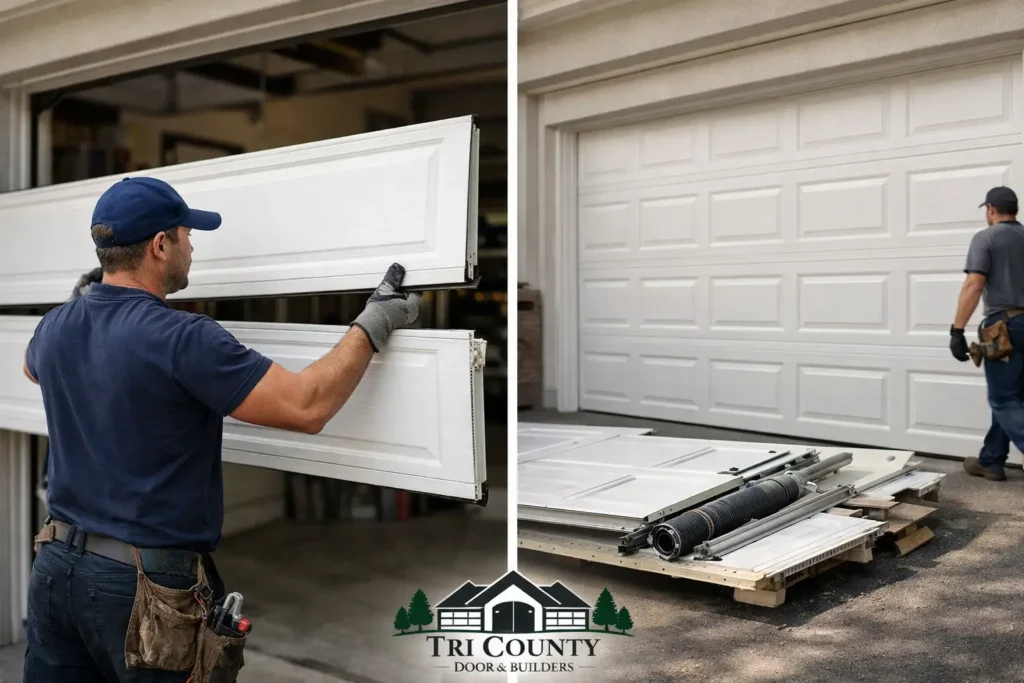
A garage door can take a lot of abuse before it stops working. A backing mishap, a loose ladder, storm debris, or years of moisture can leave one section bent, cracked, rusted, or badly faded. Garage door panel replacement may be the practical answer, but only when the damage is limited and a compatible panel is still available.
The right decision is not always obvious from the driveway. A damaged panel affects curb appeal, but it can also interfere with how the door travels through its tracks, seals against the opening, and protects the space inside. Before ordering a replacement section, it helps to look at the door as a complete system.
When garage door panel replacement makes sense
Replacing a single panel is usually worth considering when the remaining sections are in good shape and the door still operates smoothly. A newer door with one dented or cracked section is often a strong candidate, especially if the manufacturer still makes the same model, size, color, and design.
Panel replacement can preserve a door that has years of useful life left. It also avoids replacing hardware, tracks, and an opener that may be working properly. For homeowners who need to address a visible accident without taking on a larger project, that can be a sensible value.
The condition behind the damaged panel matters just as much as the panel itself. If the hinges, rollers, tracks, and reinforcement struts are intact, a technician may be able to replace the section and return the door to proper operation. A panel that is simply dented from a low-speed impact is very different from one that has been twisted enough to pull the door out of alignment.
When a full door replacement is the better value
A new panel is not always a perfect match. Even when a manufacturer has the correct model in stock, years of sunlight and weather can change the color of an existing door. White doors may yellow slightly, dark finishes can fade, and wood-grain patterns can weather unevenly. The replacement section may be structurally correct but still stand out.
Full replacement is often the better long-term choice when the door has multiple damaged sections, widespread rust, peeling finish, deteriorated insulation, or repeated operating problems. It is also worth considering if the door is older and matching panels are discontinued. Trying to force a close-but-not-quite match can cost money now and still leave the property looking unfinished.
For many Southwestern Pennsylvania properties, weather exposure adds another factor. Moisture, freeze-thaw cycles, road salt, and wind can shorten the life of a door that already has compromised paint or rusting seams. If damage reveals corrosion across more than one section, replacing the entire door may prevent another repair call next season.
A full replacement also gives owners the option to improve insulation, window placement, steel gauge, wind resistance, and style. That matters for attached garages, workshops, agricultural buildings, and commercial spaces where temperature control and durability are more than cosmetic concerns.
What determines whether a panel can be matched
Garage door panels are not universal. Width, height, thickness, insulation type, raised-panel pattern, window layout, tongue-and-groove connections, and hardware placement must all line up. Even doors from the same manufacturer can vary by model year.
Start by locating the manufacturer label, usually found along the edge of a section or on the end stile. A professional will typically need the manufacturer name, model information, door width and height, panel position, and clear photos of the damage. Photos should show both the entire door and the damaged area so the pattern, color, and construction can be identified.
There are four common reasons a panel cannot be replaced cleanly:
- The model or color has been discontinued.
- The existing door has faded enough that a new section will be noticeable.
- The impact damaged adjoining panels, hinges, tracks, or the door frame.
- The door is old enough that investing in one section does not make financial sense.
A straight answer is more valuable than a quick quote. If a replacement panel will create a mismatch or leave hidden damage unaddressed, it is better to know before committing to the repair.
Do not overlook damage to the operating system
A garage door is designed to move as a balanced unit. When one panel bends, the force of the impact can travel to the hinges, rollers, vertical tracks, cables, or opener arm. The door may still open for a few days, but it can begin binding, shaking, or stopping partway through a cycle.
Watch for a door that rubs the track, leaves an uneven gap at the floor, makes new grinding noises, or looks crooked when it is open. These are signs that the issue may extend beyond the visible section. Continuing to run a damaged door can make a repair more expensive by stressing the opener and other components.
Springs and cables deserve particular caution. They are under significant tension and should not be adjusted by a homeowner. If a damaged panel has caused the door to sag, come off track, or hang unevenly, stop using the opener until the system can be inspected. A temporary inconvenience is safer than a door that drops or becomes stuck in the opening.
Choosing the right panel material and insulation
Most replacement decisions involve steel doors, but not all steel doors are built the same. A non-insulated single-layer steel panel may be appropriate for a detached garage with limited use. An insulated steel door is often a better fit for attached garages, heated workspaces, or buildings where winter cold and summer heat affect adjacent rooms.
Insulation can help moderate temperature swings and may reduce outside noise. It will not turn an unconditioned garage into a finished living space on its own, but it can make the area more comfortable and protect stored equipment from harsher temperature changes. The best choice depends on how the garage is used, not simply on selecting the highest insulation rating available.
Style should also be considered. A replacement panel needs to match the existing door, but a full door replacement gives property owners room to choose a design that suits the building. Traditional raised panels, carriage-house looks, flush steel, and window options each create a different appearance. For a shop, farm building, or commercial bay, durability and daily operation may take priority over decorative details.
What to expect from a professional assessment
A proper assessment begins with more than measuring the damaged section. The technician should inspect the door’s balance, tracks, rollers, hinges, bottom seal, cables, and opener connection. They should also determine whether the door is safe to operate while a panel is ordered.
Availability can affect the timeline. Common panels may be easier to source, while specialty colors, windows, or older models may require more time or may no longer be available. This is why it is wise to avoid straightening, drilling, or patching a damaged panel before it is evaluated. Temporary repairs can make matching and installation harder.
Tri County Door & Builders helps property owners weigh repair costs against the condition, safety, and expected life of the entire door. That local, practical approach is especially useful when a door has been damaged by weather or an accident and the next step needs to be clear.
Protecting the new panel and the rest of the door
Once the repair is complete, simple maintenance can help prevent future problems. Keep the tracks clear of debris, check the bottom weather seal each season, and pay attention to new noises before they become major issues. Avoid leaning heavy tools or materials against the door, and make sure vehicles have enough clearance before backing in.
If the door is exposed to road salt or heavy dust, rinse the exterior periodically and inspect lower sections for chips in the finish. Small paint damage is easier to address before rust spreads beneath the coating. An annual inspection of moving hardware can also catch worn rollers, loose hinges, and balance problems early.
The best next step is a clear inspection, not a rushed decision. If one panel is truly the only problem, replacement can restore the door without replacing more than necessary. If the damage points to a larger issue, choosing a new door may provide better appearance, safety, and value for years to come.