




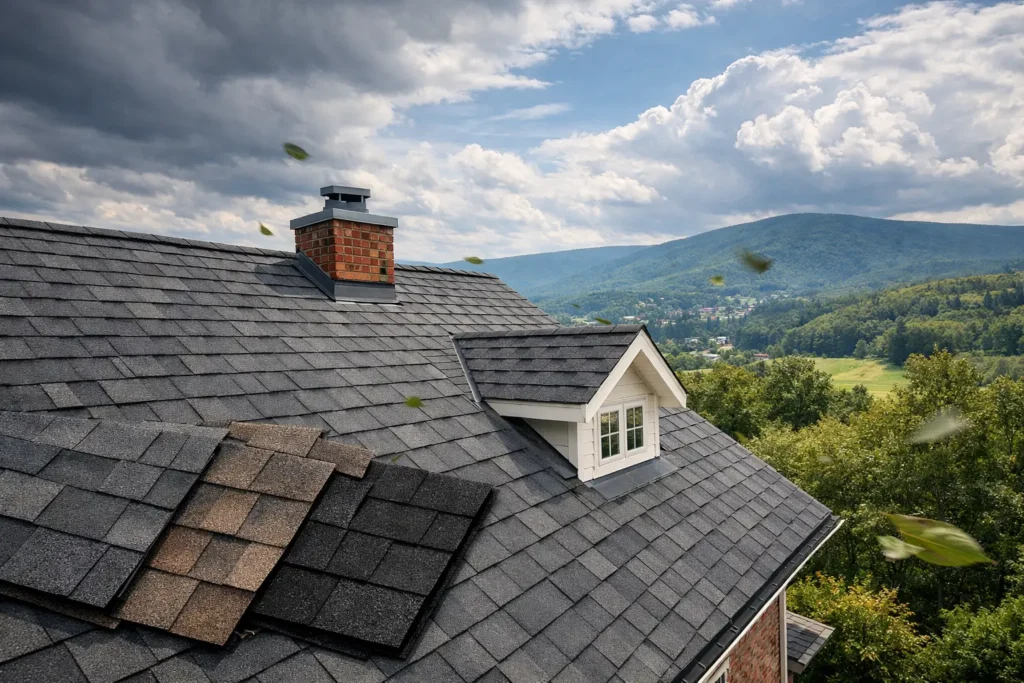
A few missing shingles after a hard storm are rarely just a cosmetic problem. They can expose underlayment, loosen nearby tabs, and let water reach the roof deck. Homeowners asking which shingles resist wind are asking the right question, but the best answer is not simply a brand name or the thickest-looking shingle. Wind performance depends on the shingle’s tested rating, the roof’s design, and the installation details that hold the whole system together.
For homes across Southwestern Pennsylvania, wind resistance matters year-round. Strong fronts, heavy spring rain, winter gusts, and open rural settings can all put pressure on a roof. Choosing a quality architectural shingle with the right wind rating is a smart start. Making sure it is installed to manufacturer requirements is what gives that shingle a real chance to perform when the weather turns.
Which Shingles Resist Wind Most Effectively?
High-wind-rated architectural shingles are generally the strongest choice for most residential roofs. Also called laminated or dimensional shingles, these products use multiple layers of asphalt and fiberglass mat to create a thicker, more substantial shingle than a basic three-tab option. Their construction can improve appearance, durability, and resistance to wind uplift.
Many architectural shingles are tested and rated for winds up to 110, 130, or 150 mph when installed according to the manufacturer’s specifications. The rating matters, but it should be read carefully. A 130-mph rating does not mean every roof will withstand a 130-mph storm under every condition. It means the shingle assembly met a specific testing standard when installed in a specific way.
Three-tab shingles can be a budget-minded option, but they usually have lower wind ratings and less material at the nailing and sealing areas. They may be suitable for some lower-cost projects, yet they are often not the first recommendation for a homeowner replacing a roof because of repeated wind damage. The initial savings can disappear quickly if a lower-grade roof needs repairs sooner.
Look for a Tested Wind Classification
Wind ratings for asphalt shingles are commonly connected to ASTM D7158 testing. You may see classifications such as Class D, Class G, and Class H, which generally correspond to wind speeds of 90, 120, and 150 mph. Not every shingle is available in every class, and the final rating may depend on the fastening method, required starter shingles, and use of approved accessories.
A contractor or supplier should help you compare the actual product documentation rather than making a broad claim that one shingle is “windproof.” No asphalt shingle is completely immune to storm damage. The practical goal is a properly rated system that is appropriate for your home, roof slope, exposure, and budget.
The Features That Help Shingles Stay Put
A wind-resistant shingle needs more than a high number on a brochure. Several product features work together to reduce the chance of tabs lifting or tearing away.
A reinforced nailing zone is one of the most valuable features. This is the section where roofers place fasteners, and added reinforcement can help prevent nails from pulling through the shingle during wind uplift. Some premium architectural shingles also use wider nailing areas, which can help installers place fasteners accurately and consistently.
Factory-applied sealant strips are just as important. When shingles warm and seal together, the adhesive bond helps keep each course from lifting in a gust. Cool weather, dust, poor storage, or an installation that does not follow the manufacturer’s instructions can interfere with sealing. On roofs installed during colder conditions, hand-sealing may be required in certain areas or situations.
Shingle weight and layered construction also contribute to performance. A heavier laminated shingle typically has more material and a more substantial profile than a three-tab shingle. That does not automatically make every heavy shingle better, but it is one reason architectural products are commonly selected for long-term roof replacements.
Installation Determines Whether the Rating Counts
The strongest shingle can still fail if the roof system is installed carelessly. This is where homeowners should look beyond the shingle color and ask practical questions about the work itself.
Fastener placement is critical. Nails driven too high can miss the reinforced nailing zone. Nails driven too low can leave exposed fasteners and reduce holding strength. Nails driven at an angle or overdriven through the shingle can also weaken the attachment. A quality installation requires the correct number of nails, in the correct location, with each nail driven flush.
In many high-wind applications, manufacturers require six nails per shingle rather than four. That detail may sound small, but it can make a meaningful difference in how a roof responds to uplift. It is also essential for preserving the product warranty where a higher wind rating is being claimed.
The roof’s perimeter deserves extra attention. Wind forces are often strongest along eaves, rakes, ridges, and corners. Proper starter shingles, correctly installed drip edge, secure hip and ridge caps, and compatible underlayment all help protect these vulnerable areas. A roofing system is only as dependable as its transitions and edges.
Roof deck condition matters, too. If plywood or oriented strand board is soft, rotted, or loose, nails may not hold as intended. Replacing damaged decking before new shingles go on is not an upsell. It is basic preparation for a roof that needs to stay secure for years.
Wind Exposure Is Different on Every Property
Two homes in the same town can have very different wind demands. A house on a hill, near an open field, beside a large body of water, or at the edge of a development may receive more direct wind than a protected home surrounded by trees. Taller roofs and steep rooflines can also experience greater uplift forces.
Farm buildings, detached garages, workshops, and commercial properties need the same careful evaluation. A simple roof shape may be easier to roof well, while a building with multiple valleys, dormers, or additions has more areas where water and wind can create problems. The right shingle choice should account for the entire structure, not just the square footage.
For property owners in Westmoreland, Somerset, and Fayette Counties, local weather patterns and installation experience are worth considering. A local supplier and installer understands that the roof needs to handle more than one kind of weather event. It must stand up to driving rain, freeze-thaw cycles, snow, sun exposure, and the sudden gusts that come through with a storm line.
Choosing the Right Wind-Resistant Roof for Your Budget
For many homeowners, a quality architectural shingle with a strong manufacturer wind rating offers the best balance of protection, appearance, and cost. Premium designer shingles may provide a thicker profile and added curb appeal, but they are not necessary for every property. On the other hand, choosing the lowest-cost shingle simply to reduce the upfront price may be a poor value if the roof has a history of wind damage or sits in an exposed location.
Owens Corning shingles are a practical option for homeowners who want dependable architectural roofing choices backed by established product engineering. Tri County Door & Builders is currently offering 30% off Owens Corning shingles, helping local property owners avoid the Pittsburgh markup and put more of their budget toward a quality new roof.
When comparing estimates, make sure they cover more than shingle brand and color. Ask what wind rating applies to the selected product, whether the quote includes six-nail installation where required, what underlayment and starter materials will be used, and how damaged decking will be handled if it is found. These questions make it easier to compare real roof systems instead of comparing incomplete prices.
Do Not Wait for the Next Missing Tab
If you see lifted corners, loose ridge caps, bare nail heads, cracked shingles, or granules collecting heavily in gutters, schedule a roof inspection before the next major storm. Small wind issues can often be addressed before they become deck damage, leaks, or interior repairs.
The best wind-resistant roof is not just a shingle with an impressive rating. It is the right product, installed with care on a sound roof deck, using the complete system the manufacturer requires. That is the kind of decision that protects your property long after the forecast clears.