




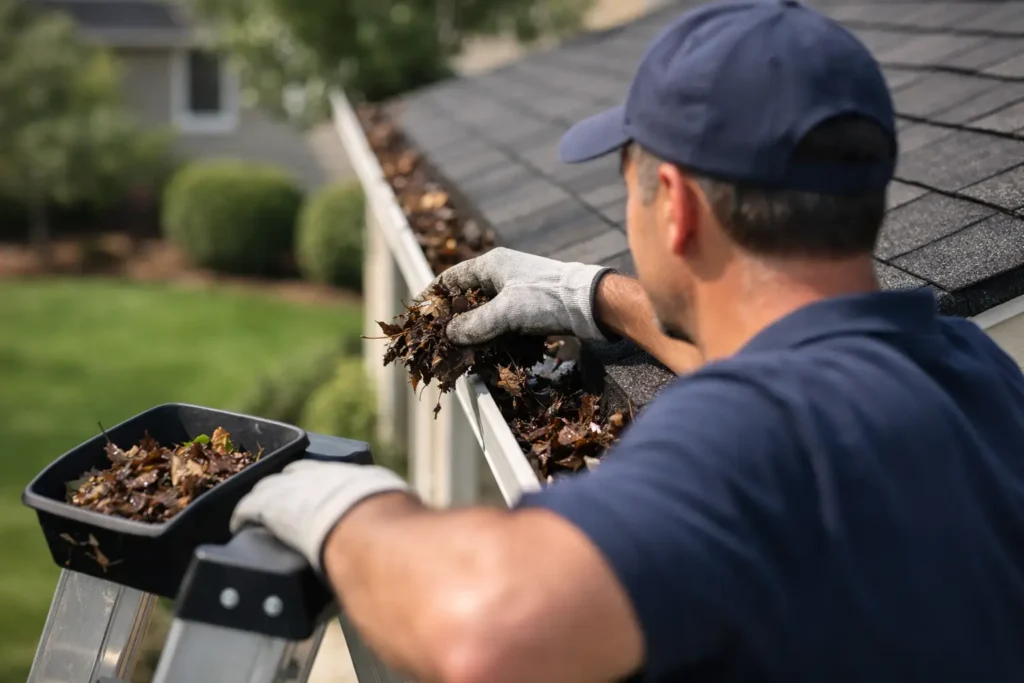
A gutter can look fine from the driveway while it is holding a season’s worth of wet leaves, shingle grit, and standing water. By the time an overflow is visible, that water may already be running behind fascia boards, soaking landscaping, or freezing near an entryway. So, how often should gutters be cleaned? For most homes, twice a year is a sound starting point, but tree cover, roof design, and Southwestern Pennsylvania weather can make more frequent service the smarter choice.
How Often Should Gutters Be Cleaned?
Plan to clean residential gutters at least twice each year: once in late spring, after seed pods and spring debris have fallen, and again in late fall after most leaves are down. This schedule keeps ordinary buildup from becoming a drainage problem and gives you a chance to spot loose hangers, damaged downspouts, or worn sealant before winter.
That baseline is not a rule for every property. A house surrounded by mature oak, maple, or pine trees may need cleaning every three months during heavy shedding periods. Pine needles are especially troublesome because they can settle into a tight mat, slide beneath gutter guards, and clog a downspout elbow quickly. Homes with few nearby trees may only need a thorough cleaning twice a year, plus a quick visual check after major storms.
For a commercial building, garage, pole building, or agricultural structure, the same principle applies: clean on a schedule that matches the debris load. Large roof areas move a surprising amount of water. Even a partial blockage can send overflow across siding, walkways, loading areas, or a building foundation.
What Changes Your Gutter Cleaning Schedule?
The right frequency depends less on the calendar than on what lands on your roof and how water moves off it. Nearby trees are the biggest factor, but they are not the only one.
Steep roofs can shed leaves quickly into gutters, while lower-pitched roofs may allow debris to sit longer before wind or rain carries it downhill. Roof valleys also concentrate water and debris in a small section of gutter. If a valley ends above one area, inspect that section more often than the rest of the system.
Weather matters in Westmoreland, Somerset, and Fayette Counties. Heavy spring rain can expose a blockage that was not obvious during dry weather. Summer thunderstorms can blow branches and roof grit into channels. In fall, wet leaves are heavier and more likely to create a dam at the downspout. Then winter brings freeze-thaw cycles that turn poor drainage into ice near foundations, porches, and walkways.
Gutter guards can reduce the amount of large debris that enters the trough, but they do not eliminate maintenance. Fine material, roof granules, and decomposing leaf fragments still accumulate. Guards also need to be checked to make sure water is flowing through them instead of skipping over the edge during a hard rain.
Warning Signs You Should Clean Them Now
Do not wait for your scheduled cleaning if the system is already showing signs of trouble. Water spilling over the gutter edge during rain is the clearest signal, but it is not the only one. Streaking on siding, soil washed away below the roofline, peeling paint on fascia, or water pooling near the foundation can all point to a blocked or poorly draining gutter.
Look up after a storm. A sagging gutter often means it is carrying too much wet debris or water, and the added weight can pull fasteners loose. Plants growing from the gutter are another obvious warning, but black, muddy buildup near the downspout opening can be just as telling. It often means the downspout is restricted even if the main gutter appears clear.
Inside the building, pay attention to stains near exterior walls or ceilings. Gutters do not cause every roof leak, but overflowing water can find its way behind fascia or under vulnerable roof edges. Addressing drainage early is generally far less expensive than repairing rotten wood, damaged siding, or interior water damage later.
A Practical Seasonal Plan for Pennsylvania Properties
A useful approach is to pair gutter checks with the seasons when conditions change most. In spring, clear winter debris and make sure each downspout discharges away from the foundation. This is also a good time to check whether snow and ice have bent a section of gutter or loosened brackets.
In late fall, schedule the more thorough cleaning after the majority of leaves have dropped. Waiting until every last leaf is down can mean entering winter with wet debris already packed in the system, especially when early snow arrives. If your property has heavy tree cover, one early-fall cleaning and another late-fall inspection may be worth the effort.
After a severe windstorm, it is wise to inspect from the ground for branches, loose gutter sections, or overflow. You do not necessarily need a full cleaning after every storm. However, a quick check can prevent a small obstruction from becoming a problem during the next rainfall.
Cleaning Gutters Without Damaging the Roof
Gutter work is simple in concept but not always safe or straightforward. Ladder falls are a serious risk, particularly on uneven ground, wet grass, or sloped driveways. Never lean a ladder directly against a gutter, as the pressure can bend the metal or pull it away from the fascia. Use a stable ladder setup, have another person nearby when possible, and avoid working during rain, wind, or icy conditions.
When cleaning, remove larger debris by hand with gloves, then flush the gutter with a hose to confirm water reaches the downspout. If water backs up, check the downspout outlet and elbows. A plumber’s snake or a controlled hose flush may clear a minor blockage, but forcing tools through thin metal can create more damage than it solves.
Be careful around roofing materials. Aggressive scraping, pressure washing from the roof, or walking where it is not necessary can loosen shingles or damage their protective granules. Granules in the gutter are normal in small amounts, especially on a newer roof, but a sudden heavy accumulation deserves attention. It may indicate shingle wear or storm damage rather than a gutter issue alone.
When Professional Gutter Service Makes Sense
Hiring help is a practical decision when a property has multiple stories, steep roof sections, difficult access, or a history of drainage problems. It can also make sense for business owners and property managers who need a documented maintenance routine without pulling staff away from daily operations.
A professional visit should do more than remove leaves. It should identify loose hangers, separated joints, damaged outlets, poor gutter pitch, and downspouts that empty too close to the building. Cleaning a clogged gutter helps today; correcting the reason it repeatedly clogs helps protect the property over time.
If inspection reveals damaged fascia, worn roof edges, or shingles affected by water exposure, address those issues before they spread. Tri County Door & Builders has served local property owners since 1998 with practical guidance on roofing and exterior building needs, including Owens Corning shingle options for homeowners planning a replacement.
Keep Water Moving Where It Belongs
The best gutter schedule is the one that prevents overflow before it starts. Put spring and late-fall cleanings on the calendar, increase the frequency when trees or storms demand it, and inspect the system whenever you see water going somewhere it should not. A few hours of maintenance can protect the roofline, foundation, siding, and walkways that make up the rest of your investment.