




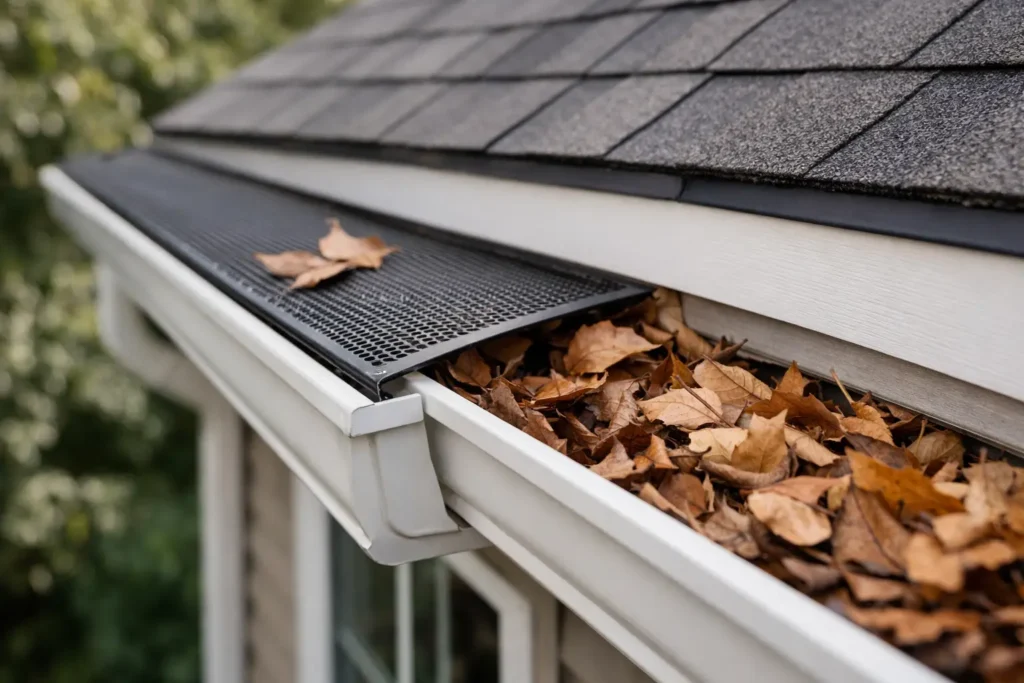
A gutter can look clear from the ground while a wet layer of maple leaves, pine needles, and roof grit is building up beneath the surface. That is why homeowners often ask, do gutters need guards? The practical answer is no, not every home needs them. But the right gutter guard can reduce clogs, protect foundations, and make seasonal maintenance much more manageable – especially on properties surrounded by trees.
Gutter guards are not a replacement for good gutters, correct installation, and occasional cleaning. They are a tool that works best when the rest of the drainage system is already doing its job.
Do Gutters Need Guards on Every Home?
No. Homes with few nearby trees, simple rooflines, and easy access to gutters may be better served by regular cleaning. If your gutters are clear and properly pitched, paying for guards may not provide enough benefit to justify the cost.
Guards make more sense when leaves, needles, seed pods, twigs, or shingle granules regularly collect in the troughs. They can also be a worthwhile investment for homeowners who have steep roofs, two-story elevations, or difficult-to-reach sections where cleaning creates a safety concern.
In Westmoreland, Somerset, and Fayette Counties, many properties deal with heavy leaf fall, frequent rain, snow, and freeze-thaw cycles. A clogged gutter in these conditions can send water over the edge, soak the soil near the foundation, stain siding, and contribute to ice buildup at the roof edge. Guards can help limit that debris buildup, but they must be selected and installed for the home, not simply chosen off a shelf.
What Gutter Guards Actually Do
A guard covers or filters the opening of a gutter. Water passes through or around the guard while larger debris stays on top, where wind or rainfall may move it away. This reduces the amount of material that settles inside the gutter and blocks the downspouts.
The key word is reduces. Even a high-quality system can collect fine debris on its surface. Pollen, roof granules, small needles, and decomposing leaf matter can still require attention over time. A guard should mean less frequent cleaning, not a promise that you will never inspect the gutters again.
When they work well, gutter guards can help prevent several common problems:
- Water spilling over gutter edges during a heavy rain
- Downspouts clogging with packed leaves and debris
- Water collecting near foundations, walks, and entryways
- Rotting fascia boards caused by standing water
- Pest nesting in damp, debris-filled gutters
They can also make a difference during roof replacement or major exterior work. Adding guards when gutters are being repaired, replaced, or evaluated can be more efficient than scheduling a separate project later.
When Gutter Guards Are Worth the Cost
The best candidates for gutter guards are homes with a recurring debris problem. If you clean your gutters twice a year and still find downspouts jammed after every fall storm, guards deserve serious consideration. The same is true if you have pine trees nearby. Pine needles are small enough to challenge basic screens and can create dense mats inside unprotected gutters.
Guards can also be valuable for homeowners who cannot safely clean their own gutters. Climbing a ladder on uneven ground, working around landscaping, or reaching above a garage roof is not a minor chore. Reducing the number of times that work is needed has real value.
Commercial properties, rental homes, agricultural buildings, and detached garages can benefit as well, particularly when a clogged gutter may go unnoticed for weeks. On these properties, water management is about protecting the building and avoiding preventable repairs.
A guard is less necessary if there are no overhanging trees and the gutters are simple to access. In that situation, a dependable cleaning schedule may be the lower-cost option. The goal is not to add a product to every home. It is to solve the drainage problem you actually have.
The Type of Guard Matters
Not all gutter guards handle debris the same way. Material, opening size, roof pitch, gutter size, and the trees around the property all affect performance.
Basic screens are often the least expensive option. They can block larger leaves but may allow smaller debris through, and some designs can lift or shift in high winds. They may be adequate for light leaf coverage, but they are not usually the best choice under pine trees.
Perforated aluminum guards are more durable and can handle a broader range of debris. They are a practical middle-ground option when properly fitted to the gutter system.
Micro-mesh guards use a fine screen designed to keep out smaller particles, including many pine needles and roof grit. They tend to cost more, but they can be a strong choice for heavily wooded lots. Their performance depends on proper installation and enough water flow for the roof’s runoff volume.
Foam and brush inserts sit inside the gutter rather than covering it. They are easy to install, but debris can collect on or within them. They are usually better viewed as a short-term or budget-conscious solution than a long-term answer for homes with heavy debris.
Surface-tension or reverse-curve systems direct water into the gutter while debris falls away. These can work well in the right conditions, but they must be matched carefully to the roof edge and rainfall pattern. A poor fit can allow water to shoot past the gutter during a hard downpour.
Watch for the Installation Details
A good guard cannot fix a gutter system that is undersized, loose, poorly pitched, or missing enough downspouts. Before installing guards, inspect the basics. Gutters should be securely fastened, slope toward the downspouts, and discharge water away from the building’s foundation.
Pay close attention to the fascia board. If it is soft, rotted, or pulling away behind the gutter, adding guards first can hide a bigger problem. The same goes for roof edges with damaged drip edge or recurring overflow. Water needs a clear path from the roof into the gutter, then through the downspout and away from the structure.
Homeowners should also ask how the guard attaches. Some products slide under shingles, while others fasten to the gutter lip or fascia. Installation methods should not compromise the roof system or create a place where water can back up. This is particularly important when a roof is newer or scheduled for replacement.
Gutter Guards and Winter Weather
Guards do not prevent ice dams. Ice dams happen when heat loss, snow melt, and cold roof edges allow water to refreeze near the eaves. Gutters and guards may become involved, but they are not the root cause.
That said, clean gutters and properly working downspouts can help manage water when temperatures fluctuate. If water cannot drain because a gutter is full of leaves, freezing conditions can make the blockage worse. Good attic insulation, ventilation, roof maintenance, and proper drainage work together to reduce winter-related issues.
Tri County Door & Builders can help property owners consider roof, gutter, and exterior conditions as connected parts of the same system. That practical approach matters more than treating guards as a stand-alone cure for every water problem.
Maintenance Still Matters
Even with guards, inspect your gutters at least twice a year and after major storms. Look for debris sitting on top of the guards, water marks on siding, sagging sections, loose fasteners, and downspouts that are draining slowly. Check the discharge point, too. A clear gutter does little good if the downspout empties beside the foundation.
If guards are installed under tree cover, a light brushing or rinsing may be needed during the heaviest part of leaf season. This is still much easier than digging compacted debris out of the gutter channel, but it should be part of your maintenance expectations.
The best choice is the one that fits your roof, tree cover, budget, and ability to maintain the system. If clogged gutters are already causing overflow or water near the foundation, address that issue before the next hard rain turns a small maintenance job into an exterior repair.