




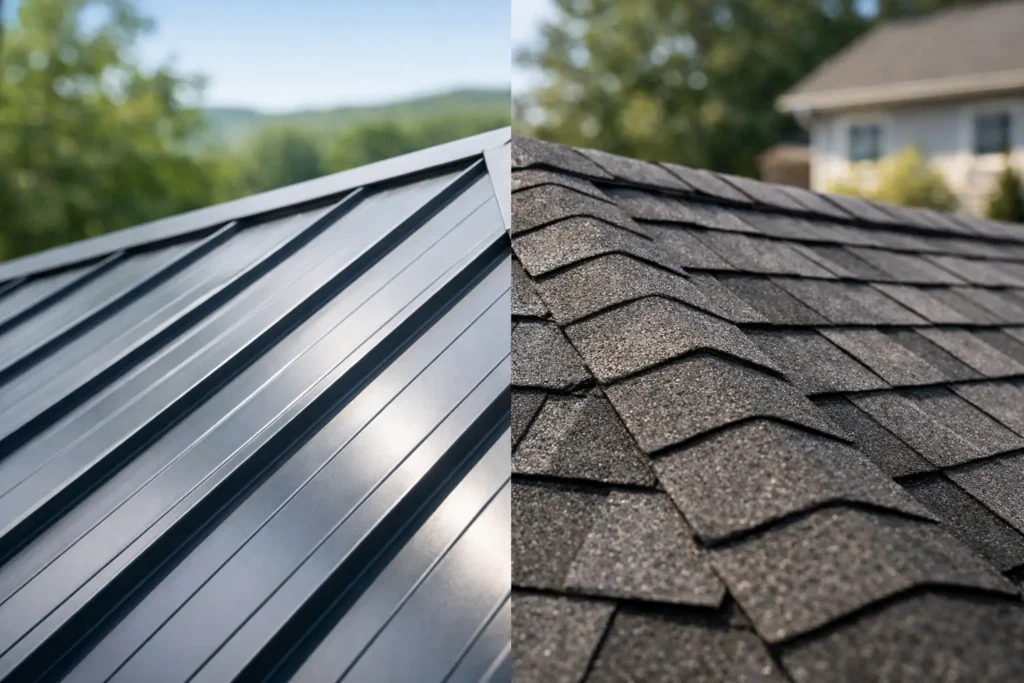
A roof replacement often starts with a simple question after a leak, missing shingles, or storm damage: what material will protect this building best without stretching the budget too far? When comparing metal panels versus asphalt shingles, the right answer depends on the building, the roof design, the expected ownership timeline, and Southwestern Pennsylvania weather.
Asphalt shingles remain the familiar choice for many homes because they offer dependable protection at a lower upfront cost. Metal panels bring a longer service life and strong performance on garages, barns, pole buildings, and many homes. Neither option is automatically better. A practical comparison makes it easier to spend confidently.
Metal Panels Versus Asphalt Shingles: The Main Difference
The biggest difference is how each roof is built and how long it is designed to serve. Asphalt roofing uses overlapping shingle courses installed over an underlayment system. Metal roofing uses formed steel panels, typically fastened through the panel or attached with concealed clips depending on the system.
A properly installed asphalt shingle roof can be a smart, cost-conscious choice for a house with a traditional roofline. Metal panels are especially common on agricultural and commercial buildings because they cover large areas efficiently and hold up well over time. They can also be an excellent residential option when long-term durability, low maintenance, and a distinct appearance are priorities.
The roof itself matters as much as the material. A simple gable roof may work well with either system. A home with many valleys, dormers, penetrations, and complex transitions can require more detailed metal fabrication and installation, which affects labor and price.
Upfront Cost and Long-Term Value
Asphalt shingles usually have the lower initial investment. Materials are widely available, installation is familiar to most roofing crews, and repairs can often be limited to a smaller area. For property owners who need a reliable new roof now while keeping project costs controlled, shingles are often the practical choice.
Metal panels generally cost more at the start. The final price varies with panel profile, gauge, coating, roof slope, trim requirements, insulation needs, and whether the roof uses exposed fasteners or a standing-seam system. That higher initial cost can make sense for an owner planning to keep the property for many years or for a building where reduced maintenance and longevity matter more than the first invoice.
Long-term value is not just a lifespan calculation. Consider the building’s role. A rental home being prepared for sale may call for a quality shingle roof that fits the market. A family home, workshop, farm structure, or commercial building expected to stay in service for decades may justify metal’s added investment.
For homeowners who prefer shingles, the price gap may be more manageable than expected. Tri County Door & Builders’ 30% off Owens Corning shingles campaign is intended to help local property owners avoid the Pittsburgh-area markup while choosing a trusted roofing system.
Durability in Pennsylvania Weather
Westmoreland, Somerset, and Fayette County roofs face more than ordinary rain. Heavy snow, ice, wind, freeze-thaw cycles, falling branches, and summer heat all put roofing materials to work. The installation details that manage water and ventilation are critical with either material.
Metal panels resist rot and are not prone to shingle granule loss. Their smooth surface sheds rain and snow efficiently, although that snow movement needs to be planned for. Snow guards may be appropriate above entry doors, walkways, equipment, or areas where sliding snow could create a hazard.
Asphalt shingles perform well in changing weather when the roof has sound decking, proper underlayment, flashing, and attic ventilation. Wind-rated shingles can offer meaningful protection, but performance still depends on correct fastening and careful work around valleys, chimneys, and pipe boots.
Hail is a trade-off worth discussing honestly. Metal can dent in a severe hailstorm, particularly lighter-gauge panels. Asphalt shingles can lose granules, crack, or sustain bruising that may not be obvious from the ground. The best choice depends on the material grade, roof exposure, local tree cover, and the type of storms the property typically experiences.
Lifespan and Maintenance Expectations
A metal roof can last several decades when the panel system, coating, fasteners, and installation are appropriate for the building. Periodic inspections still matter. Exposed-fastener roofs should be checked for fastener condition and gasket wear over time. Scratches or damaged coatings should also be addressed before they become corrosion concerns.
Asphalt shingles commonly offer a shorter service life, but they are not a short-term material when installed correctly. Product line, ventilation, sun exposure, storm history, and maintenance all affect how long a roof performs. A homeowner should inspect for lifted tabs, missing shingles, exposed nail heads, granule buildup in gutters, and worn flashing after major weather events.
Metal usually requires less routine attention, while shingles are often simpler to repair in isolated spots. That distinction matters. If a branch damages one section of an asphalt roof, a qualified roofer may be able to replace the affected shingles and restore the area cleanly. Repairing metal panels can be more involved if the damage crosses panel runs or disrupts trim and flashing.
Appearance and Building Type
Asphalt shingles suit a wide range of homes, from ranch houses to traditional two-story properties. They provide texture, depth, and many color options, making it easier to complement existing siding, brick, stone, and trim. Architectural shingles are a popular middle ground for homeowners who want a more dimensional look without moving to a premium roofing material.
Metal panels create a cleaner, more linear appearance. They are a natural fit for pole buildings, barns, garages, storage structures, and commercial properties. On homes, metal works particularly well with farmhouse, contemporary, cabin, and rural designs. Color selection matters because a metal roof is a highly visible, long-term exterior feature.
Do not choose based on appearance alone. A dark metal roof may look sharp, but it needs compatible ventilation and insulation planning. A shingle roof may match the neighborhood well, but it still needs a system designed for the home’s pitch and drainage points.
Energy, Condensation, and Ventilation
Metal roofing is often associated with energy savings because reflective finishes can reduce heat absorption. That benefit varies by color, roof assembly, insulation, attic ventilation, and the building’s use. It should not be treated as a guaranteed utility-bill number.
Condensation is the issue many owners overlook on metal garages, barns, and pole buildings. Warm, humid indoor air can meet a colder roof panel and create moisture underneath. Proper insulation, vapor control, ventilation, and a suitable underlayment or condensation-control system are essential. Installing metal panels without addressing the building envelope can lead to dripping, damp insulation, or corrosion concerns later.
Asphalt shingle roofs also require airflow. Intake ventilation at the eaves and exhaust ventilation near the ridge help manage heat and moisture in the attic. Good ventilation can support shingle performance and protect the roof deck, particularly through humid summers and cold winters.
When Asphalt Shingles Make the Most Sense
Asphalt shingles are often the better fit when initial cost is the main concern, the roof design is complex, or the home calls for a traditional appearance. They are also a sensible option for owners who want access to familiar styles, proven warranty options, and straightforward future repairs.
Quality matters here. A well-installed shingle system includes more than the visible shingles. Underlayment, ice and water protection where needed, flashing, ventilation, and clean workmanship determine whether the roof handles the next hard rain or snowmelt cycle as it should.
When Metal Panels Are Worth the Investment
Metal panels are often worth serious consideration for farm buildings, detached garages, pole buildings, workshops, commercial properties, and homes intended for long-term ownership. They can offer decades of service, strong weather resistance, and a low-maintenance exterior when installed as a complete roofing system.
They are particularly appealing when a property owner wants a roof that can match metal siding, a new building package, or a rural property’s working needs. The key is matching the panel type and thickness to the project instead of selecting solely by color or lowest material price.
A roof decision should begin with the building in front of you, not a one-size-fits-all recommendation. Look at the roof’s condition, slope, drainage, expected use, budget, and how long you plan to own the property. A knowledgeable local evaluation can turn metal panels versus asphalt shingles from a confusing choice into a roof system that serves the property well for years.