



A leaking roof over a shop, warehouse, apartment building, or farm operation can disrupt far more than a workday. It can damage inventory, create safety concerns, raise energy costs, and turn a manageable repair into a major expense. This commercial roofing material guide is built for property owners who need a practical way to compare roofing options before committing to a replacement or new construction project.
The right material depends on the building itself, its roof slope, the condition of the existing deck, drainage, budget, and how long you plan to own the property. In Western Pennsylvania, snow loads, freeze-thaw cycles, wind, and heavy rain also deserve a place in the decision. A lower upfront price is not always the lower-cost choice over the life of the roof.
Commercial Roofing Material Guide: Start With the Building
Before comparing products, identify what the roof needs to do. A low-slope retail building has different demands than a steep-slope office, an agricultural structure, or a metal building. Roof geometry determines how water moves, where snow collects, and which materials can be installed correctly.
A roof with little slope typically needs a membrane system designed to shed water toward drains or scuppers. A steeper roof may be a good candidate for architectural shingles or metal panels. Buildings with rooftop HVAC equipment, vents, skylights, or frequent maintenance traffic need special attention around penetrations and walk paths.
It also pays to look below the surface. A new roof cannot correct a weak deck, inadequate insulation, poor ventilation, or drainage that allows water to pond. During an evaluation, ask whether replacement is necessary or whether a targeted repair can safely extend the current roof’s service life. Honest guidance should fit the condition of the building, not force every project into the same solution.
Metal Roofing for Long-Term Performance
Metal roofing is a strong option for commercial, agricultural, and light industrial buildings, especially where durability and low maintenance matter. Properly installed metal panels shed rain and snow effectively, resist many wind-related concerns, and can provide decades of service.
Standing seam metal roofing is often chosen for buildings where appearance and weather resistance both matter. Its concealed fasteners reduce exposed points where water can enter over time. Exposed-fastener panels can be a more economical choice for certain barns, storage buildings, garages, and pole buildings, but fasteners and washers should be inspected as the roof ages.
Metal comes with trade-offs. The initial investment can be higher than shingles, and installation details matter greatly around transitions, valleys, penetrations, and flashing. Expansion and contraction must be accounted for, particularly on larger roof sections. A low price that skips proper trim, underlayment, closures, and flashing can lead to leaks that are expensive to chase later.
For owners who expect to keep a building for many years, metal is often worth serious consideration. It can also be a practical fit when renovating an older building, provided the existing structure and local code requirements support the system.
Single-Ply Membranes for Low-Slope Roofs
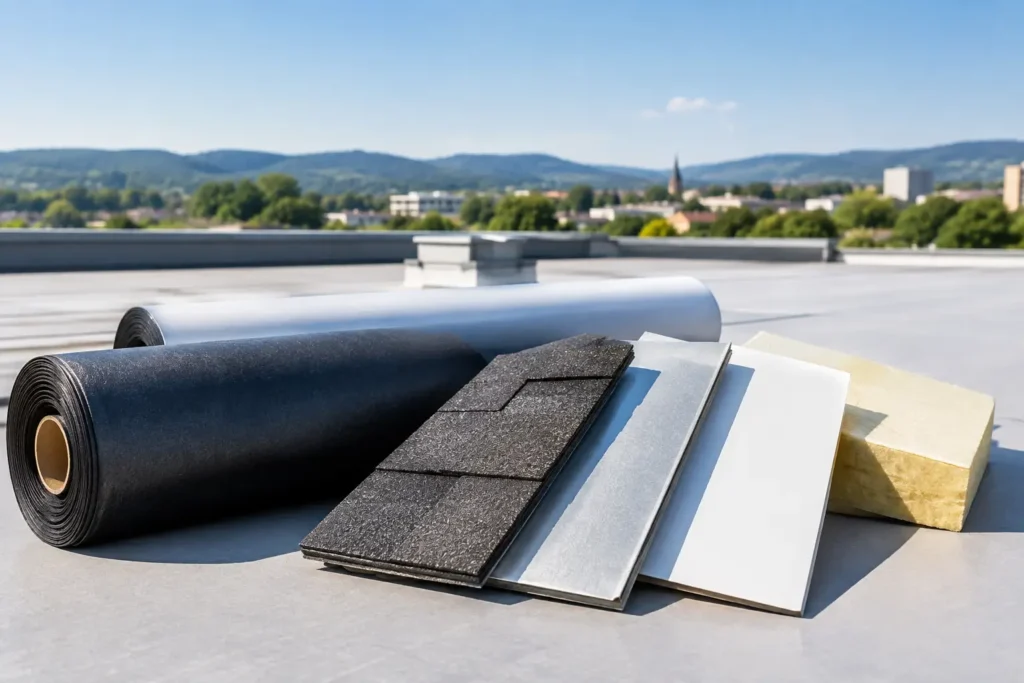
For low-slope commercial roofs, single-ply membranes are common because they create a continuous, water-resistant surface across broad roof areas. TPO, PVC, and EPDM are three materials property owners are likely to encounter.
TPO Roofing
TPO is frequently selected for its balance of cost, heat-reflective surface options, and welded seams. White TPO can help reduce heat absorption during warmer months, which may support more consistent indoor comfort in conditioned commercial space. The material must be installed with careful attention to seam welding, edge details, and drainage.
TPO can make sense for office buildings, retail spaces, and other low-slope structures. However, it is not a substitute for fixing standing-water issues. If water regularly ponds because of poor slope or blocked drains, address that condition as part of the roofing scope.
PVC Roofing
PVC is another heat-welded membrane known for strong resistance to certain chemicals, grease, and oils. That can make it a good option for restaurants, manufacturing settings, or buildings with rooftop exhaust conditions that would be harder on other materials.
PVC commonly carries a higher upfront cost than TPO, so the decision often comes down to the building’s exposure and use. Paying more for chemical resistance may be sensible on one property and unnecessary on another.
EPDM Roofing
EPDM is a synthetic rubber membrane with a long history on low-slope roofs. It is commonly black, though other options are available, and it performs well in changing temperatures. EPDM seams are typically adhered or taped rather than heat welded.
This system can be a dependable, cost-conscious solution when installed by an experienced crew. As with all membrane systems, the condition of flashings, seams, drains, and rooftop penetrations will have a major effect on long-term performance.
Asphalt Shingles for Steep-Slope Commercial Roofs
Not every commercial property has a flat roof. Small offices, churches, multifamily properties, storefronts, and mixed-use buildings often have steep-slope roof sections where architectural asphalt shingles are a practical choice.
Shingles offer a familiar appearance, broad color selection, and an accessible price point compared with many metal systems. Quality brands such as Owens Corning, GAF, and TAMKO offer options that can fit different budgets and performance goals. The full roofing system matters here: underlayment, ice and water protection in vulnerable areas, ventilation, flashing, and proper fastening all affect how the roof holds up.
For property owners planning a shingle replacement, Tri County Door & Builders is offering 30% off Owens Corning shingles. That can be a meaningful opportunity to avoid the Pittsburgh markup while choosing a complete roof system suited to the property.
Shingles are not the right answer for every building. They are generally better suited to adequately sloped roofs, and they may require more frequent replacement than metal. Still, for many steep-slope commercial projects, they deliver dependable protection and good curb appeal without stretching the budget unnecessarily.
Roofing Costs: Compare the Full Project, Not Just the Material
The material price is only one line in a roofing estimate. Tear-off and disposal, deck repairs, insulation, drainage improvements, flashing, access, safety requirements, and the number of roof penetrations can all change the final cost.
A simple rectangular roof with clear access may be straightforward. A roof with parapet walls, multiple HVAC units, skylights, chimneys, or damaged decking requires more labor and more detailed waterproofing work. That does not mean the project is not worthwhile. It means the estimate should explain what is included and why.
When comparing proposals, make sure each contractor is pricing a similar scope. Ask what material thickness or shingle line is specified, how seams and flashings will be handled, whether damaged decking is included as an allowance, and what warranty applies to both materials and workmanship. A clear estimate is easier to trust than a low number with missing details.
Plan for Maintenance Before You Need Repairs
Even a well-installed commercial roof benefits from regular attention. Clear drains and gutters, remove debris that traps moisture, and inspect areas around vents, curbs, skylights, and seams. After severe storms or heavy snow periods, a visual check can catch loose flashing, punctures, or blocked drainage before water reaches the interior.
Property managers should also document repairs and inspections. A basic maintenance record helps track recurring problems and gives useful context when it is time to budget for replacement. If a leak appears, respond quickly. Water may travel along decking or insulation, so the spot where it shows inside is not always where the roof first failed.
The best roofing material is the one that matches your building, protects your investment, and can be installed with the right details from the start. For commercial owners in Westmoreland, Somerset, and Fayette Counties, a local evaluation can turn a confusing list of materials into a straightforward plan built around your roof, your budget, and the years ahead.