




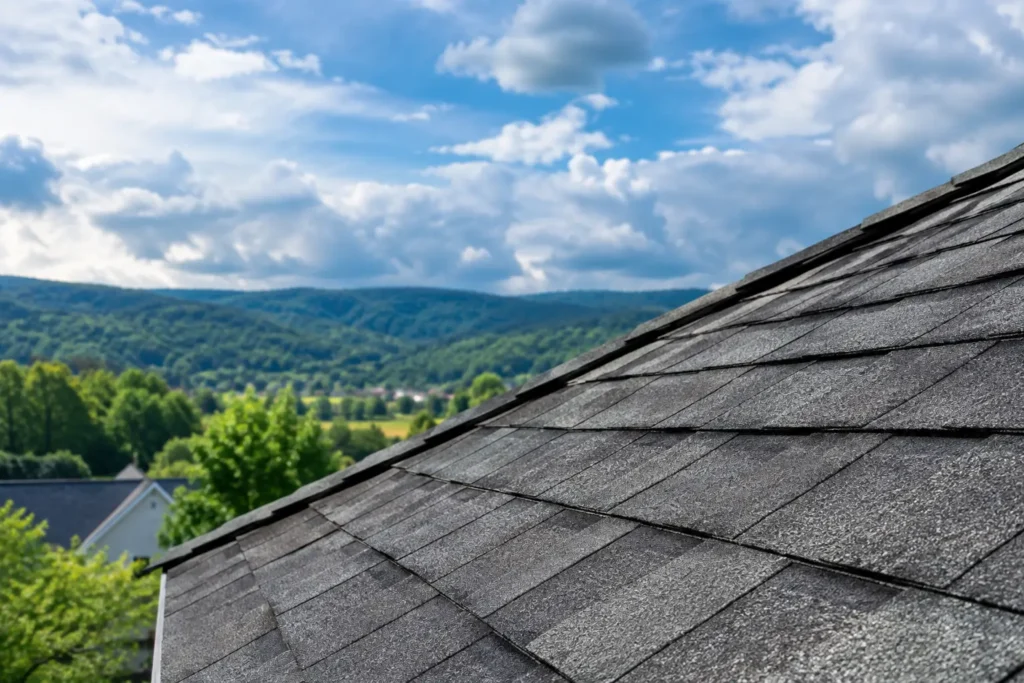
A missing shingle after a hard storm is not always a sign that the entire roof was installed poorly. Wind damage can come down to the roof’s age, its exposure, the fastening method, and the shingle wind ratings selected when the roof was installed. For property owners, understanding those ratings makes it easier to compare roofing options and avoid paying for protection that does not match the building’s needs.
What Shingle Wind Ratings Actually Measure
A shingle wind rating indicates how well a roofing system is designed to resist wind uplift. Wind does not simply blow across a roof. As it moves over ridges, eaves, valleys, dormers, and roof edges, it creates pressure that can lift shingles from the deck. Once one shingle breaks loose, nearby shingles become more exposed, and the damage can spread quickly.
Most asphalt shingles are tested using recognized industry standards. You may see ratings such as 60 mph, 110 mph, 130 mph, or higher in product literature and warranty information. These numbers are useful, but they should not be treated as a promise that a roof will remain untouched during a storm at that exact wind speed. They reflect performance under specific test conditions with a complete, properly installed roofing system.
Two test standards appear often in asphalt shingle specifications. ASTM D3161 evaluates wind resistance through a fan test, while ASTM D7158 uses uplift testing and classifies shingles by wind speed. Under ASTM D7158, Class D generally corresponds to 90 mph, Class G to 120 mph, and Class H to 150 mph. The product label and manufacturer documentation will identify the applicable testing method and rating.
The practical point is simple: a higher wind rating generally provides a greater margin of resistance, but the rating alone does not determine how a roof will perform on your property.
Why Wind Ratings Matter in Southwestern Pennsylvania
Homes, farm buildings, garages, and commercial properties in this region can experience sudden thunderstorms, strong straight-line winds, heavy seasonal weather, and the added strain of snow and ice. Wind exposure also varies dramatically from one property to the next. A home tucked among mature trees faces a different set of conditions than a house on an open hillside, a ridge-top building, or a broad agricultural structure with little windbreak around it.
Roof shape matters, too. Long uninterrupted roof slopes, high ridges, steep pitches, open gable ends, and attached structures can create areas where wind pressure is more severe. The edges and corners of a roof are especially vulnerable because wind forces are often greatest there.
For many standard residential roofs, a quality architectural shingle with an appropriate enhanced wind rating may be a practical choice. For a highly exposed property, a more wind-resistant option may justify the additional cost. The right answer depends on the building, its surroundings, the roof design, and the owner’s plans for the property.
A Higher Rating Is Only Part of the Roofing System
A shingle can be rated for high winds and still fail early if it is not installed according to the manufacturer’s requirements. Wind resistance comes from the complete system, not just the shingle in the bundle.
Proper nailing is one of the biggest factors. Nails must be placed in the correct nailing zone, driven flush without cutting into the shingle, and installed in the required quantity. Using too few fasteners, placing them too high or too low, or overdriving them can reduce a shingle’s ability to resist uplift.
Starter shingles are equally important along eaves and rakes. They help secure the first course, which is often exposed to the strongest lifting forces. Underlayment, deck condition, flashing details, ventilation, and adhesive sealant strips all play a role in long-term performance as well.
Many manufacturers offer higher wind warranty coverage only when specific installation details are followed. That may include a required number of nails per shingle, approved starter products, compatible accessories, and installation during suitable weather. Homeowners should review the warranty requirements before assuming the highest advertised wind coverage applies automatically.
How to Compare Shingle Wind Ratings
When comparing asphalt shingles, start with the published wind rating, then look beyond it. A roof is a long-term investment, and the most useful comparison includes product performance, installation requirements, warranty terms, appearance, and cost.
Ask whether the listed rating is the standard rating or an enhanced rating available with additional installation steps. A shingle advertised with a 130 mph wind warranty, for example, may require six nails per shingle rather than four. That added fastening pattern can be worthwhile, but it should be included in the installation plan and quote.
It also helps to separate a wind rating from other forms of protection. Impact resistance ratings address damage from hail or debris, not wind uplift. Algae resistance addresses staining, not storm performance. A shingle can be excellent in one category without being the best choice in another.
Color and profile matter to curb appeal, but they should come after the performance requirements are clear. Architectural shingles are popular because they offer dimensional appearance and generally stronger construction than basic three-tab shingles. Still, product lines vary. Reviewing the specifications for the exact shingle being considered is better than relying on a broad category name.
When a Roof May Need More Than a Basic Wind Rating
A higher-rated shingle is worth discussing when a property sits in an exposed location, has a history of wind-related repairs, or contains roof features that create difficult pressure zones. It can also make sense for homeowners who expect to stay in the home for many years and want to reduce the chance of repeated repairs after severe weather.
On the other hand, the highest available rating is not automatically the best value for every project. A protected home with a simple roof design may not need the same level of wind resistance as an open-country structure. Spending the budget on proper deck repairs, upgraded flashing, ventilation, or a complete manufacturer-approved system may deliver more value than choosing a premium rating alone.
This is where local product knowledge matters. A contractor or supplier should be able to explain what changes between product options and why one system suits a specific roof better than another. Tri County Door & Builders helps property owners compare trusted roofing options without treating every roof like the same job.
Check Wind Damage Before It Becomes a Leak
After a strong storm, look for shingles that are missing, creased, lifted, cracked, or lying in the yard. From the ground, you may also notice uneven roof lines, exposed areas near the ridge, or loose pieces of flashing. Do not climb onto a steep or wet roof to inspect it yourself.
Wind damage is not always obvious. A shingle may remain in place but lose its seal or develop a crease that weakens it over time. That can allow water to reach the underlayment and roof deck during later rainstorms. A prompt professional inspection can identify whether the issue is limited to a repair or whether the roof is approaching replacement time.
If replacement is needed, it is a good time to reconsider wind performance rather than simply matching the old shingles. Homeowners shopping for Owens Corning shingles can also ask about current pricing opportunities, including Tri County’s 30% off campaign, and compare the system details that support the chosen wind rating.
Common Questions About Shingle Wind Ratings
Does a 130 mph rating mean my roof cannot be damaged by wind?
No. Wind ratings are based on controlled testing and specific installation requirements. Falling limbs, flying debris, roof age, poor deck conditions, and unusually severe weather can still cause damage. The rating shows the product’s tested resistance, not an absolute guarantee.
Are more nails always better?
Not necessarily. The correct number and placement of nails must follow the shingle manufacturer’s instructions. Enhanced wind coverage often requires additional nails, but random extra fasteners or incorrect placement can create problems rather than solve them.
Can old shingles lose wind resistance?
Yes. As shingles age, sealant strips, fasteners, and the shingle material itself can become less dependable. Granule loss, cracking, curling, and past storm damage are signs that a roof may no longer perform as it did when new.
Choosing shingles is about more than picking a color or finding the lowest price. Match the wind rating and installation method to the roof you have, the weather it faces, and the years of protection you expect from it.