




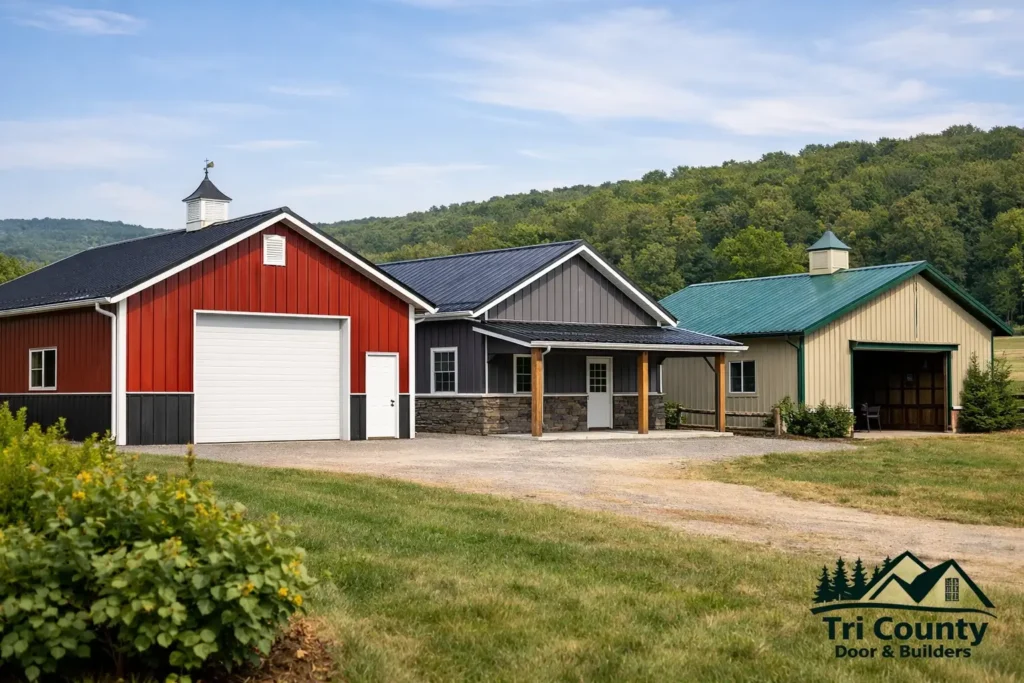
A pole barn’s color is not a small finishing detail. It affects how the building fits your property, how much dirt and weathering it shows, and whether it still looks right when your needs change years from now. The best pole barn colors balance personal preference with practical concerns like Southwestern Pennsylvania weather, surrounding buildings, maintenance expectations, and resale value.
For most property owners, starting with a proven neutral exterior and adding contrast through trim or roofing is a safe, attractive choice. That does not mean every barn needs to be beige or gray. It means the color plan should work as hard as the building itself.
Start With the Building’s Job
Before comparing swatches, consider how the pole barn will be used. A working agricultural building, contractor garage, backyard workshop, horse barn, and barndominium-style structure may all call for different approaches.
A utility-focused building can handle a more traditional color combination because function comes first. White, light gray, tan, dark green, and burgundy have remained popular for decades because they suit rural properties without looking dated. These colors also tend to coordinate easily with existing homes, fencing, equipment, and outbuildings.
A pole barn built near a home or used as a finished garage often deserves more attention to architectural consistency. Matching the house’s roof color, siding family, shutters, or stone accents creates a more intentional look. Exact matching is not always necessary, and sometimes it is not possible across different materials. Choosing complementary colors is usually enough.
Commercial and contractor buildings should also consider visibility and branding needs. A clean neutral body with darker trim looks professional and gives the building a broad appeal if the property is sold or leased later. Very bold colors can be effective when they fit an established business identity, but they are a more specific long-term choice.
Best Pole Barn Colors That Stay Popular
The most reliable color combinations are popular for a reason: they work across property styles, hide normal wear reasonably well, and are less likely to feel tied to a short-lived trend.
Charcoal Gray With Black or White Trim
Charcoal gray is one of the strongest options for a modern shop, garage, or residential pole building. It looks sharp beside stone, brick, white siding, and many common roofing colors. Black trim gives it a clean, contemporary appearance, while white trim provides a brighter, more traditional contrast.
The trade-off is heat. Darker metal surfaces absorb more sunlight, which can make an uninsulated building warmer during sunny weather. Proper insulation, ventilation, and thoughtful door placement matter more when choosing a dark exterior.
Tan or Light Brown With Brown Trim
Tan is a dependable choice for agricultural buildings, equipment storage, and properties with wooded or open-country surroundings. It blends naturally with the landscape, dust, gravel drives, and earth-tone homes. Brown trim or a brown roof gives the building a grounded, classic appearance.
This combination is forgiving. It generally hides dirt better than bright white and is less visually heavy than a very dark building. For property owners who want a barn that looks good without demanding attention, tan and brown are hard to beat.
White With Dark Trim
White pole barns remain common because they look clean, reflect sunlight, and work with almost any accent color. Dark green, black, charcoal, navy, red, and brown trim can all change the character of a white building without making the overall design feel overdone.
White does show mud splash, algae, and staining more readily than mid-tone colors, especially near the lower wall panels. On a working farm or a building near a gravel drive, darker wainscoting along the bottom portion of the walls can reduce visible wear while adding contrast.
Dark Green With White or Tan Trim
Dark green is a natural fit for wooded lots, farms, and properties where owners want the building to settle into the landscape rather than stand apart from it. It has a traditional agricultural feel but can still look polished with the right trim.
White trim creates a crisp, familiar barn appearance. Tan trim softens the contrast and works especially well with brown roofing or nearby earth-tone structures. Green is less common in suburban settings, but it can be an excellent choice when the property has mature trees or a rural backdrop.
Red or Burgundy With White Trim
Red is the classic barn color, and burgundy offers a deeper version that often feels less bright and more refined. Either option can provide a strong agricultural look, particularly with white trim and a neutral roof.
The consideration here is visibility. Red and burgundy make a statement, which is exactly what some property owners want. If the building sits close to a home with cool gray siding or a modern black roof, however, a traditional red barn may not feel connected to the rest of the property. Look at the building from the road and from the home before committing.
Light Gray With White or Charcoal Accents
Light gray is one of the most flexible choices available. It works on rural, residential, and commercial properties, and it pairs well with nearly every common roof color. White trim keeps the look light and conventional, while charcoal trim creates a more defined, updated design.
Gray is also practical in Western Pennsylvania. It does not show dust as quickly as white, and it avoids the heat gain associated with the darkest colors. If you are unsure where to start, a gray body with a darker roof is a sensible baseline.
Choose the Roof and Trim Before Finalizing Wall Color
Many owners begin with wall panels, but the roof has a larger visual impact than they expect. It is visible from farther away, covers a larger plane, and must work with the house or other nearby structures. A darker roof is common because it frames lighter wall colors well and can hide certain types of staining.
Once the roof color is selected, choose the wall panels and trim around it. A simple three-part plan usually works best: one main wall color, one roof color, and one trim color. Adding several competing colors can make even a well-built barn look busy.
Wainscoting is useful when you want another layer of contrast without overcomplicating the design. A dark lower panel can protect the appearance of light walls from mud and equipment marks. It is especially practical around overhead doors, entry doors, and areas that see regular traffic.
Consider Sun, Snow, Dirt, and Maintenance
Color preference matters, but local conditions should have a seat at the table. Pennsylvania buildings see wet springs, muddy ground, leaf debris, snow, and periods of strong summer sun. The finish itself is built for exterior use, but color determines how visible normal weathering becomes.
Dark colors can warm up faster in direct sunlight. This is not a reason to avoid them, but it is a reason to plan for insulation and ventilation if the barn will be used as a workspace, garage, or animal shelter. Light colors reflect more heat but can show dirt and mildew more easily.
Mid-tone shades such as tan, gray, brown, and dark green tend to be the easiest to live with. They hide dust, rain spotting, and minor marks better than stark white, while avoiding the intense visual weight of black or very dark charcoal.
Also consider where the building sits. A barn under trees may collect pollen, sap, and leaf debris. A structure near a busy drive may see road dust. A building in an open field will receive more direct sun. No color eliminates maintenance, but the right one can make routine cleaning less urgent.
Match the Property Without Making Everything Identical
A pole barn does not need to duplicate the house to look like it belongs. In fact, matching every color exactly can make the design feel forced, particularly when the home uses vinyl, brick, stone, or painted siding and the barn uses metal panels.
Instead, repeat one or two key elements. If the house has a black roof, a pole barn with a black roof or black trim will create a connection. If the home features warm beige siding and brown shutters, tan walls with brown trim may be the better fit. If the home is white with charcoal accents, a gray or white barn can carry the same visual language.
For older farm properties with several outbuildings, choose a color family rather than trying to make every structure identical. Coordinated neutrals look intentional and leave room for future additions.
Avoid Color Decisions You May Regret
The right color plan should still work if the building changes use. A workshop may become equipment storage. A personal garage may become a business space. A hobby barn may eventually be sold with the property. Neutral main colors give you more flexibility than highly specific combinations.
It is also wise to view physical samples outside before making a final decision. Metal colors can look different in full sun, shade, cloudy weather, and against existing siding. Hold samples next to the house, driveway, roofline, and any nearby buildings. A color that looks perfect under showroom lighting may read much darker or warmer outside.
Tri County Door & Builders helps property owners across Westmoreland, Somerset, and Fayette Counties sort through these choices with practical experience, not one-size-fits-all recommendations. The best result is a pole barn that suits the property, performs in local conditions, and still looks like a smart investment years from now.
Choose a color combination you will be comfortable seeing in every season, from a muddy March afternoon to a bright January snowfall. That simple test usually leads to a better decision than chasing the newest trend.