




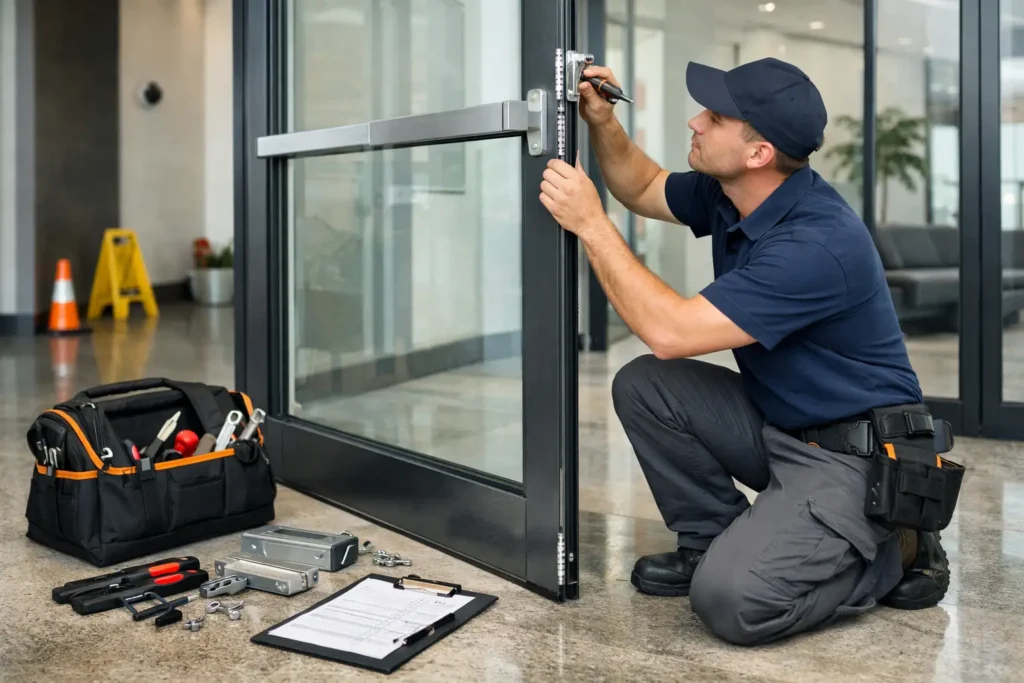
A loading-bay door that sticks halfway open, a storefront entry that will not latch, or a roll-up door making new grinding noises can stop work faster than most property owners expect. This commercial door maintenance guide gives business owners and property managers a practical way to spot developing problems early, protect employees and inventory, and avoid turning a manageable repair into an urgent service call.
Commercial doors work harder than most building components. They handle repeated cycles, changing temperatures, wind, moisture, vehicle traffic, and daily wear from employees, customers, and deliveries. A maintenance plan does not eliminate every failure, but it gives you a clearer picture of what needs attention and when.
What Commercial Door Maintenance Protects
A properly maintained door protects more than the opening in your building. It helps keep your facility secure after hours, limits drafts and water intrusion, supports safe access, and keeps operations moving. For a warehouse or shop, an overhead door that will not open can delay deliveries and leave equipment trapped inside. For a retail or office property, a misaligned entry door can create a security concern or make the building difficult to access.
The details depend on the door type. Sectional overhead doors, rolling steel doors, hollow-metal personnel doors, automatic doors, fire-rated doors, and high-use service entrances each have different parts and service needs. Still, the same principle applies: listen for changes, inspect visible wear, and address small issues before the door is forced to work through them.
Maintenance is also a cost-control decision. Replacing a worn roller, damaged weather seal, loose hinge, or failing closer is usually far less disruptive than replacing an entire door system after a breakdown or impact event.
Build a Commercial Door Maintenance Routine
The right schedule depends on traffic. A door used dozens of times per day needs more attention than one opened only a few times each week. A busy service bay, agricultural operation, warehouse, or contractor yard should plan more frequent checks than a lightly used storage building.
Start with a quick weekly walk-around
A weekly visual check can be done by a trained employee or property manager. Open and close the door through a normal cycle, then look and listen for anything different. The door should move evenly without jerking, scraping, excessive vibration, or unusual noise.
Check for loose fasteners, damaged panels, bent track sections, frayed cables, worn rollers, gaps around the perimeter, and signs that a vehicle or piece of equipment has contacted the door. At pedestrian doors, check whether the door closes and latches without being slammed, whether the hinges are secure, and whether the frame shows rubbing or separation.
This check should not involve disassembling components. The goal is to catch clear warning signs and report them promptly.
Schedule monthly functional checks
Once a month, take a closer look at the door’s working parts. On overhead doors, inspect the tracks for debris and obvious damage. Dirt, ice, gravel, and other buildup can interfere with rollers and create unnecessary strain. Clean the area around the opening, including the threshold and drainage path, so water does not collect where it can freeze or seep inside.
Test the door’s locking hardware, handles, panic hardware, closers, and access controls. A door that looks fine but does not latch consistently is not providing dependable security. For powered overhead doors, test photo eyes and reversing controls according to the operator manufacturer’s instructions. Keep sensors clean and properly aligned, but do not bypass safety devices to keep a door running.
Review weather seals at the bottom and sides of the opening. Cracked, flattened, or missing seals allow cold air, rain, pests, and blowing snow into the building. In Southwestern Pennsylvania, that can quickly affect comfort, heating costs, stored materials, and floor safety during winter weather.
Bring in a professional for periodic service
High-tension springs, lift cables, drums, operators, and certain fire-door components require trained service. These parts can cause serious injury or equipment damage when adjusted incorrectly. If an overhead door is out of balance, a cable is fraying, a spring appears damaged, or the door will not stay in position, stop using it and arrange professional service.
For many commercial properties, a professional inspection once or twice a year is a practical starting point. High-cycle doors may need quarterly service. A qualified technician can inspect spring tension, cable condition, bearings, rollers, operator settings, limit switches, hardware alignment, and mounting points in ways a routine walk-around cannot.
Key Areas to Inspect on Every Door
A good inspection focuses on the components that most often affect safe operation and building protection.
Hardware and alignment: Loose hinges, worn rollers, damaged tracks, and shifted frames can make a door bind or sag. A small alignment issue can put stress on the operator or cause the door to wear unevenly. Do not ignore a door that needs extra force to close.
Weather protection: Look at bottom seals, perimeter weatherstripping, thresholds, sweeps, and flashing around the opening. Water stains, rust, soft framing, or recurring drafts may point to a sealing issue rather than a problem with the door itself.
Locks and access: Test keys, cylinders, latch bolts, deadbolts, panic bars, closers, and electronic access hardware. Employees should not have to prop a door open because it is difficult to use. Propping open a secure or fire-rated door can create safety and security problems.
Operator and safety controls: Overhead door operators should respond consistently and stop or reverse as designed when an obstruction is detected. Keep photo-eye lenses clean, protect wiring from damage, and make sure remote controls and wall stations are functioning properly.
Door condition: Check steel skins, glass, seals, frames, and fasteners for rust, dents, cracks, corrosion, or impact damage. Minor surface damage may be cosmetic, but a deep dent or bent panel can affect how the entire system moves.
Give Fire-Rated Doors Extra Attention
Fire-rated doors are not ordinary doors with a different label. They are part of a building’s fire-protection system and need to close and latch properly to perform as intended. A fire door should not be blocked, wedged open, altered with unapproved hardware, or left with damaged seals, missing labels, or nonfunctioning closers.
Inspection and testing requirements can vary based on the building, occupancy, local code, and authority having jurisdiction. Property managers should maintain records of required fire-door inspections and work with qualified professionals when repairs or modifications are needed. A convenient shortcut, such as adding a hook to hold a door open, can create a costly compliance issue later.
Prepare Doors for Pennsylvania Weather
Western Pennsylvania weather puts commercial openings through freeze-thaw cycles, wind-driven rain, heavy snow, and temperature swings. Seasonal checks help prevent weather-related failures.
Before winter, clear debris from tracks and thresholds, inspect weather seals, verify that drainage around the opening is working, and make sure door closers and latches operate correctly. Avoid using corrosive de-icing materials directly around door hardware when possible. Salt and moisture can speed up corrosion on metal components.
During cold spells, do not force a frozen overhead door. Check whether ice has bonded the bottom seal to the concrete or whether snow and debris are blocking the path. Forcing the operator can damage the opener, cables, panels, or gears. Remove the obstruction safely and call for service if the door still will not move normally.
After severe wind, vehicle impact, or a power outage, inspect the door before putting it back into regular use. A door may appear closed while tracks, cables, sensors, or locking hardware have been compromised.
Know When Repair Is Better Than Replacement
Not every worn component means the whole door needs to be replaced. A targeted repair often makes sense when the door panels and frame are in sound condition, the door fits the opening properly, and the problem is limited to hardware, seals, rollers, an operator component, or a damaged section.
Replacement may be the better long-term value when repairs are becoming frequent, the door is heavily corroded, the opening no longer meets operational needs, or parts for an older system are difficult to obtain. Energy loss is another consideration. A better-insulated commercial overhead door can make a noticeable difference in a heated shop, service area, or storage space, though the payoff depends on how often the door is used and how the building is conditioned.
When comparing options, consider cycle rating, insulation needs, wind exposure, security requirements, opening size, equipment clearance, and the type of traffic using the door. The least expensive door is not always the most affordable choice over its working life.
Keep a Simple Service Record
A maintenance log does not need to be complicated. Record the date, door location, issue noticed, action taken, and service provider. Include photos of impact damage or recurring water intrusion when useful. This record helps identify patterns, supports warranty discussions, and gives managers a better basis for budgeting repairs or replacement.
It also helps employees know what has already been reported. Instead of several people repeatedly forcing a sticking door, the team can take it out of service and follow the correct repair process.
A commercial door is easiest to manage when it receives attention before it becomes an emergency. For property owners in Westmoreland, Somerset, and Fayette counties, Tri County Door & Builders can help evaluate door condition, recommend practical repair or replacement options, and keep a critical opening working the way your business needs it to.