



A roof replacement is not the time to choose based on the first shingle color that catches your eye. When homeowners compare GAF TAMKO shingles, they are usually weighing the same practical questions: Which roof will hold up to local weather, fit the home’s appearance, stay within budget, and come with support if something goes wrong?
GAF and TAMKO are established asphalt shingle manufacturers with product lines built for residential roofs. Neither is automatically the right answer for every property. The better choice depends on the shingle line, the complete roofing system, the installer’s workmanship, and what matters most to you over the life of the roof.
GAF vs. TAMKO shingles: Start with the roof, not the label
Both brands offer architectural shingles, also called dimensional shingles, that provide more depth and visual interest than basic three-tab products. For many homes in Western Pennsylvania, architectural shingles are the practical starting point because they balance appearance, durability, and cost.
GAF is widely recognized for its Timberline shingle lines. TAMKO is well known for its Heritage architectural shingles. Both product families are common choices for homeowners who want a traditional layered look without moving into premium specialty roofing materials.
The brand name alone does not tell the entire story. A manufacturer may offer entry-level, mid-range, and enhanced-performance options, each with different color selections, wind ratings, algae protection, and warranty terms. Comparing a GAF architectural shingle to a TAMKO architectural shingle is useful. Comparing a basic shingle from one brand to a premium line from another can lead to the wrong conclusion.
A dependable contractor or supplier should help you compare equivalent products and provide a written scope of work. That is how you avoid paying for a name without understanding what is actually included in the roofing system.
Appearance matters more than many homeowners expect
Your roof covers a large portion of your home’s visible exterior. A color that looks good on a small sample can look much darker, warmer, or more blended once it covers the entire roof.
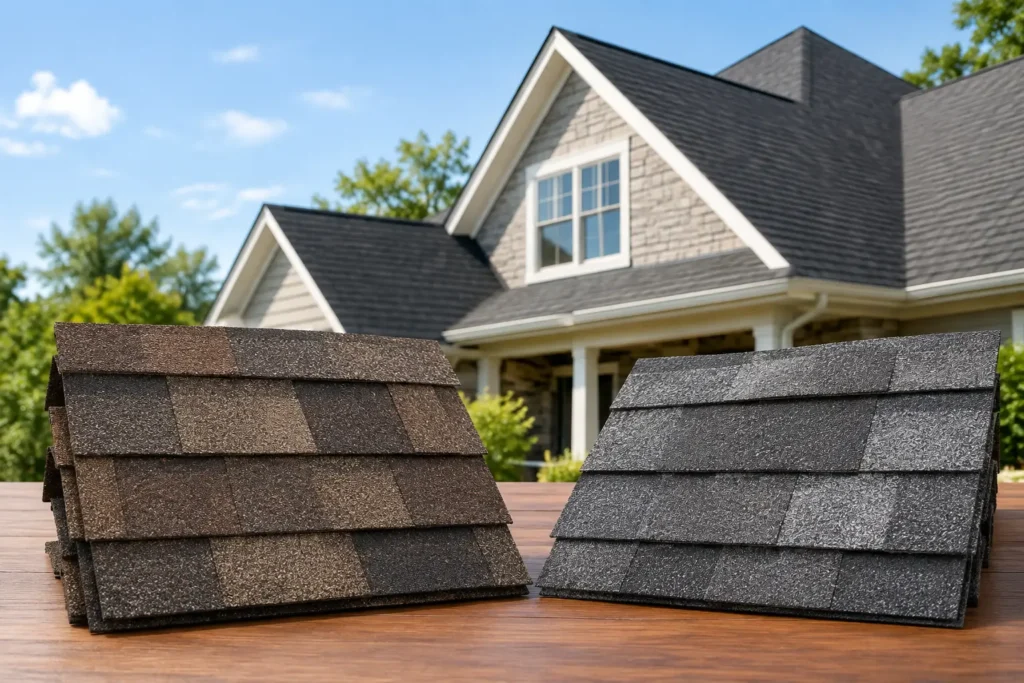
GAF and TAMKO both offer neutral blends that work well with brick, siding, stone, and rural properties. Charcoal and weathered wood tones remain popular because they pair easily with many exterior colors. Brown blends can add warmth to tan, cream, or earth-tone homes, while black and dark gray options provide a more defined, modern look.
The best approach is to look at full-size samples outdoors whenever possible. View them beside your siding in morning light, afternoon light, and on an overcast day. This is especially helpful in wooded areas, where shade can change the appearance of a roof substantially.
If resale is part of your thinking, neutral colors are usually the safest choice. That does not mean every roof should be gray. It means the color should complement the home instead of becoming the one feature buyers remember for the wrong reason.
Performance depends on more than shingles
A new roof is a system, not a stack of shingles. The shingles are the visible layer, but water protection and ventilation depend on what is installed underneath and around them.
A properly specified asphalt roof may include underlayment, ice and water protection in vulnerable areas, starter shingles, hip and ridge materials, flashing, ventilation components, and fasteners installed to manufacturer requirements. Skipping or substituting key materials can affect performance even when the field shingles are high quality.
This matters in Southwestern Pennsylvania, where roofs face rain, snow, freeze-thaw cycles, wind, and occasional ice buildup. Valleys, chimney areas, skylights, sidewalls, and low-slope transitions need particular attention. Those are the locations where roof leaks often begin, not in the middle of an open shingle field.
Attic ventilation also deserves a real conversation. Poor ventilation can contribute to excess heat and moisture, which may shorten roof life and create problems in the attic. Ventilation is not one-size-fits-all. The right setup depends on attic layout, insulation, intake airflow, exhaust placement, and the home’s existing conditions.
Warranty comparisons require careful reading
Warranty language can sound straightforward until you look at what it covers. A manufacturer warranty may address defects in the roofing materials, while the contractor’s workmanship warranty addresses installation-related issues. Those are different protections, and both matter.
Some enhanced manufacturer warranty options may be available when qualifying shingles and accessories are used together and the roof is installed through an eligible contractor program. Requirements vary by product line and can change, so homeowners should ask for the actual warranty documentation tied to their proposed roof.
Before signing a contract, ask these questions in plain terms: What shingle line is being installed? Which accessories are included? Who handles a warranty claim? What is covered by the installer, and for how long? Is tear-off, disposal, deck repair, and flashing replacement included in the quote?
A lower price can be a good value, but only when the scope is comparable. A quote that leaves out underlayment upgrades, flashing work, ventilation, or disposal is not necessarily less expensive once those items are added later.
Price: Compare installed value, not just bundle cost
Material pricing varies by shingle line, color, roof size, pitch, availability, and accessory requirements. Installation costs also change when a roof is steep, has multiple layers to remove, requires decking repairs, or has dormers, chimneys, and valleys.
For that reason, there is no honest universal answer to whether GAF or TAMKO costs less. On one project, a comparable TAMKO option may be the budget-friendly choice. On another, a GAF system may be competitively priced or offer a color and warranty combination that makes more sense for the homeowner.
The useful question is not, “Which brand is cheapest?” It is, “What am I getting for the installed price?” A complete estimate should clearly identify the products, labor, removal work, protection of landscaping and property, cleanup, and any potential deck repair process.
Homeowners who are exploring several brands should also consider current promotions. For example, Tri County Door & Builders is offering 30% off Owens Corning shingles, which may make an Owens Corning roof worth comparing alongside GAF and TAMKO options. The goal is not to force one brand on every home. It is to put comparable systems and real installed costs side by side, without the added Pittsburgh-area markup.
How to choose between GAF and TAMKO
Choose the product that best matches your home, budget, and installation plan. If you strongly prefer a particular color blend available in one brand, that can be a valid deciding factor. If a specific enhanced warranty structure matters most, review the requirements closely. If upfront cost is the priority, compare equivalent architectural shingle systems rather than comparing a premium option against a standard one.
It is also wise to ask about availability before making a final color decision. Roofing projects can move quickly once weather allows, and selecting a readily available product may help keep the schedule on track. That said, do not let availability alone push you into a color or product line you will regret seeing every day for years.
For commercial buildings, garages, agricultural structures, and low-slope areas, asphalt shingles may not always be the best fit. Metal roofing or another system may offer better performance for the building design. An honest recommendation should account for roof pitch, intended use, drainage, and long-term maintenance needs.
The installation crew is part of the product
A quality shingle can still fail early if it is installed over damaged decking, fastened incorrectly, poorly flashed, or placed on a roof with unresolved ventilation issues. Conversely, a properly installed roofing system gives either GAF or TAMKO shingles their best chance to perform as designed.
Ask who will be responsible for the work, how the site will be protected during tear-off, and how unexpected deck damage will be handled. Make sure the contractor is insured and willing to explain the process before the first bundle reaches the roof.
The right roof is the one that fits your home and is installed with care from the deck up. A clear estimate, comparable product information, and straightforward answers will help you make that decision with confidence.