




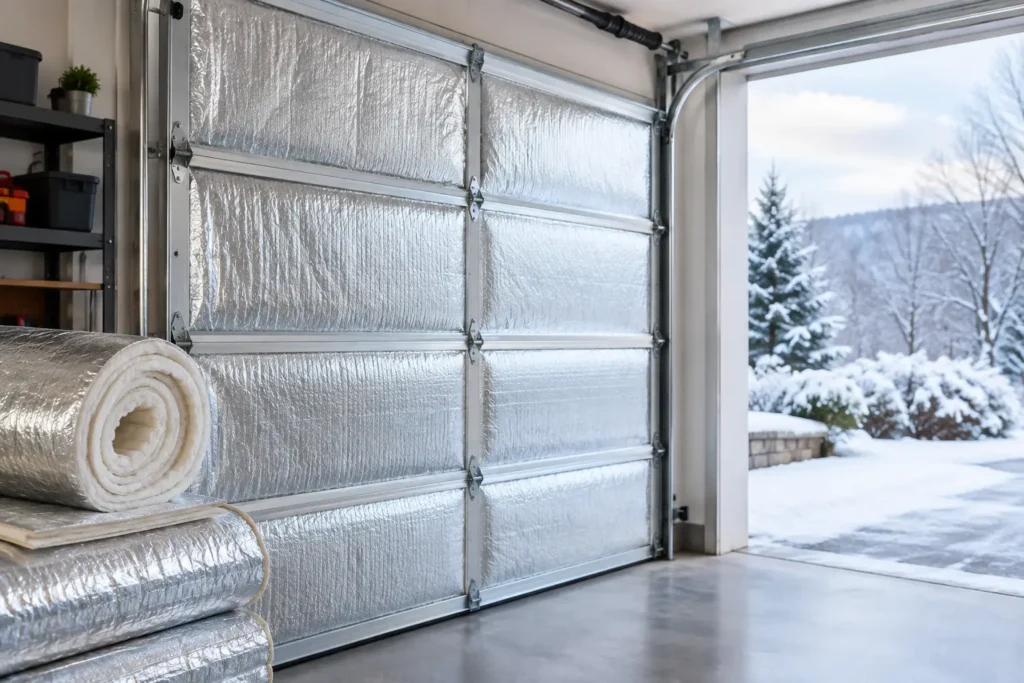
A garage can be 20 degrees colder than the rest of the house on a hard Southwestern Pennsylvania winter morning. If there is a bedroom above it, a workshop inside it, or a wall connecting it to your living space, that cold does not always stay put. This garage door insulation guide explains what insulation can realistically do, how to choose a material, and when upgrading the door itself makes better sense.
Insulation is not a cure-all for a drafty or failing garage door. It works best as one part of a practical plan that also addresses worn bottom seals, gaps around the opening, and a door that is properly balanced and operating safely.
When garage door insulation is worth the cost
An insulated garage door is usually a smart investment when the garage is attached to the home, used as a workshop, or contains plumbing and equipment that benefit from steadier temperatures. It can reduce the intensity of summer heat and winter cold, help limit noise, and make the space more usable during the months when an uninsulated garage feels like a refrigerator.
The benefit is less dramatic for a detached garage used only to park vehicles or store lawn equipment. Even there, insulation may be worthwhile if you spend time working inside, but expectations should be realistic. A door can slow heat transfer, yet it cannot turn an unheated building into conditioned living space.
Look at the whole garage before choosing a product. If the ceiling, exterior walls, and windows are uninsulated, the garage door is only one of several weak points. On the other hand, a large sectional door often represents the biggest single surface facing the weather, so improving it can have a noticeable effect.
Understand R-value before you buy
R-value measures resistance to heat flow. A higher number generally means better insulating performance, but material type, thickness, fit, and air leakage all affect real-world results. An insulation kit with a good stated R-value will not perform as expected if panels leave wide gaps or interfere with the door’s operation.
For many homeowners, a moderate R-value is a sensible middle ground. It improves comfort without adding unnecessary cost or weight. Higher R-values are more compelling for attached garages, hobby spaces, and buildings where temperature stability matters. They are also common in insulated replacement doors with foam-filled construction.
Do not choose solely by the biggest number on a package. Check whether the R-value applies to the insulation material alone or to the complete door assembly. Ask how the material will be secured, whether it is compatible with your specific door style, and whether added weight will require spring adjustment.
Insulation materials and their trade-offs
Foam board panels, typically polystyrene, are popular for DIY projects because they are rigid, relatively light, and easy to cut to fit individual door sections. They provide better insulating value per inch than thin reflective products. Their main drawback is fit: poorly cut panels can rattle, bow, or leave gaps that reduce performance.
Reflective insulation is lightweight and often easy to install. It can be useful where space is tight and can reflect radiant heat when an appropriate air space is present. In a typical garage door application, however, it usually provides less cold-weather resistance than thicker foam insulation. It is not automatically the best choice just because it is simple to handle.
Fiberglass batts should be approached carefully on moving sectional doors. They can absorb moisture, sag over time, and add enough weight to affect the springs and opener. If a garage door was not designed for that material, a purpose-made kit or an insulated replacement door is generally the better path.
Polyurethane foam, commonly found in premium insulated doors, offers strong R-value and helps stiffen the door. This is one reason a factory-insulated door often feels more solid and operates more quietly than an older hollow steel door fitted with an aftermarket kit.
Start with the door’s condition
Before insulating an existing door, inspect it honestly. A door with cracked sections, rust, damaged hinges, weak rollers, or an unreliable opener may need repair or replacement first. Adding insulation to a door near the end of its service life can mean paying for an upgrade you will soon remove.
Pay special attention to the bottom weather seal. If daylight is visible under the closed door or cold air blows in around the sides, insulation panels alone will not solve the problem. Replace worn weatherstripping and make sure the door closes evenly against the opening. A good seal often delivers more immediate comfort than people expect.
Test the balance as well. With the opener disconnected and the door closed, lift it manually to about halfway. A properly balanced door should stay near that position. If it races upward, drops quickly, or feels unusually heavy, stop and have the springs checked by a trained garage door technician. Springs are under high tension and are not a casual do-it-yourself repair.
How to insulate an existing sectional door
Most retrofit projects work best on standard sectional steel doors with open channels on the back of each panel. Measure each section individually rather than assuming every panel is identical. Older doors can vary slightly, and cutting panels too large can cause binding when the door bends along its hinges.
Clean the inside of the door first. Then cut the insulation to fit within each panel frame, leaving enough room around hinges, braces, handles, and moving hardware. Secure it according to the manufacturer’s instructions. Avoid methods that puncture the outer skin or create loose material that could catch as the door travels through the tracks.
After installation, run the door several times while standing clear of moving parts. Watch for rubbing, shifting panels, or a door that sounds strained. The opener should not labor, and the door should still seal properly when closed. If the door’s behavior changes, the additional weight may need professional adjustment.
Never block vents or alter required ventilation around gas-fired appliances in an attached garage. Insulation should improve comfort without creating a safety issue.
Insulate the garage, not just the door
A garage door project has the best payoff when paired with basic air-sealing and insulation where it matters most. For a garage under a finished room, the ceiling is often a priority. For an attached garage, the wall between the garage and home should be properly insulated and sealed, especially around penetrations for wiring, pipes, and ducts.
Weatherstrip the service door, seal obvious gaps around window trim, and inspect the threshold where the garage door meets the floor. If water regularly enters the garage, correct drainage concerns before installing materials that could trap moisture or deteriorate.
Heating a garage introduces another decision. If you plan to condition the space regularly, discuss insulation levels, ventilation, electrical load, and local code requirements with a qualified professional. A space heater may take the edge off for a short project, but it is not a substitute for a properly planned heated workspace.
When a replacement insulated door is the better value
A replacement door can make more sense than a retrofit when the existing door is damaged, poorly sealed, thin, or difficult to operate. Factory-insulated steel doors provide insulation, finished interior surfaces, structural strength, and a more consistent fit in one package. They can also improve curb appeal and reduce outside noise.
This option costs more upfront, so it is not necessary for every garage. But when repair needs are mounting, the door is older, or you want a higher-performing workspace, replacing the complete door can prevent piecemeal spending. It also allows a technician to match the springs, tracks, rollers, and opener setup to the new door’s size and weight.
For property owners in Westmoreland, Somerset, and Fayette Counties, the local weather makes durable materials and correct installation especially worthwhile. Snow, freeze-thaw cycles, wind, and humid summers expose weak seals and lightweight components quickly.
A better-insulated garage begins with the right goal: greater comfort, better protection for the space, or a quieter, more dependable door. Tri County Door & Builders can help you weigh repair, retrofit, and replacement options so the solution fits the building, the budget, and the way you actually use your garage.