




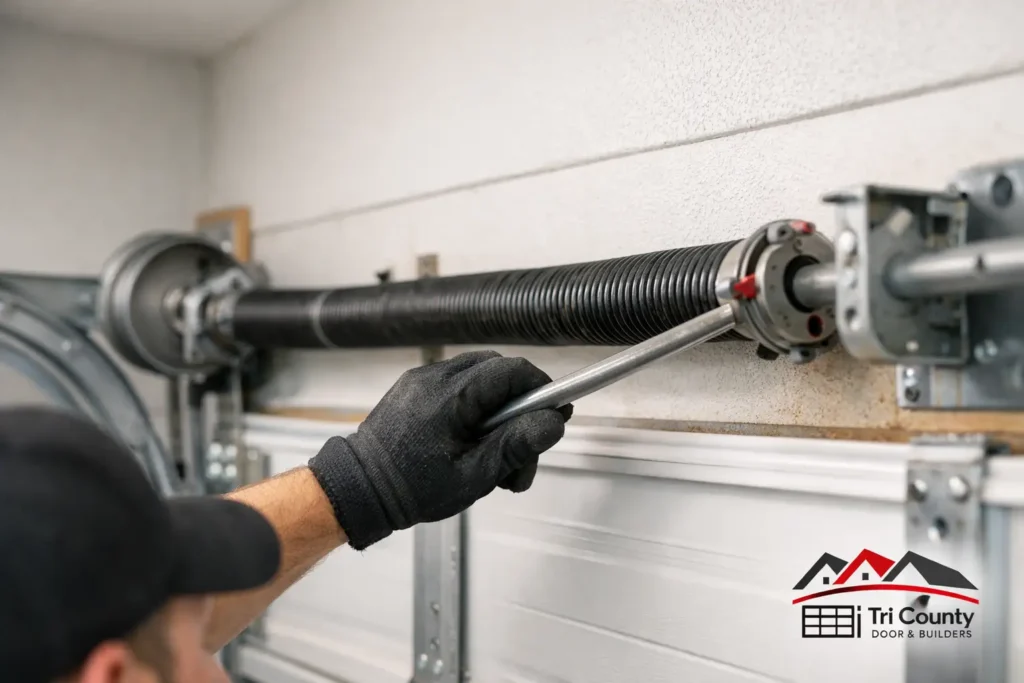
A garage door usually gives you a warning before a spring fails. The door starts feeling heavier, opens unevenly, slams shut, or makes a sharp bang from the garage that sounds a lot bigger than the part itself. If you have been searching for a garage door spring repair example, the real value is not just seeing what broke. It is understanding what failed, why it failed, and what a proper repair should include so you do not pay for a quick fix that leaves the door unsafe.
For homeowners and property owners, spring problems are one of the most common garage door service calls. They are also one of the repairs that should not be treated like a casual weekend project. Garage door springs hold and release a serious amount of tension. When they wear out or snap, the issue is not only inconvenience. It is a safety problem and, in some cases, a threat to the opener, tracks, cables, and door sections if the system keeps being used.
A real garage door spring repair example
Picture a standard residential sectional garage door that suddenly will not open more than a few inches. The opener hums, strains, and then stops. When the technician arrives, the first sign is clear – one torsion spring above the door has a visible gap where the coil snapped.
That gap matters because a torsion spring should look continuous when intact. Once it breaks, the door loses much of the counterbalance that makes it easy to lift. What used to feel manageable at 10 to 20 pounds of lifting force can suddenly feel like the full weight of the door.
In this garage door spring repair example, the repair is not just swapping one part and leaving. A good technician checks the spring size, wire diameter, length, door height, drum condition, cable wear, center bearing, end bearing plates, and opener strain. If the broken spring is part of a two-spring system, replacing both springs is often the smarter move. The reason is simple – if one failed from age and cycle wear, the second is usually not far behind.
That is the kind of detail property owners should expect from a professional service visit. A spring repair done right should restore balance, not just movement.
What springs actually do
Garage door springs do the heavy lifting so the opener does not have to. Whether the door uses torsion springs mounted above the opening or extension springs along the tracks, the job is the same. They store mechanical energy and help raise and lower the door in a controlled way.
Without properly matched springs, the opener is forced to pull more weight than it was designed to handle. That can burn out the motor, strip gears, or cause the door to move unevenly. In other words, the spring is not a minor accessory. It is one of the central working parts of the whole system.
This is also why spring sizing matters. A spring that is too strong can make the door drift upward or refuse to stay closed. A spring that is too weak can leave the door heavy and hard on the opener. The right repair is based on the actual door weight and setup, not guesswork.
Why garage door springs fail
Most spring failures come down to age, use, and environment. Every open and close counts as a cycle. Over time, that metal simply wears out. On a busy household garage, especially one used as the main entry point, springs can burn through their cycle life faster than many owners expect.
Weather can make things worse. In Southwestern Pennsylvania, changing temperatures, humidity, and winter conditions can all affect metal parts. Rust and corrosion add friction and wear. Lack of lubrication does not usually cause the spring to break by itself, but it can speed up deterioration across the system.
Sometimes the failure is tied to poor installation from the start. Wrong spring sizing, uneven tension, neglected cables, or an opener that has been forcing a badly balanced door for months can shorten the life of the entire setup.
Signs you need more than a basic repair
Not every service call ends with a simple spring replacement. Sometimes the broken spring is the first visible symptom of a larger issue.
If the door is crooked when opening, the cables may be frayed or off the drum. If the tracks are bent, rollers are worn, or hinges are loose, those problems need attention too. If the opener has been trying to lift a dead-weight door, it may need adjustment or repair after the spring issue is fixed.
This is where an honest technician is worth a lot. You do not want to be sold a full system replacement when a targeted repair will do the job. At the same time, you also do not want a bargain spring swap that ignores worn cables and leaves you with another breakdown in a month.
What a proper spring repair visit should include
A professional spring repair should start with inspection, not assumptions. The technician should identify the spring type, confirm the door weight or existing spring specification, and examine related hardware before performing the repair.
After installation, the door should be balanced and tested by hand. It should open smoothly, stay reasonably in place when partially raised, and close without slamming. The opener settings may also need adjustment so the motor is not overworking after the new springs are installed.
Good service also includes checking safety features. Photo eyes, force settings, and door reversal should all be working as intended. A spring repair affects how the whole door operates, so testing the full system is part of doing the job right.
Repair or replace – what makes sense?
It depends on the age and condition of the door system. If the door is in otherwise solid shape, a spring replacement is usually the most practical fix. It restores safe operation without the cost of replacing tracks, panels, and hardware that still have years of service left.
If the door is older, badly rusted, dented, out of balance, and paired with a tired opener, replacement may make more financial sense over time. The same goes for commercial or agricultural buildings where door reliability matters every day and downtime creates bigger problems.
For many property owners, the smart question is not just, Can this be repaired? It is, What will give me dependable operation for the next several years without repeat service calls? That is where local experience matters. A company that handles both installation and repair can usually give a more grounded answer because they see the full life cycle of these systems.
Why DIY spring work is a bad gamble
There are plenty of home maintenance jobs a capable property owner can handle. Garage door spring replacement is usually not one of them. Torsion springs are wound under high tension, and mistakes can lead to serious injury or damage.
Even if someone manages to install a spring, there is still the issue of sizing it correctly, setting tension properly, aligning cables, and balancing the door. A door that technically opens is not the same as a door that operates safely.
For extension spring systems, people sometimes assume the risk is lower. It is still not simple. Safety cables, pulley condition, stretch, and matching spring strength all matter. A wrong repair can create a door that lifts unevenly or comes down too fast.
Choosing the right service provider
When you call for spring repair, ask practical questions. Do they work on your type of door? Will they inspect the full system? Are they replacing one spring or recommending a matched pair when appropriate? Do they handle both residential and commercial doors?
You also want a provider who explains the repair clearly. No vague language. No pressure. Just a straightforward explanation of what failed, what needs attention now, and what can wait.
That approach has real value in areas where weather, usage, and building types vary widely from one property to the next. A detached residential garage, farm outbuilding, and small commercial shop may all have overhead doors, but they do not all need the same solution. Companies like Tri County Door & Builders have built trust by helping property owners sort through those differences instead of pushing a one-size-fits-all answer.
Garage door spring repair example – what you should take from it
The main lesson from any garage door spring repair example is that the spring is never just a spring. It affects balance, opener strain, cable performance, and day-to-day safety. A proper repair should solve the immediate problem and leave the door operating the way it should.
If your garage door suddenly feels heavy, stops opening, or makes a loud snap, stop using it until it can be inspected. That small step can prevent bigger damage and help you make a better repair decision when the technician arrives.
A dependable garage door should open without drama, close without hesitation, and work when you need it most. When the spring fails, the right repair is not about the fastest patch. It is about getting the door back to safe, reliable service and keeping it that way.