




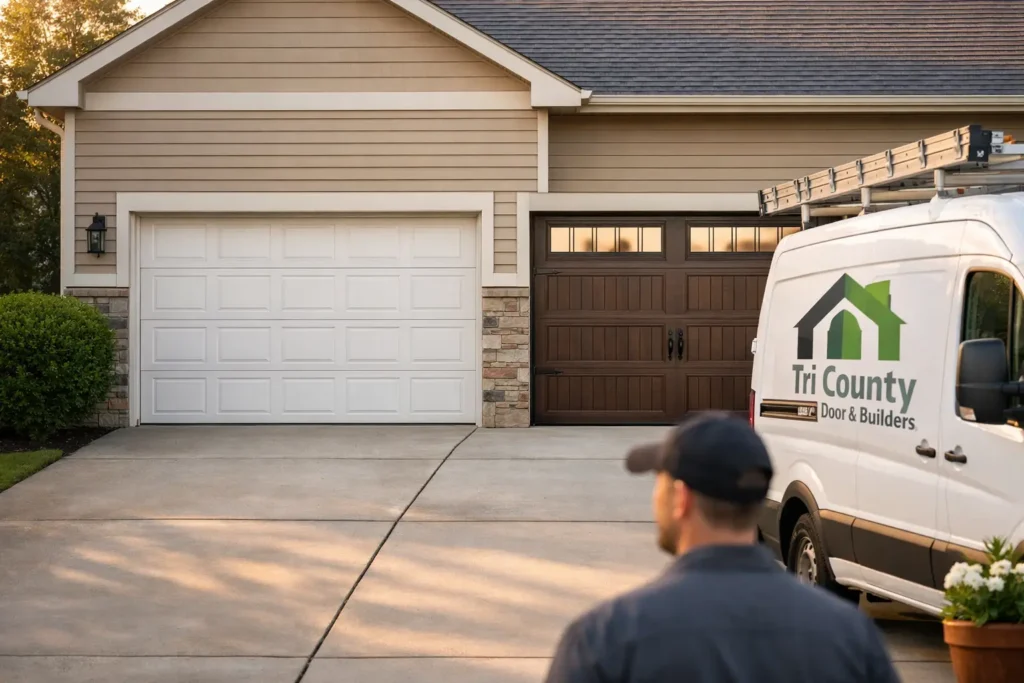
A garage door that rattles through every cycle, lets cold air into the garage, and makes the front of the property look tired is not just an inconvenience. It is usually a sign that several parts of the system are reaching the end of their useful life. This garage door upgrade example shows how a homeowner can move from repeated repairs to a better-looking, more reliable door that fits Southwestern Pennsylvania weather and everyday use.
A Garage Door Upgrade Example: From Repair Calls to Replacement
Consider a homeowner with a detached two-car garage built in the early 1990s. The original wood door had been painted more than once and was beginning to rot along the bottom edge. It still opened, but only after a loud shake from the opener. The rollers were worn, the tracks needed frequent adjustment, and the door did little to keep winter air out of the building.
The homeowner first considered replacing only the bottom section and a few hardware parts. That can be a sensible repair when the remaining sections are sound and replacement panels are available. In this case, though, the damage was not limited to one section. Moisture had affected the wood frame, the door was heavy, and the aging springs and opener were working harder than they should.
The better long-term choice was a full door replacement paired with new hardware. The project included a steel insulated garage door, new tracks, rollers, cables, torsion springs, weather seal, and an opener sized for the new door. Rather than putting more money into a system with several weak points, the homeowner started over with components designed to work together.
That is often the turning point in a garage door decision. A single repair may solve a single problem. When the door, hardware, and opener all show their age, replacement can provide better value over the next several years.
Choosing the Right Replacement Door
The homeowner selected a sectional steel door with insulation between the exterior and interior steel skins. It offered the practical durability of steel without requiring the regular scraping, painting, and moisture management associated with an aging wood door. A raised-panel design in a neutral color matched the siding and trim without making the garage look out of place.
Insulation was a key part of the decision. The garage was not fully heated, but it stored tools, lawn equipment, and a workbench. It also sat close to the house, so the homeowner wanted to reduce drafts and temperature swings. An insulated door will not turn an unheated garage into finished living space, but it can make the area more comfortable and help protect stored items from extreme cold.
The right insulation level depends on how the garage is used. A detached storage garage may benefit from a basic insulated steel door, while an attached garage with a workshop or living area above it may justify a higher R-value door. Spending more on insulation makes the most sense when the building is frequently used, conditioned, or connected to the home.
Appearance matters, too. Garage doors can take up a large portion of the front elevation, especially on ranch homes and properties with attached garages. The homeowner chose simple windows across the top row to bring daylight into the garage. Windows can improve the look of the door and reduce the need for lights during the day, but they should be placed where they make sense for privacy and security.
Why New Hardware Was Part of the Upgrade
A new door should not be installed on worn-out moving parts. The springs, rollers, cables, hinges, and tracks carry the real work of lifting and guiding the door. If those pieces are tired or mismatched, even an attractive new door can operate poorly.
For this project, torsion springs were selected and calibrated for the door’s weight. Properly balanced springs allow the opener to guide the door rather than strain to lift it. Better rollers also reduced the rattling sound that had become familiar with the old system.
This is one area where professional installation matters. Garage door springs and cables are under substantial tension. Adjusting or replacing them without the correct tools and experience can lead to serious injury or property damage. A qualified installer can also verify that the tracks are level, the safety sensors are aligned, and the door reverses correctly when it meets an obstruction.
The Opener Upgrade Was Not an Afterthought
The old chain-drive opener still functioned, but it was noisy and lacked current safety and convenience features. Once the new insulated door was installed, the homeowner chose a modern belt-drive opener with a battery backup and exterior keypad.
A belt-drive unit is often a good option for an attached garage because it runs more quietly than many chain-drive models. A chain-drive opener can still be a durable, cost-effective choice for a detached garage or a building where operating noise is not a concern. The best choice depends on the door weight, garage location, expected use, and budget.
Battery backup was particularly useful for this property. During a power outage, the homeowner could still get a vehicle out of the garage without relying on the manual release. The keypad also gave family members access without the need to carry an extra remote.
Smart controls are another option, allowing owners to check whether the door is open and operate it from a phone. They are convenient, but they are not necessary for every customer. A reliable opener with correctly installed safety features should come first. Convenience features should support the way the property is actually used, not simply add cost.
What Changed After Installation
The most immediate difference was the noise level. The new rollers, balanced springs, and opener eliminated the shaking and scraping that accompanied the old door. The door also sat evenly against the opening, with fresh perimeter weatherstripping that reduced wind-driven drafts and debris.
The garage looked cleaner from the street, but the practical gains were more valuable. The homeowner no longer had to wonder whether the door would open before work or during a winter storm. The door was easier to operate manually, the opener was no longer overloaded, and the garage stayed more stable in temperature during cold weather.
Just as important, the project reduced the chance of an urgent failure. A worn cable, failing spring, or door that comes off its track often creates a same-day problem. Replacing an aging system on a planned schedule gives the property owner more control over product choices, timing, and budget.
When Repair Still Makes More Sense
Not every garage door problem calls for a full upgrade. If the door is structurally sound and has a broken spring, damaged roller, misaligned sensor, or worn weather seal, a targeted repair may be the responsible choice. A professional inspection can identify whether the issue is isolated or part of a larger pattern of wear.
Replacement becomes more attractive when there is extensive rust, rot, cracked or bent sections, recurring breakdowns, poor insulation, or outdated safety performance. It also makes sense when a homeowner wants to change the size, style, or functionality of the garage door as part of a larger exterior improvement.
For commercial properties, the decision may also involve cycle frequency, vehicle access, security, and downtime. A door that works adequately for a home garage may not hold up in a busy shop, agricultural building, or service facility. Matching the door and operator to the job prevents costly surprises later.
Planning Your Own Garage Door Upgrade
Before choosing a door, take note of how the garage is used, whether it is attached or detached, and what condition the existing hardware is in. Measure the opening, but also consider the headroom and side room needed for tracks and an opener. If you are replacing a door after years of use, plan on having the springs, rollers, cables, and seals evaluated at the same time.
Homeowners in Westmoreland, Somerset, and Fayette counties also benefit from considering local weather exposure. Wind, moisture, road salt, and winter temperature changes can be hard on doors and hardware. Durable materials, proper sealing, and correctly installed components are not extras when the door needs to work year-round.
Tri County Door & Builders helps property owners weigh those choices without pushing a one-size-fits-all answer. The right garage door upgrade is the one that fits the building, the budget, and the way you expect to use the space for years to come.