




A garage door can weigh several hundred pounds, but properly sized springs make it feel manageable to lift. When those springs wear out, the change is usually sudden: the opener strains, the door feels unusually heavy, or it will not open at all. So, how long do garage door springs last? The honest answer is measured in cycles, not simply years.
For a household that uses the garage door a few times each day, standard springs often last around 7 to 10 years. A door used as the main entrance to the home, however, can go through its expected spring life much faster. The right replacement spring, professional installation, and a little attention to warning signs can help prevent a broken spring from becoming an inconvenient – or unsafe – surprise.
How Long Do Garage Door Springs Last in Real Use?
Most standard residential garage door springs are rated for about 10,000 cycles. One cycle is one complete opening and closing of the door. If your family opens the door in the morning, returns home in the evening, and makes a few extra trips throughout the day, those cycles add up quickly.
At two cycles per day, a 10,000-cycle spring could theoretically last more than 13 years. At six cycles per day, that same spring may reach the end of its useful life in about four and a half years. Many households fall somewhere between those examples, which is why a 7-to-10-year expectation is a practical rule of thumb rather than a guarantee.
Higher-cycle springs are available for doors that see more traffic. Springs rated for 20,000, 30,000, or more cycles can be a smart investment for attached garages, busy family homes, workshops, and small commercial properties. They generally cost more upfront, but they may reduce repair interruptions and replacement costs over time.
Torsion Springs vs. Extension Springs
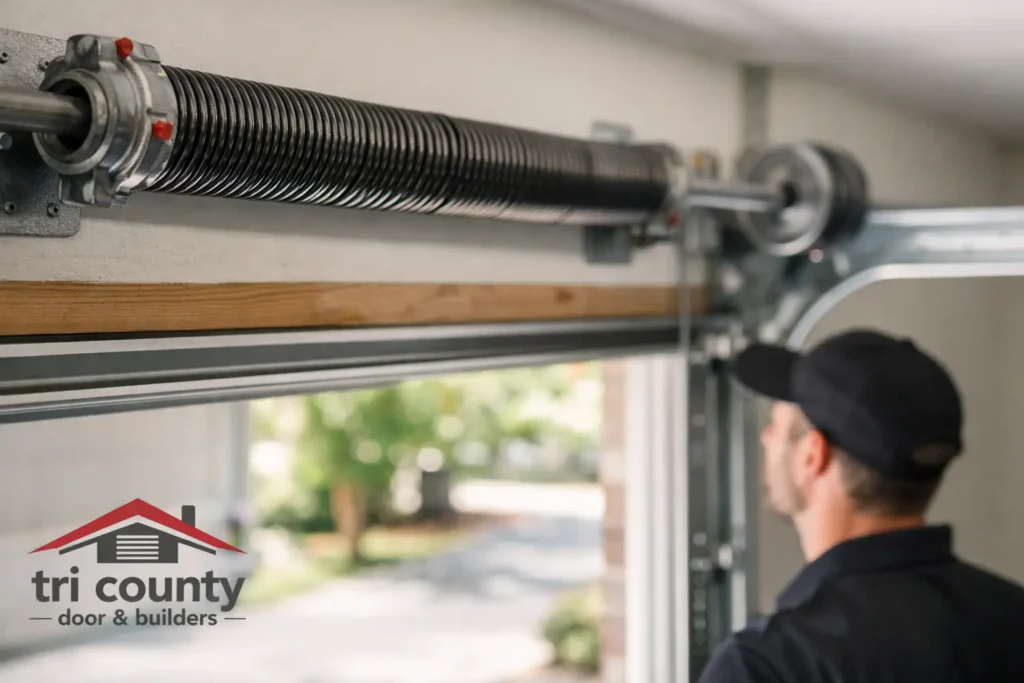
Torsion springs are mounted above the garage door opening on a steel shaft. They store energy by twisting as the door closes and release that energy as it opens. They are common on newer garage doors and are often preferred for their smoother operation, balance, and controlled movement.
Extension springs run along the horizontal tracks on either side of the door. They stretch and contract as the door moves. These systems can work well, especially on lighter doors, but they should always have safety cables installed through the center of each spring. If an extension spring breaks without a containment cable, it can become a dangerous projectile.
Both types wear out from repeated use. The expected lifespan depends more on the spring’s cycle rating, correct sizing, and the weight of the door than on whether it is a torsion or extension system.
What Shortens Garage Door Spring Life?
Springs are built for hard work, but they are not maintenance-free parts. Several conditions can shorten their service life, particularly in Western Pennsylvania, where cold winters, humidity, and frequent temperature swings put extra stress on garage door systems.
Rust is one of the most common concerns. Moisture can corrode the coils and create friction as the spring expands and contracts. A garage that is damp, poorly ventilated, or exposed to road salt may see rust develop faster than a dry, protected garage.
An unbalanced door is another major issue. Springs must be precisely matched to the door’s actual weight. If the door has been updated with heavier insulation, windows, decorative hardware, or replacement panels, the existing springs may no longer be properly sized. A spring that is doing more work than it was designed to handle can fail early. The opener also has to work harder, which can lead to separate motor or gear problems.
Poor installation can create the same result. Springs need the correct wire size, length, inside diameter, and tension for the specific door. Using a generic spring or making a rough adjustment may get the door moving temporarily, but it does not provide the balance or safety a garage door needs.
Frequent use naturally matters, too. A detached garage used only on weekends may get many more years from its springs than an attached garage that serves as the household’s primary entry point. There is no single calendar date when every spring needs replacement.
Signs a Garage Door Spring Is Wearing Out
A spring often breaks without much warning, but the door may show clues as the system loses balance or tension. Pay attention if the garage door begins opening more slowly, stops partway, closes unevenly, or reverses unexpectedly. A loud bang from the garage may also be the sound of a spring breaking.
With a torsion spring, you may see a visible gap of about two inches in the coil above the door. With extension springs, one side may hang lower or appear stretched differently from the other side. In either situation, do not keep pressing the opener button to force the door to move.
Other signs are less obvious. The opener may make a straining sound, the door may feel much heavier when operated manually, or it may not stay in place when lifted halfway. A properly balanced garage door should remain near the halfway position when disconnected from the opener and carefully raised by hand. Because a damaged spring can make even this test hazardous, it is best left to a trained technician if the door feels heavy or moves unpredictably.
What to Do When a Spring Breaks
A broken garage door spring is not a DIY repair for most property owners. Springs hold a significant amount of stored energy, and improper removal or installation can cause serious injury or damage to the door, tracks, cables, or opener.
If the door is closed, leave it closed when possible. Avoid pulling the emergency release and trying to lift a heavy door by hand, especially if a vehicle or person could be in its path. Do not disconnect cables, loosen brackets, or use makeshift tools to wind a torsion spring.
If your vehicle is trapped inside the garage, call a qualified garage door repair professional and explain the situation. A technician can identify the failed component, verify the door’s weight and balance, and install properly matched replacement springs. When one spring in a two-spring torsion system breaks, replacing both is often the practical choice because the second spring has experienced the same amount of wear.
Can Maintenance Help Springs Last Longer?
Maintenance cannot make a spring last forever, but it can help the entire door system operate with less strain. Twice a year, look over the springs, cables, rollers, tracks, and mounting hardware for rust, fraying, loose fasteners, or visible damage. Keep the tracks clear of debris, but do not apply grease to them. Greased tracks collect dirt and can interfere with the rollers.
A garage door-specific lubricant can be applied lightly to moving metal components, including the spring coils, hinges, and rollers where appropriate. Avoid using heavy oil or treating lubrication as a fix for a noisy, unbalanced, or damaged door. Noise can point to worn rollers, loose hardware, failing bearings, or an issue with the opener.
It also helps to have the balance and hardware checked periodically, especially on a heavier insulated door, a wood door, or a door that receives frequent daily use. Professional service can catch cable wear, roller failure, and balance issues before they place extra demand on the springs.
Choosing the Right Replacement Spring
The least expensive spring is not always the best value. A standard 10,000-cycle spring may be entirely suitable for a lightly used detached garage. For a busy household, farm building, shop, or small business, a higher-cycle option may be worth discussing. The right choice depends on how often the door operates, the door’s weight, the local environment, and how long you plan to keep the property.
At Tri County Door & Builders, garage door service is approached as a system repair, not just a quick part swap. Correct spring sizing and door balance protect the door, the opener, and the people using the garage every day.
If your door suddenly feels heavy, starts moving unevenly, or makes a sharp bang, treat it as a reason to stop and have it checked. Addressing a worn spring early is usually far easier than dealing with a disabled garage door at the moment you need it most.