




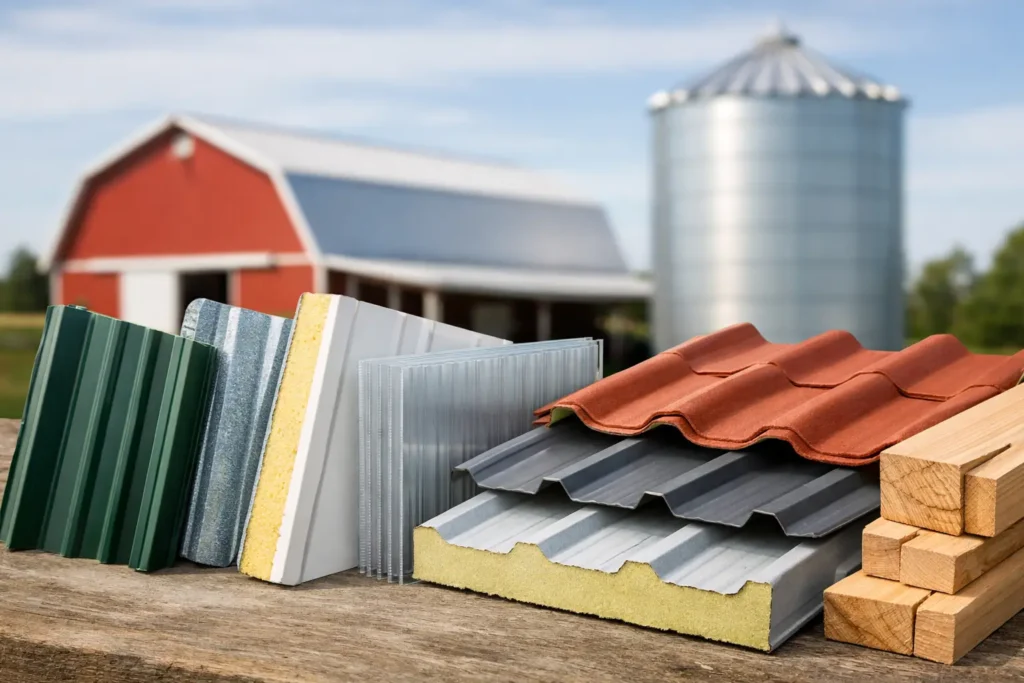
A barn wall that looks fine in July can become a problem by February. In this part of Pennsylvania, farm buildings have to deal with wind, snow load, temperature swings, moisture, and daily wear from equipment, livestock, and traffic. That is why agricultural building panels are not just a finish choice. They play a big role in how long a structure lasts, how much maintenance it needs, and how well it works year after year.
For farmers, property owners, and builders, the challenge is usually not finding panels. It is sorting through the options without overpaying for features you do not need or cutting corners where performance matters most. The right panel depends on the building, the use, and the conditions it will face.
What agricultural building panels actually do
When people talk about panels, they often focus on appearance first. On an agricultural building, performance comes first. Panels protect the frame and interior from weather, help manage moisture, hold up against impact, and affect how much upkeep the building will require.
That matters whether you are putting up a livestock barn, equipment shed, riding arena, workshop, storage building, or a mixed-use pole building. A panel system that works well on a basic storage structure may not be the best fit for a building with animals, wash-down areas, insulation, or frequent door activity.
The best panel choice usually comes down to three questions. How tough does it need to be? How much exposure will it see? And how long do you want it to perform before major maintenance or replacement becomes an issue?
Types of agricultural building panels
Metal panels are the most common choice for agricultural construction, and for good reason. They are durable, cost-effective, and well suited for large wall and roof spans. Steel panels are especially popular because they offer a strong balance of strength and price.
Within metal panels, profile matters. Some ribbed panels are designed mainly for walls, while others are made to perform on roofs where water shedding is critical. Heavier-gauge steel generally offers more durability, but it also comes at a higher cost. If the building is likely to see impact from machinery, animals, or regular use, paying for more strength up front can save money later.
There are also insulated panel systems for certain agricultural or light commercial applications. These can make sense when temperature control is important, such as in workshops, farm stores, or buildings where condensation creates ongoing problems. They cost more than standard exposed-fastener panels, so they are not always the right fit for every farm structure.
Liner panels may also come into the conversation for interiors. In buildings where you want cleaner walls, easier maintenance, or a more finished appearance inside, an interior panel layer can be worth considering. That is especially true in wash bays, utility areas, or buildings used for more than simple storage.
Agricultural building panels and weather exposure
Not every panel failure starts with a major storm. A lot of it starts with years of ordinary exposure. Rain, snow, freeze-thaw cycles, sun, and humidity all work on a building slowly. Over time, weak coatings, poor installation, or the wrong panel choice start to show up as rust, fading, leaks, fastener issues, or warped sections.
In Western and Southwestern Pennsylvania, moisture management deserves extra attention. Condensation can be just as damaging as outside weather if a building is not designed properly. If warm interior air meets a cool metal surface, water forms. That can drip onto equipment, bedding, feed, or stored materials and create problems that seem like roof leaks even when the roof itself is fine.
This is where panel selection has to work together with the rest of the building system. Insulation, ventilation, closures, underlayment, and trim details all matter. A good panel installed poorly is still a problem. A basic panel installed correctly in the right application can often outperform a more expensive product used the wrong way.
How coating and finish affect long-term value
One of the biggest differences between agricultural building panels is the finish system. It is easy to compare panel prices and stop there, but the coating often tells you more about long-term value than the base price does.
Better finishes hold color longer, resist chalking and corrosion better, and stand up to weather more consistently. Lower-cost finishes may make sense on a strictly utilitarian structure where appearance is not a priority and the budget is tight. But if the building is close to a home, visible from the road, or expected to last for decades with minimal upkeep, a better finish is usually money well spent.
This is one of those areas where it depends on the project. A machine shed on the back of a property does not need the same visual standard as a farm market building, horse facility, or post-frame building that doubles as a business space. The right recommendation should match the real use of the structure, not a one-size-fits-all sales pitch.
Matching panel choice to the building use
A livestock building has different demands than a cold-storage shed. That sounds obvious, but it is where many buyers get tripped up. They choose panels based on general durability without thinking through the day-to-day environment.
For livestock applications, moisture, air quality, and cleanability matter. Interior conditions can be hard on metal over time, especially if ventilation is poor. For equipment storage, impact resistance and weather protection may matter more than interior finish. For workshops or farm businesses, appearance, insulation compatibility, and long-term maintenance may rise to the top.
Roof panels and wall panels should also be treated as separate decisions. A wall panel may perform well vertically but not offer the water-shedding performance you need on the roof. Likewise, the roof often takes the greatest beating from weather, so this is usually not the place to cut corners just to save a little on materials.
Installation matters as much as the panel itself
Even high-quality agricultural building panels can fail early if they are not installed correctly. Fastener placement, overlap details, trim fit, sealants, and panel alignment all affect performance. Poor installation tends to show up first around penetrations, edges, eaves, and transitions where water finds a way in.
That is why experienced guidance matters, especially on larger farm or pole building projects. A supplier or installer who understands local weather conditions and real agricultural use can help prevent common mistakes before the first panel goes up.
This is also where cheaper is not always cheaper. Saving money on labor by rushing a job or skipping key details can lead to repairs, leaks, and replacement costs that wipe out the original savings. Property owners usually do better when they focus on total value over time instead of the lowest number on day one.
When budget matters most
Budget always matters. Most customers are balancing immediate costs against long-term performance, and there is nothing wrong with that. The key is knowing where to save and where not to.
If the building is a basic utility structure, a practical exposed-fastener metal panel can be the right answer. If the structure will house valuable equipment, serve customers, or need to stay cleaner and drier inside, it often makes sense to step up in finish quality, insulation planning, or panel thickness.
A good local supplier should be able to walk through those trade-offs clearly. That means explaining what you gain, what you give up, and what actually fits the job. Tri County Door & Builders has built its reputation on that kind of straight answer, which matters when you are making a decision that affects your property for years.
Signs you may need better agricultural building panels
Sometimes the question is not what to buy on a new project. It is whether an existing building has outgrown its current materials. If you are seeing repeated leaks, rusting edges, loose fasteners, faded or failing finishes, or constant maintenance, the issue may be more than age alone.
Older buildings were not always designed for current demands. Equipment is larger, storage needs have changed, and many farm buildings now serve multiple purposes. Upgrading agricultural building panels can improve protection, appearance, and service life without requiring a complete rebuild, depending on the condition of the structure underneath.
That kind of project deserves a close look before materials are ordered. Sometimes a targeted panel replacement makes sense. Other times, broader structural or ventilation improvements should happen at the same time so the new panels can actually do their job.
The best building materials are the ones that fit the way you really use your property, not the ones that sound best on paper. If you are planning a new barn, shop, storage building, or upgrade, take the time to match the panel system to the work the building has to do. That is how you get a structure that keeps earning its keep long after the installation is done.