



A roof can look fine from the driveway and still be the wrong fit for the house, the budget, or the weather it has to handle. If you are figuring out how to choose roof shingles, the real question is not just which shingle looks best. It is which one will hold up, fit the structure, and make financial sense for the long run.
That matters in places where roofs take a beating from wind, rain, snow, freeze-thaw cycles, and summer heat. A good-looking roof that is mismatched to local conditions can become an expensive lesson. A better approach is to weigh performance, warranty, installation quality, and total cost together before you decide.
How to choose roof shingles without overpaying
Most property owners start with color or price. That is understandable, but it is not the best place to begin. The smarter starting point is the building itself. The pitch of the roof, the age of the home, attic ventilation, local weather exposure, and whether you plan to stay in the property for five years or twenty all affect the right choice.
If this is your forever home, durability and warranty coverage usually deserve more weight than the lowest upfront number. If you are replacing a roof on a rental or preparing to sell, appearance, value, and practical cost control may matter more. Neither approach is wrong. The mistake is buying a premium product when a standard architectural shingle would do the job, or choosing the cheapest option when the roof really needs stronger protection.
For many homeowners, asphalt shingles are the most practical fit because they balance cost, appearance, and performance. Within asphalt roofing, though, there is still a big range in quality.
3-tab vs. architectural vs. premium shingles
3-tab shingles are the basic option. They are lighter, flatter in appearance, and generally less expensive. For tight budgets, they can still make sense, but they usually do not offer the same dimensional look or lifespan as higher-grade products.
Architectural shingles are the most common step up. They are thicker, more durable, and designed to create a layered appearance that looks better on most homes. For many property owners, this is the sweet spot because you get stronger wind resistance, better curb appeal, and a longer expected service life without jumping to the highest price tier.
Premium or designer shingles are built for a more distinctive appearance and often mimic slate or wood shake. They can be a strong choice for higher-end homes or for owners who care a great deal about appearance, but they are not always necessary. If the goal is dependable protection and value, architectural shingles are often the practical answer.
Start with the roof’s job, not just its color
The roof has one primary job – protect the structure. That means your shingle choice should match the demands of the property.
A detached garage, agricultural building, rental home, and primary residence may all call for different roofing priorities. A farmhouse exposed to open wind may need a different shingle rating than a home tucked into a protected neighborhood. A steep roofline visible from the road may justify spending more on appearance than a low-slope roof few people ever see.
This is where a lot of homeowners get stuck. They compare one shingle sample to another under showroom lighting, but what really matters is how that product performs after years of weather exposure.
Wind rating and weather resistance
In Southwestern Pennsylvania, weather is not a small detail. Ice, snow load, heavy rain, and gusty storms should all factor into the decision. A shingle with stronger wind resistance can be worth the added cost, especially on exposed properties or larger roof spans.
Impact resistance may also be worth asking about. Not every building needs a premium impact-rated shingle, but if your area sees frequent storm activity or falling branches, tougher materials can help reduce future repairs.
Water shedding matters too, but shingles are only one part of the system. Underlayment, flashing, ventilation, and proper installation all work together. The best shingle on the market can still fail early if the roof system underneath it is poorly handled.
Budget matters, but think in total cost
When people ask how to choose roof shingles, they are often really asking how to avoid making an expensive mistake. That usually means looking beyond the material price alone.
A lower-cost shingle may save money today, but if it wears out sooner, is more likely to lift in strong wind, or does not carry the warranty protection you want, the value may not be there. On the other hand, paying for a top-tier product you do not actually need can inflate the project cost without adding much real benefit.
It helps to think in terms of cost over time. If one shingle costs more but lasts significantly longer and offers better performance, it may be the better buy. If two products are close in lifespan and warranty, the lower-cost option may be the smarter move.
That is one reason many homeowners pay close attention to brand reputation. Established roofing brands have a track record, clearer warranty options, and product lines designed for different budgets. If you are comparing choices from names like Owens Corning, GAF, or TAMKO, you are usually looking at manufacturers with broad product support and known performance standards.
Warranty is useful, but read it realistically
A warranty should give you confidence, not a false sense of security. Manufacturer warranties vary, and coverage often depends on proper installation, ventilation, and use of approved system components.
That means the warranty is only part of the story. Ask what is covered, how long it lasts, and whether labor is included or just materials. Also ask what can void it. A long warranty sounds great, but it only has real value if the roof system is installed the right way.
Style should fit the home, not fight it
Shingles are a major visual feature, especially on single-story homes, ranch homes, and houses with prominent rooflines. The right shingle color and profile can make the whole property look sharper. The wrong choice can make a good home look mismatched.
Dark shingles can create a bold, classic look and may hide stains better over time, but they also absorb more heat. Lighter colors can soften the look of the home and may help with heat reflection, though the difference depends on the full roof system and attic insulation.
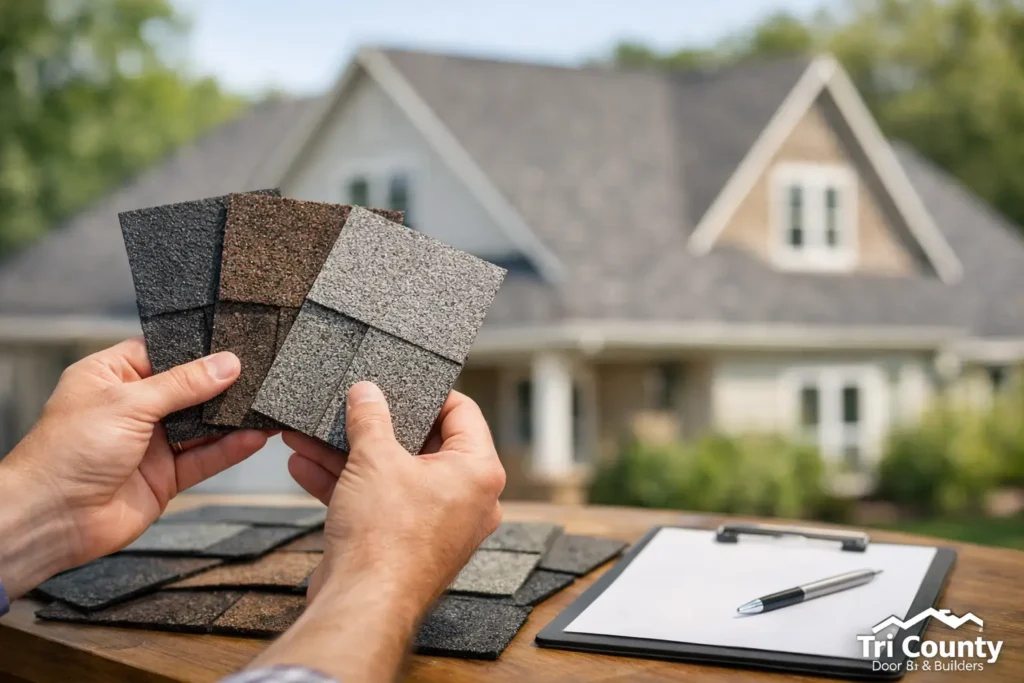
The best color often depends on siding, trim, stone, brick, and the surrounding setting. A sample board is helpful, but it is even better to look at larger examples in natural light. What looks warm gray indoors may read brown or blue outside.
Architectural shingles tend to offer more visual depth than basic 3-tab products, which is one reason they are so popular. They add dimension without making the roof look overly busy.
How to choose roof shingles for long-term value
Long-term value comes from matching the product to the property and making sure the installation is done right. That sounds simple, but it is where the biggest savings usually happen.
A roof replacement is not just a materials purchase. It is a system decision. If your decking, ventilation, or flashing needs attention, that should be addressed at the same time. Skipping those details to hold down the quote can cost more later.
This is also where local guidance matters. A supplier or installer who understands regional weather patterns, common home styles, and what actually holds up in this area can help narrow your choices fast. That kind of advice is often more useful than scrolling through endless product pages.
For homeowners trying to balance quality and affordability, current promotions can also shift the equation. For example, a strong discount on a trusted brand can make it easier to move up to a better shingle than you first planned. Tri County Door & Builders is currently offering 30% off Owens Corning shingles, which can help property owners avoid the Pittsburgh markup and get a stronger roof at a better value.
Questions worth asking before you buy
Before choosing a shingle, ask how long you expect to stay in the property, what weather exposure the roof gets, whether the attic ventilation is adequate, and what level of warranty protection you actually want. Also ask whether the appearance matches the rest of the property and whether the quote includes the full roofing system, not just the shingles.
Those questions tend to cut through the noise. They move the conversation away from sales talk and toward what actually works.
A good roof should feel like a solid decision five years from now, not just a fast decision today. If you take the time to match the shingle to your budget, your building, and the conditions it has to face, you are far more likely to end up with a roof that looks right, performs well, and earns its keep every season.