




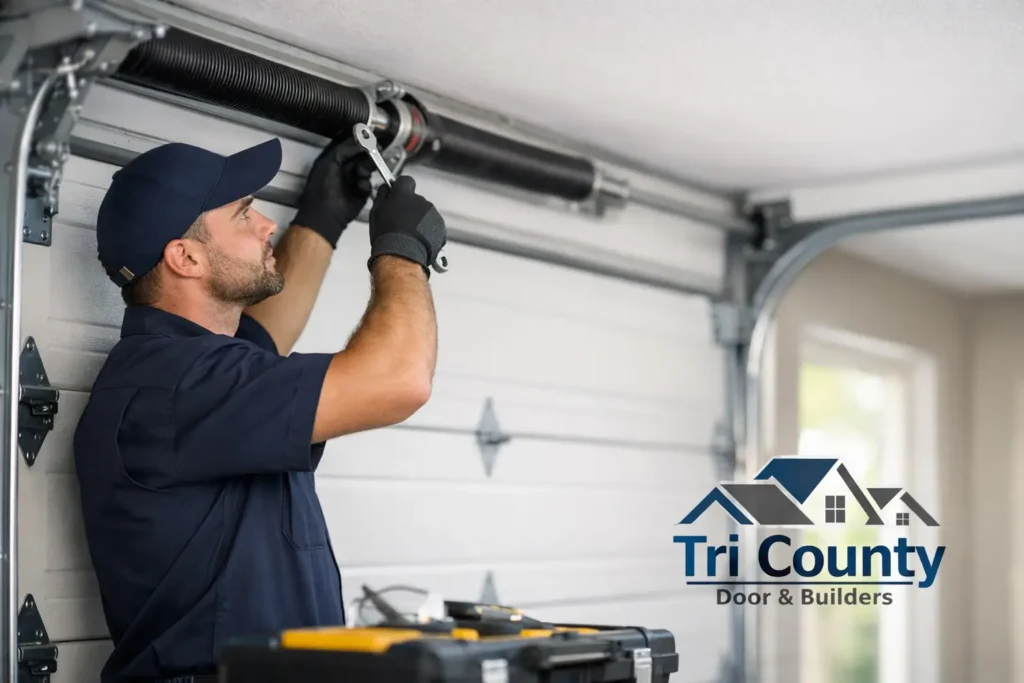
A garage door usually waits until the worst possible moment to act up – right before work, during a storm, or when you need to get equipment out fast. If you are searching for how to fix garage door problems, the first step is figuring out whether you are dealing with a simple maintenance issue or a repair that could turn dangerous in a hurry.
That distinction matters more than most people realize. Some garage door problems are straightforward, like a blocked sensor or loose hardware. Others involve high-tension springs, damaged cables, or a door that is no longer balanced. In those cases, the safest fix is not a DIY fix.
How to fix garage door issues starts with the symptom
Garage doors do not fail in just one way. A door that will not open at all calls for a different approach than one that opens halfway, shakes on the track, or sounds like it is grinding itself apart. Starting with the symptom saves time and helps you avoid replacing parts that are not actually the problem.
If the door will not respond to the opener, check the basics first. Make sure the opener has power, the breaker has not tripped, and the wall button still works. If the wall button works but the remote does not, the remote battery may be dead or the opener may need to be reprogrammed.
If the door starts to close and then reverses, the safety sensors are a common culprit. These sensors sit near the floor on both sides of the opening. Dirt, spiderwebs, bumped brackets, or direct sunlight can interfere with the beam. Wipe the lenses clean and make sure both sensors are pointed directly at each other.
A noisy door is often a maintenance issue, but not always. Squeaking can point to dry rollers or hinges. Banging or popping may mean a more serious alignment or spring problem. If the sound changed suddenly, pay attention. Sudden changes usually mean something has shifted, loosened, or worn out enough to need repair.
Check the simple fixes before you take anything apart
A lot of homeowners jump straight to the opener, but the opener is not always the issue. The door itself does most of the heavy lifting. The opener is mainly guiding the motion.
Start with a visual inspection. Look at the tracks for bends, debris, or loose mounting brackets. Check the rollers to see if any are cracked, worn, or off track. Inspect the hinges and fasteners for anything loose. If the door looks crooked when it is partway open, stop there. That can mean a cable, spring, or track issue that should not be forced.
Lubrication is one of the most common fixes for rough operation. Use a garage-door-safe lubricant on metal rollers, hinges, and springs if the manufacturer recommends it. Do not use heavy grease on the tracks. Tracks should be clean, not coated. Grease tends to collect dirt and create more drag over time.
Tightening loose bolts and brackets can also help, especially on older doors that have seen years of vibration. Use reasonable caution here. You can tighten hardware on tracks and hinges, but do not loosen or adjust parts connected to the spring system unless you know exactly what you are doing.
When the garage door is off track
If your door has come off track, do not keep hitting the opener button and hope it straightens itself out. That usually makes the damage worse. An off-track door can twist sections, damage rollers, and put extra stress on the opener.
Disconnect the opener using the emergency release cord so the door can be moved manually if needed. Then inspect the track and rollers. Sometimes a roller slips out because the track was bumped or a bracket loosened. In mild cases, the track can be realigned and the roller guided back into place.
This is where judgment matters. If the track is badly bent, the door is hanging unevenly, or one side is lower than the other, you may also have a cable or spring problem. That is not the time to experiment. A door under tension can move unexpectedly and cause serious injury.
How to fix garage door opener problems
Openers can fail electrically, mechanically, or because of settings that are slightly off. If the motor runs but the door does not move, the opener may have been disconnected from the door, especially if the emergency release was pulled. Reconnect the trolley according to the opener instructions and test again.
If the opener strains or stops midway, the travel limits or force settings may be out of adjustment. These controls tell the opener how far the door should move and how much resistance is acceptable. Small adjustments can solve the issue, but too much force is unsafe. A door should not need excessive force to open or close. If it does, the real problem may be the door balance, not the opener setting.
A door that opens slowly in cold weather can also point to stiff rollers, aging springs, or an opener that is nearing the end of its service life. In Southwestern Pennsylvania, changing temperatures and moisture can be hard on moving parts. Seasonal maintenance helps, but older systems eventually need more than adjustment.
Test the door balance safely
One useful check is the balance test. With the opener disconnected, lift the door by hand about halfway and let go carefully. A properly balanced door should stay near that position. If it drops fast or shoots upward, the spring system is out of balance.
That does not mean you should adjust the springs yourself. It means the springs are likely the issue, and spring work is best left to a trained technician.
Problems you should not try to fix yourself
There is a big difference between maintenance and high-risk repair. Cleaning sensors, lubricating hinges, and replacing remote batteries are reasonable DIY tasks. Torsion springs, extension springs, lift cables, and bottom brackets are not.
Garage door springs are wound under heavy tension. If one breaks, you may hear a sharp bang from the garage. The door may suddenly become too heavy to lift, or it may only rise a few inches before stopping. A broken cable can leave the door crooked or jammed. In both cases, stop using the opener.
Trying to force the door open can burn out the opener or cause the door to bind harder. More important, trying to remove or adjust spring components without the right tools and training can lead to severe injury.
If your door is a commercial overhead door or a larger insulated residential model, the weight alone is reason to be careful. What looks like a simple jam can actually be a balance failure.
Signs it is time to call for garage door repair
Knowing how to fix garage door problems also means knowing when not to. If the door is crooked, slams shut, has a broken spring, frayed cable, bent track, or damaged panel near the hinges, a service call is usually the smartest move.
The same goes for recurring problems. If you keep adjusting the opener or lubricating parts and the problem returns, the issue may be wear in the rollers, hinges, bearings, or spring system. Repeated temporary fixes often cost more in the long run than addressing the actual cause.
For property owners managing detached garages, workshops, farm buildings, or small commercial spaces, downtime matters. A garage door that will not close securely is not just an inconvenience. It can affect security, weather protection, and daily operations. That is where working with a local company that understands regional weather, building types, and repair urgency can make the process a lot easier.
Preventing the next garage door problem
Most garage door repairs do not come out of nowhere. The door usually gives warnings first – more noise, slower movement, jerking, uneven gaps, or extra strain on the opener. Paying attention early can help you avoid a bigger repair later.
A simple maintenance routine goes a long way. Inspect hardware a few times a year. Keep tracks clear. Lubricate moving metal parts as needed. Test the sensors and auto-reverse feature. Watch how the door moves instead of assuming it is fine because it still opens.
If your garage door is older, replacement may sometimes make more sense than repeated repair. That depends on the condition of the panels, insulation value, parts availability, and how often the door is used. A well-timed replacement can improve reliability and reduce service calls, especially for buildings that see daily traffic.
Tri County Door & Builders works with homeowners, contractors, and property owners who want straight answers on whether a garage door can be repaired safely or whether it is time for a better long-term solution. That kind of practical guidance matters when you are trying to protect your property without overspending.
If your garage door problem is minor, a careful inspection and basic maintenance may get it running again. If it involves tension, weight, or anything that looks uneven, the smart move is to stop before a manageable repair turns into a much bigger one.