




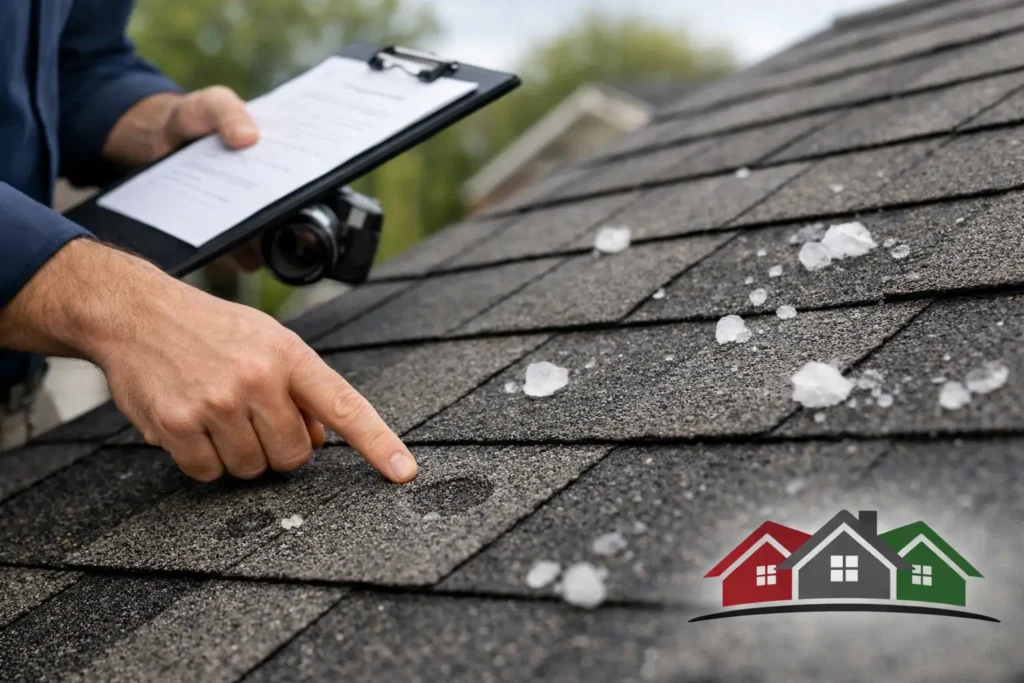
A hard storm can leave a roof looking perfectly normal from the driveway while damaging the protective layer that keeps water out. Knowing how to spot hail roof damage soon after a storm can help you address a problem before a small bruise in a shingle turns into a leak, stained ceiling, or damaged insulation.
For property owners in Southwestern Pennsylvania, that timing matters. Hail often arrives with high winds and heavy rain, and its effects are not always obvious from the ground. A careful, safe inspection can tell you whether you need a professional roofing evaluation or simply need to keep an eye on the roof.
Start With the Evidence Around the Property
Before looking at the roof itself, walk the property and look for signs that hail struck with enough force to cause damage. These clues do not prove your shingles were harmed, but they help establish whether a closer inspection is worthwhile.
Check vehicles, window screens, gutters, downspouts, outdoor furniture, siding, air-conditioning units, fence posts, and metal vents. Dents in soft metal, torn screens, cracked plastic fixtures, and leaf damage in the yard can all point to a hail event strong enough to affect roofing materials.
Pay attention to where the damage appears. Wind-driven hail may strike only one slope of the roof or one side of the building. If the west-facing siding, gutters, and vehicles show marks while the opposite side does not, the roof slope facing that direction deserves particular attention.
Take clear photos of any visible storm damage before cleaning up. Include wide shots that show the location and close-ups that show the detail. If you later need a contractor’s assessment or choose to contact your insurance carrier, a record from the day of the storm is more useful than trying to recreate the evidence weeks later.
How to Spot Hail Roof Damage on Asphalt Shingles
Asphalt shingles are designed to shed water, but hail can knock loose the protective granules embedded in their surface. Those granules protect the asphalt from sun exposure and weathering. When enough are displaced, the shingle can age faster even if it does not leak right away.
From the ground, look for irregular dark patches or areas with an unusual dull appearance. Use binoculars if you have them, but do not assume every dark spot is hail damage. Shingle color variation, algae staining, normal wear, and shadows can look similar from a distance.
A closer inspection may reveal a few common hail-related signs:
- Round or irregular areas where granules are missing, exposing darker asphalt beneath
- Soft, bruised-looking spots that feel slightly different from the surrounding shingle
- Small cracks or fractures in the shingle surface
- Fresh granules collecting in gutters or at the base of downspouts
- Damage concentrated on the same roof slope and in a pattern consistent with the storm direction
A true hail strike is often random rather than uniform. It may look like a small impact mark with granules pressed into the shingle or knocked away. By comparison, ordinary aging is usually more widespread and even across the roof surface. Blistering from heat, manufacturing defects, foot traffic, and improper installation can also resemble impact damage. That is why a qualified inspection is valuable when the answer is not clear.
Check the Roof’s Vulnerable Areas
Hail does not limit itself to the main shingle field. In fact, damage to roof accessories may be easier to see and can be just as important to address.
Look at metal flashing around chimneys, skylights, walls, and roof valleys. Dents in flashing do not always create an immediate water entry point, but severe dents, bent edges, or loosened seals can compromise the roof over time. Ridge vents, turbine vents, pipe boots, satellite mounts, and metal chimney caps should also be checked for dents, cracks, or separation.
Gutters and downspouts deserve a close look. Small dents are often cosmetic, but hail can also loosen hangers, crack seams, or change the slope of a gutter enough to affect drainage. If water backs up against the roof edge during the next rain, it can create a problem that was not present before the storm.
On a low-slope commercial roof, watch for punctures, splits, exposed membrane, displaced gravel, or pooling water that remains after the roof has had time to drain. These systems should be evaluated by a roofing professional. Walking on a low-slope roof can damage the membrane or put you near hidden weak areas.
Metal roofing reacts differently than shingles. Hail may leave dents without causing a leak, particularly on heavier-gauge panels. Still, inspect seams, fasteners, ridge caps, flashing, and panel edges. A dent that affects a seam or loosens a fastener is more concerning than a shallow mark in the center of a panel.
Inspect Safely From the Ground First
After a storm, roofs can be slick, debris-covered, and structurally unsafe. A ladder or roof inspection is not a DIY job for everyone, especially on a steep roof, a wet surface, or a multi-story building. The safest first step is a ground-level inspection, followed by a professional assessment if you see concerning signs.
If you are experienced with ladders and conditions are dry, you may be able to inspect gutters, lower flashing, and the roof edge from a secure ladder position. Keep both feet on the ladder and avoid stepping onto the roof solely to look for hail marks. Never inspect near downed power lines, unstable trees, or active storm conditions.
Inside the building, check the attic and upper-floor ceilings as well. Look for new water stains, damp insulation, dripping, musty odors, or daylight around roof penetrations. Keep in mind that a roof can sustain hail damage without showing an indoor leak immediately. Water may not find a path through until the next heavy rain, freeze-thaw cycle, or high-wind event.
Document What You Find Without Assuming the Cause
Good documentation is practical, whether the roof needs a simple repair, a larger replacement, or no immediate work at all. Photograph affected exterior items, roof edges, gutters, and any interior water marks. Make a note of the storm date, estimated hail size if known, and which side of the property received the most impact.
Avoid making repairs that hide the condition before the roof has been evaluated, unless temporary action is needed to stop active water intrusion. If there is a leak, use a bucket indoors, move valuables away from the affected area, and arrange for a professional to assess the source. Temporary measures should protect the property, not replace a proper roofing repair.
Insurance coverage varies based on the policy, the roof’s age, the type of damage, deductibles, and other factors. A contractor can document visible conditions and explain repair options, but your insurance carrier determines coverage. Be wary of anyone who promises approval, urges you to sign paperwork immediately, or diagnoses a full replacement from a quick glance at the driveway.
When a Professional Roof Inspection Makes Sense
Call for a professional inspection when multiple exterior items show hail impact, you see missing shingle granules or damaged flashing, or the roof is older and already showing wear. It is also wise to schedule an evaluation if neighbors have confirmed hail damage, even when your roof looks fine from the ground.
A thorough inspection should distinguish storm-related impact from normal age-related wear. It should also assess the full roofing system, including shingles, underlayment exposure at vulnerable areas, flashing, ventilation, gutters, and roof penetrations. The right recommendation may be a targeted repair, continued monitoring, or a replacement if the roof’s condition warrants it.
For homeowners weighing a replacement, material choice matters. Architectural shingles from established manufacturers can offer stronger visual appeal and durability than basic three-tab shingles, but the best fit depends on roof pitch, budget, ventilation, existing condition, and long-term plans for the property. Tri County Door & Builders helps local property owners make those decisions with straightforward guidance, quality roofing options, and installation support.
A storm does not have to leave a hole in the roof to create a real concern. Inspect calmly, document what you can see, and get an experienced opinion when the signs point to impact. Acting while the evidence is fresh gives you the best chance to protect the building before the next hard rain finds the weak spot.