




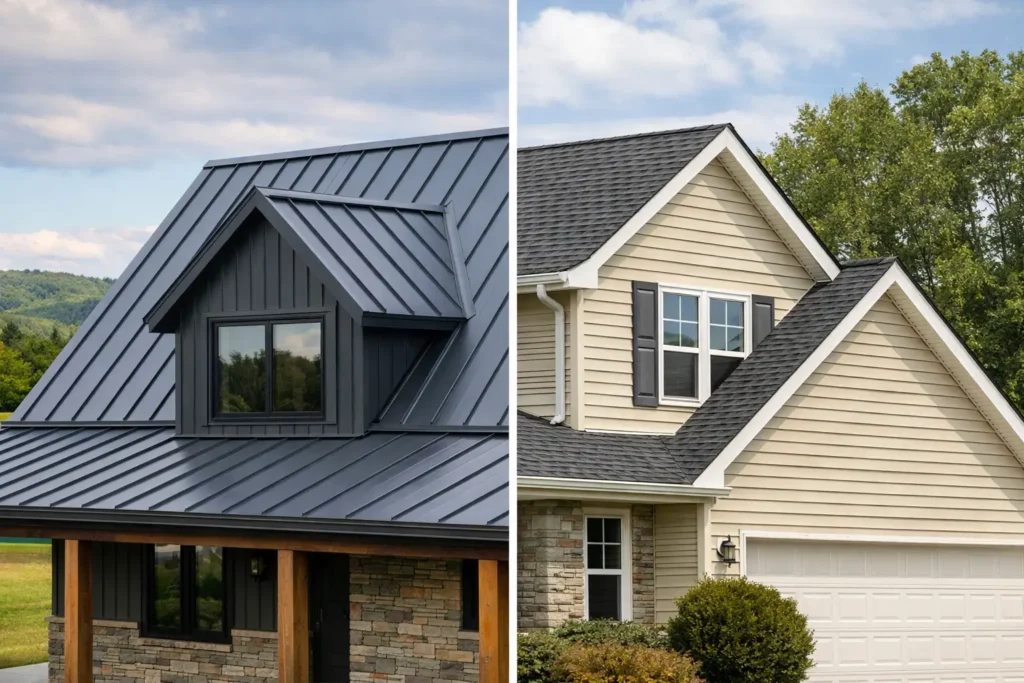
A siding decision can affect far more than curb appeal. In Southwestern Pennsylvania, exterior walls have to handle wet springs, humid summers, freeze-thaw cycles, wind, and the occasional hard hit from hail or flying debris. When weighing metal panels vs vinyl, the better choice depends on the building, the budget, the desired look, and how long you expect the siding to perform with minimal attention.
Metal and vinyl both have a place on local homes, garages, pole buildings, agricultural structures, and commercial properties. The key is understanding where each material performs well and where its trade-offs become more noticeable.
Metal Panels vs Vinyl: The Big Differences
Metal panel siding is typically made from coated steel and installed in vertical or horizontal profiles. It is widely used on pole buildings, garages, workshops, barns, barndominiums, and commercial structures, though it can also create a clean, durable residential exterior. Vinyl siding is a PVC-based product installed in overlapping panels and remains a common choice for traditional homes.
The most immediate difference is rigidity. Metal is a solid, substantial cladding material that holds its shape and resists many types of impact. Vinyl is lighter and more flexible, which can make it less expensive to install on certain homes but also more vulnerable to cracking in cold weather or damage from a direct impact.
Appearance is another major factor. Vinyl offers a familiar residential look in many colors and textures, including products designed to resemble wood grain. Metal panels provide a sharper, more modern or agricultural appearance, with exposed or concealed fasteners depending on the panel system. Neither look is automatically better. A farmhouse, detached garage, equipment building, or contemporary home addition may look right with metal, while a traditional neighborhood home may be better served by vinyl.
Durability in Pennsylvania Weather
For property owners concerned about long-term toughness, metal siding has a clear advantage. Quality steel panels resist rot, insect damage, and moisture absorption. They do not become brittle from cold temperatures the way vinyl can. On a workshop, farm building, or garage that sees regular use, that added durability can be worth the higher initial investment.
Vinyl does not rust, and it will not need painting under normal conditions. However, it can crack when temperatures drop and a lawn tool, ladder, baseball, or piece of windblown debris strikes it. It may also warp or distort near high heat sources. Darker vinyl colors have improved over the years, but heat exposure remains a consideration, especially on walls with strong afternoon sun.
Metal has its own limitations. A hard impact can dent a steel panel, and scratches that cut through the protective finish should be addressed to prevent corrosion. Lighter-gauge panels are more prone to denting than heavier options. The quality of the coating, panel profile, trim details, and installation work all matter as much as the basic fact that the siding is metal.
For buildings in Westmoreland, Somerset, and Fayette Counties, proper installation matters because water management matters. Siding is only one part of the wall system. Flashing, house wrap or another approved weather-resistant barrier, trim, fasteners, and drainage details must work together to keep water where it belongs.
Cost: Upfront Price Versus Service Life
Vinyl usually costs less upfront than metal siding, particularly on a standard home with straightforward walls and few custom details. Its lighter weight and broad availability can keep material and labor costs manageable. For homeowners focused on refreshing an exterior while staying within a fixed budget, vinyl can be a practical choice.
Metal panels often cost more initially, especially when a project includes custom trim, closures, insulation details, wainscoting transitions, or a heavier panel gauge. Yet initial price is not the full story. A well-selected and properly installed metal system can deliver decades of service with little routine maintenance. That makes it especially appealing for garages, pole barns, commercial buildings, and properties where durability is more valuable than a conventional residential appearance.
Comparing quotes requires more than looking at the final number. Ask what gauge of metal is included, what coating is being supplied, how trim and flashing are handled, and whether fasteners are matched to the panel system. For vinyl, ask about panel thickness, wind rating, insulation backing if applicable, color options, trim quality, and what preparation work is included.
The least expensive quote may leave out details that affect how the exterior holds up after several Pennsylvania winters.
Maintenance Requirements
Both choices are considered low-maintenance compared with wood siding, but low-maintenance does not mean no-maintenance.
Vinyl should be washed periodically to remove dirt, pollen, mildew, and spider webs. A soft brush and a siding-safe cleaning method are usually enough. Avoid high-pressure washing that can force water behind the panels or loosen components. Homeowners should also watch for cracked pieces, loose panels after storms, and gaps around utility penetrations.
Metal panels need occasional cleaning as well, particularly on buildings surrounded by trees, road dust, or agricultural activity. Check for loose fasteners, damaged sealant, clogged wall transitions, and scratches in the finish. If a panel is dented or damaged, replacement is often possible without redoing the entire wall, although matching an older color can sometimes require planning.
Neither material should be installed and forgotten. A quick seasonal walk-around can catch small issues before moisture reaches the wall framing or insulation.
Energy Efficiency and Moisture Control
Siding alone does not determine whether a building is energy efficient. Insulation, air sealing, wall framing, windows, attic conditions, and ventilation have a larger effect on utility costs. Still, the siding choice affects how the wall assembly is built.
Vinyl can be installed over insulated backing, which may slightly improve the wall’s thermal performance and create a straighter appearance over minor irregularities. It is not a substitute for properly insulated wall cavities or continuous exterior insulation where required or desired.
Metal panels can be part of an efficient wall system, particularly on pole buildings and post-frame structures. Condensation control is critical. Without the correct insulation, vapor control, ventilation, and installation details, metal surfaces can contribute to condensation problems when warm interior air meets a cold panel. This is not a reason to avoid metal. It is a reason to plan the full building envelope before materials are ordered.
For conditioned garages, workshops, barndominiums, and commercial spaces, it pays to discuss insulation and siding together rather than treating them as separate decisions.
When Metal Panels Make More Sense
Metal siding is often the stronger fit for buildings that need to work hard: agricultural structures, equipment storage, detached garages, workshops, pole buildings, and light commercial properties. It also makes sense for homeowners who prefer a modern, board-and-batten-inspired, or rural building style and want a surface that stands up well to active use.
It can be a particularly good choice where the exterior may encounter equipment, livestock activity, frequent traffic, or heavy weather exposure. A metal wainscot on the lower portion of a building can also be a smart compromise, protecting the area most likely to see scuffs and impacts while using another siding style above.
When Vinyl Is the Better Fit
Vinyl remains a sensible option for many homes, especially when the goal is a traditional appearance, a broad range of colors, and a lower initial investment. It works well on residential projects where the siding is unlikely to take regular impacts and where the homeowner wants a familiar exterior with simple upkeep.
It can also be easier to blend with existing neighborhood architecture. If an addition, porch enclosure, or repair needs to match current vinyl siding, staying with vinyl may produce the most consistent result.
The right answer is rarely just metal or vinyl. It is the material that fits the structure, the environment, and the way the property is used. Before making a final decision, look at actual panel and siding samples outdoors, compare complete installation details, and consider how the building should perform not just next season, but years from now.