



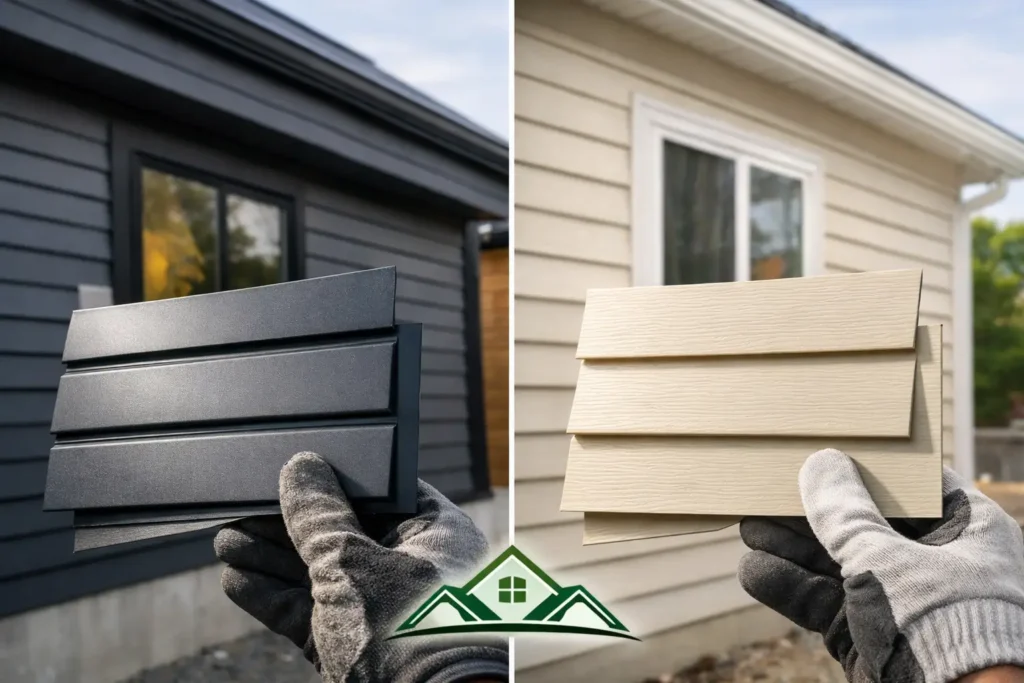
If your siding has seen better days, this decision usually comes down to two things fast – what it will cost now, and how it will hold up five, ten, or twenty years from now. When homeowners and property owners compare metal siding vs vinyl, they are usually trying to avoid a costly mistake, not win a design debate.
Both materials have a place. The right pick depends on the building, your budget, your maintenance expectations, and the kind of weather your property takes year after year. In Southwestern Pennsylvania, that matters. Siding has to deal with moisture, temperature swings, wind, and the wear that comes with four real seasons.
Metal siding vs vinyl: the biggest differences
The simplest way to look at it is this: vinyl usually wins on lower upfront cost and easy availability, while metal often wins on strength, longevity, and resistance to damage. That does not mean metal is always better or vinyl is always cheaper in the long run. It depends on where the building sits, how it is used, and what you expect from it.
Vinyl siding is popular because it is affordable, low maintenance, and available in many colors and profiles. It works well for many homes and light commercial properties, especially when the main goal is to improve appearance without stretching the budget too far.
Metal siding appeals to buyers who want a tougher exterior. It is commonly chosen for agricultural buildings, garages, workshops, pole buildings, and homes where durability matters more than the lowest possible price. It also tends to fit properties where owners want a cleaner, more substantial look.
Upfront cost is only part of the story
For many buyers, vinyl is the easier number to say yes to at the start. Material and installation costs are often lower than metal, which makes vinyl attractive for large homes or rental properties where budget control is the top priority.
Metal siding usually costs more upfront, especially if you are choosing heavier-gauge panels or a higher-end finish. Installation can also be more specialized depending on the panel style and building type. That said, lower first cost does not always equal better value.
If a property is exposed to repeated impact, harsh weather, or heavy wear, a cheaper material can become expensive if it needs repair or replacement sooner. That is why the real question is not just what you will spend now. It is what you will spend over time.
Durability in real-world conditions
This is where metal often separates itself.
Metal siding stands up well against hail, wind, and everyday abuse better than vinyl in many situations. On garages, barns, workshops, and commercial buildings, that added toughness can make a real difference. If you have equipment moving around the property, kids playing near the house, or a building that takes a lot of wind exposure, metal is harder to crack or break.
Vinyl siding is durable enough for many homes, but it is more vulnerable to impact damage. A hard hit from a thrown object, severe weather, or even routine accidents can crack panels. Once that happens, repairs are usually straightforward, but they still need attention.
Temperature also matters. Vinyl can expand and contract more noticeably with seasonal changes. Good installation helps manage that, but it is still part of the material’s nature. Metal also expands and contracts, but quality installation and proper fastening are designed to account for it.
Maintenance and long-term upkeep
Neither option is high-maintenance compared to wood, but they are not equal.
Vinyl siding is known for easy upkeep. In many cases, occasional washing is enough to keep it looking presentable. It does not need painting, and for homeowners who want something simple, that is a major advantage.
Metal siding is also relatively low maintenance, especially when it comes with a quality finish. It can hold its appearance well over time, and it does not invite the same kind of routine upkeep some other materials do. Still, if panels get scratched or damaged, those areas should be addressed to protect the finish and maintain appearance.
One thing property owners sometimes overlook is how siding ages visually. Vinyl can fade over time, and replacement panels may not match older sections perfectly. Metal can also fade, but higher-quality finishes tend to hold color well. If long-term consistency matters to you, that is worth discussing before you buy.
Appearance and curb appeal
This part is more personal, but it still affects property value and satisfaction.
Vinyl offers a broad range of styles, colors, and textures. If you want a traditional residential look, vinyl gives you plenty of options. It can blend into almost any neighborhood and works especially well on homes where the goal is a familiar, clean exterior.
Metal siding has a different look. Depending on the profile and color, it can feel more modern, more agricultural, or more utility-focused. On the right building, that is a benefit, not a drawback. A barndominium, detached garage, pole building, or small business property can look sharp with metal siding when the design is done well.
For homeowners, the question is often whether you want the siding to blend in or stand out a bit more. Neither answer is wrong. It just depends on the style of the home and the impression you want the property to make.
Energy performance and insulation
Siding itself is only one part of the wall system, so this category can be misunderstood.
Vinyl and metal are not magic answers for insulation on their own. The real energy performance comes from the full assembly – sheathing, house wrap, insulation, air sealing, and proper installation. That said, some insulated vinyl products can add value in the right application.
Metal does not insulate well by itself, but that does not make it a poor choice. It simply means the building should be designed correctly. On many residential and commercial projects, insulation strategy matters more than siding material alone. If energy efficiency is high on your priority list, the best move is to look at the whole wall system, not just the outer layer.
Where metal usually makes more sense
Metal siding is often the stronger choice when the building needs to take abuse and keep performing. That includes garages, workshops, farm buildings, storage buildings, pole barns, and many commercial structures. It also makes sense for homeowners who would rather spend more now for a material that generally offers more strength and a longer service life.
It can be especially practical on rural properties where buildings are exposed to open wind, debris, equipment traffic, and tougher use. In those cases, metal is not just a style choice. It is a working material.
Where vinyl usually makes more sense
Vinyl often makes the most sense when keeping project costs manageable is the top concern and the building does not face heavy wear. For many homes, especially in established neighborhoods, vinyl delivers a clean appearance and dependable performance at a price that is easier to budget.
It is also a good fit for owners who want minimal upkeep and a familiar residential look. If the home is not in a high-impact setting and the siding is installed correctly, vinyl can serve well for years.
Questions to ask before you decide
A good siding choice usually gets clearer when you ask a few practical questions. What kind of building is this? How exposed is it to wind and weather? Is this your long-term property, or are you trying to improve it for resale? Are you more concerned with upfront cost or fewer repairs later? Do you want a traditional home exterior, or are you comfortable with a more distinct look?
Those answers matter more than trends. They help narrow the choice to what actually fits your property.
The better material is the one that fits the job
The metal siding vs vinyl question does not have one universal winner because not every building is asking for the same thing. A family home in a neighborhood may benefit from the affordability and familiar look of vinyl. A garage, pole building, workshop, or exposed rural structure may be better served by metal.
That is why local guidance matters. A contractor or supplier who understands how buildings perform in this region can help you look past showroom impressions and focus on the material that matches your needs. At Tri County Door & Builders, that is the kind of conversation we believe property owners deserve – straightforward advice, practical options, and a recommendation based on the job, not a one-size-fits-all sales pitch.
If you are weighing siding options, the best next step is to look at your building honestly. Think about wear, weather, budget, and how long you want the exterior to last. The right choice is usually the one that gives you fewer regrets after the work is done.