




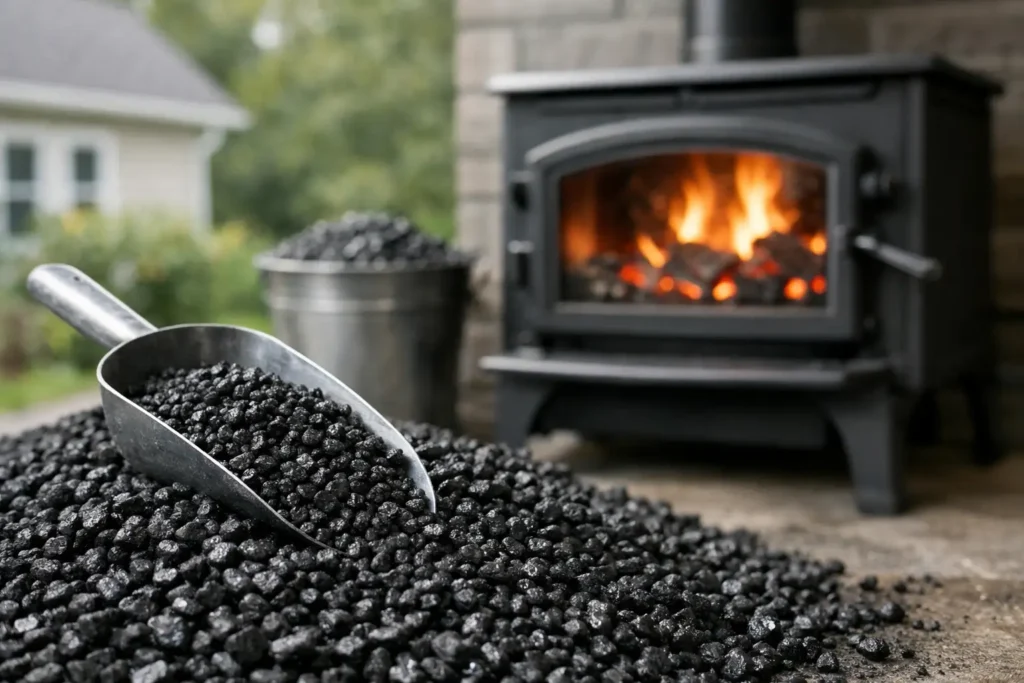
A coal stove that burns well can provide steady, economical heat through a Pennsylvania winter. Rice coal is a popular fuel for that job, but only when it is matched to the right appliance, stored dry, and managed with proper attention to draft, ash, and safety. Its small, uniform size makes it especially useful in automatic-feed coal stoves and boilers.
Rice coal is not a fuel you can substitute casually. Using the wrong coal size can lead to poor combustion, jammed feed systems, excess ash, or damage to equipment. Before ordering a load or filling bins for the season, property owners should understand what rice coal is designed to do and whether their heating system is built for it.
What Is Rice Coal?
Rice coal is a size grade of anthracite coal, a hard coal known for high heat output, low moisture content, and relatively clean burning compared with softer bituminous coal. The name describes the size of the pieces, not the material. Individual pieces are generally small, similar in scale to grains of rice, which allows them to move through the augers and feed mechanisms used by many automatic coal appliances.
Anthracite is commonly sold in several size classifications, including pea, nut, stove, buckwheat, and rice. Each size is intended for specific equipment and airflow requirements. Larger hand-fired stoves often use nut or stove coal. Rice coal is typically used in appliances with a stoker, hopper, or automated feed system.
That distinction matters. A stove manual is the final word on the proper fuel size. If it calls for rice coal, using pea or nut coal may prevent the fuel from feeding correctly. If it calls for a larger size, rice coal can restrict airflow or burn too quickly for the appliance’s design.
Why Rice Coal Works Well in Automatic Feed Systems
The main benefit of rice coal is consistency. Its small size lets an auger or pusher mechanism deliver measured amounts of fuel to the fire as the thermostat calls for heat. Instead of tending a hand-fired stove several times a day, the owner can maintain the hopper, empty ash, and monitor the system while the appliance handles much of the routine feeding.
This can be a practical option for homes, workshops, garages, agricultural buildings, and other properties where a compatible coal stove or boiler is already installed. Anthracite produces a concentrated, long-lasting heat, which can be especially attractive when cold temperatures settle into Westmoreland, Somerset, and Fayette Counties.
Still, convenience depends on the system being maintained. A neglected feed motor, worn auger, blocked vent, or dirty combustion fan can turn an efficient appliance into a frustrating one. Automatic does not mean maintenance-free.
Heat Output and Fuel Quality
Good anthracite rice coal is dense, relatively dry, and sorted to a consistent size. It should contain minimal fines, which are coal dust and very small fragments. Some fines are normal, especially after transportation and handling, but excessive dust can affect feeding and airflow.
Fuel quality also varies by supplier and storage conditions. Coal that has been repeatedly moved, dropped, or exposed to rain may contain more broken material or moisture. When comparing prices, look beyond the per-ton cost. Consider the coal’s sizing consistency, amount of fines, delivery options, and whether the supplier has a dependable local reputation.
A lower price is not always a better value if the fuel causes frequent feed problems or leaves behind a disproportionate amount of ash. For many owners, reliable operation during the coldest weeks is worth more than saving a small amount on a questionable load.
Choosing the Right Rice Coal for Your Stove or Boiler
Start with the appliance manufacturer’s specifications. Check the owner’s manual or the data plate on the unit for the approved coal type and size. Most systems designed for rice coal require anthracite, but assumptions can cause expensive problems. If the manual is unavailable, contact a qualified stove or boiler technician before buying fuel.
It also helps to calculate your expected seasonal use. Consumption depends on the building’s size, insulation level, desired indoor temperature, appliance efficiency, and whether coal is the primary heat source or a supplement. A well-insulated home will use far less fuel than a drafty shop with high ceilings and frequent door use.
For a first season with a new-to-you appliance, avoid guessing too aggressively. Purchase enough fuel to get started, track your weekly usage in different weather, and plan your next order based on real numbers. This gives you a better picture than a broad estimate from someone else’s home or building.
If a building still has poor insulation, air leaks, or an aging roof, address those issues as part of the heating plan. Reducing heat loss can lower fuel use regardless of whether the primary source is coal, gas, wood, or another system. The most affordable heat is the heat that stays inside the building.
Storing Rice Coal Correctly
Rice coal needs a dry, accessible storage area. Many owners use a coal bin, covered bulk container, basement storage bay, or outdoor bin with a weather-resistant lid. The storage method should keep precipitation out while allowing you to safely transfer fuel to the appliance hopper.
Avoid placing bulk coal directly where drainage is poor. Standing water can freeze, create messy handling conditions, and add moisture to the fuel. Keep the area clear of ignition sources and make sure it does not block walkways, service access, or emergency exits.
A practical setup also considers ash removal. Burning anthracite creates ash that must be emptied regularly into a covered metal container. Never use plastic containers, cardboard boxes, or combustible bins for hot or recently removed ash. Ash can hold heat longer than it appears to, so store it outdoors on a noncombustible surface until it is completely cold.
Safe Operation Matters More Than Convenience
Coal heat requires the same respect as any combustion appliance. The stove or boiler must have a properly installed venting system, adequate combustion air, and regular inspection. Carbon monoxide has no color or odor, making detectors essential near sleeping areas and on each level of the home.
Keep the appliance manual nearby and follow its cleaning intervals. Ash buildup can reduce airflow. A dirty chimney or flue can weaken draft and increase the risk of dangerous exhaust entering the building. At the beginning of each heating season, have the chimney, pipe connections, and appliance components inspected by a qualified professional.
Do not burn household trash, treated lumber, plastics, or other materials in a coal appliance. These materials can produce harmful fumes, damage the unit, and create unsafe deposits in the venting system. Burn only the fuel specified by the manufacturer.
Watch for warning signs during operation: smoke entering the room, a persistent odor of exhaust, sluggish heat output, unusually high fuel use, a feed system that binds, or carbon monoxide alarms. Shut the system down according to the manufacturer’s instructions and have the issue evaluated. Trying to work around a combustion or venting problem is never a good trade-off.
Routine Care for Better Performance
A few regular habits make a major difference. Check the hopper level before it runs low, empty ash as needed, and keep the area around the stove or boiler free of dust and clutter. Inspect gaskets, doors, electrical connections, motors, and feed mechanisms on the schedule recommended for your equipment.
During colder stretches, pay closer attention to ash production and draft. The appliance may run longer, and small issues become more noticeable under heavy demand. If performance changes suddenly, do not simply turn up the thermostat. Look for the cause, whether it is fuel quality, airflow, ash accumulation, or a mechanical problem.
For property owners planning a garage, pole building, or workshop, heating should be considered early in the project. Adequate insulation, safe appliance placement, vent routing, and access for fuel and ash handling are easier and less costly to plan before the building is finished than after.
Rice coal can be a dependable heating fuel for the right appliance and the right property. Buy the specified size, keep it dry, maintain the equipment, and treat venting and carbon monoxide protection as non-negotiable parts of the system. Those practical steps help turn a cold-weather fuel choice into steady heat you can count on.