




A roof can look finished in a day, but its long-term performance depends heavily on the layer installed before the shingles go on. In the roofing felt versus synthetic underlayment decision, the better material is not automatically the most expensive one. It is the one that fits the roof system, installation conditions, manufacturer requirements, and the property owner’s budget.
For homeowners and property owners in Southwestern Pennsylvania, that choice matters. Our roofs see driving rain, snow, freeze-thaw cycles, gusty wind, and occasional periods when a roof deck may be exposed before the final covering is installed. Underlayment is not the primary waterproofing layer – shingles, metal panels, or other roof coverings handle that job – but it is a critical backup layer that helps protect the deck when weather finds a weakness.
What Roofing Underlayment Actually Does
Underlayment sits directly over the roof deck and beneath the finished roofing material. It provides a secondary barrier against wind-driven rain, helps protect the deck during installation, and creates a more consistent surface for roofing materials.
It can also help when water gets beneath shingles because of wind, ice dams, damaged shingles, or a flashing issue. That does not mean any underlayment can replace proper flashing, ventilation, shingle installation, or ice and water protection at vulnerable edges and valleys. A good roof is a system, and every layer needs to do its job.
The two common choices for asphalt-shingle roofs are traditional asphalt-saturated felt and synthetic underlayment. Both can be appropriate. The real question is where each one makes the most sense.
Roofing Felt Versus Synthetic Underlayment: The Core Difference
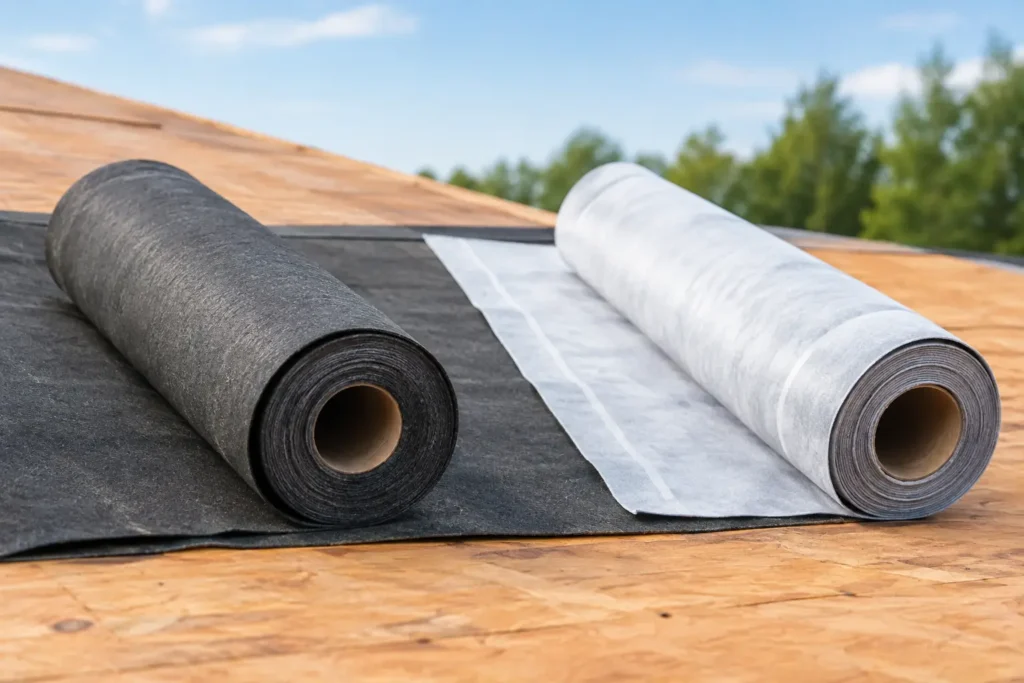
Traditional roofing felt is made from a paper or fiberglass base saturated with asphalt. It has been used on residential roofs for generations, and it remains a familiar, cost-conscious option. You may hear it called 15-pound or 30-pound felt, although those names no longer consistently reflect actual product weight.
Synthetic underlayment is generally made from engineered polypropylene or polyethylene materials. It is lighter to carry, often stronger against tearing, and more resistant to moisture absorption than felt. Product quality varies between manufacturers, so the label and installation instructions still matter.
The practical difference is how the materials behave when exposed to weather and foot traffic. Felt tends to be less expensive upfront, while synthetic products typically offer better tear resistance, lighter rolls, and longer exposure ratings. Those advantages can be especially valuable on larger roofs, steeper slopes, or jobs where weather may interrupt installation.
Where Traditional Felt Still Makes Sense
Felt is not an outdated product that should be dismissed. For a straightforward roof replacement with a predictable installation schedule, it can be a sensible choice. It is widely available, familiar to experienced installers, and generally costs less than synthetic underlayment.
A homeowner working within a strict budget may prefer felt if the roof is being installed promptly and the selected shingle system permits it. A heavier felt product can offer more durability than lighter felt, though it is still more prone to tearing and wrinkling than many synthetic options.
The drawback is that felt can absorb moisture. If it gets wet before shingles are installed, it may wrinkle or buckle as it dries. Those wrinkles can sometimes show through thinner shingles or create an uneven installation surface. Felt can also tear more easily in windy conditions or when crews are moving across the roof.
Why Synthetic Is Often the Practical Upgrade
Synthetic underlayment has become a common choice for good reasons. A roll covers more area while weighing less than comparable felt, which makes handling easier and reduces strain during installation. It also tends to stay flatter after rain and resists tearing better when exposed to wind or foot traffic.
For roofs with complex valleys, dormers, long runs, or a higher chance of weather delays, that added durability can be worthwhile. Synthetic materials are often rated for longer exposure periods than felt, although “longer” never means the roof should be left unfinished. Sunlight and weather will eventually degrade any exposed underlayment.
There are trade-offs. Synthetic material usually costs more, and not every product performs the same way. Some surfaces can be slick when wet, so safe installation practices are essential. Installers should also use the correct fasteners and follow the specific manufacturer’s instructions for overlap, fastening pattern, and allowable exposure time.
Weather Exposure Changes the Calculation
In Westmoreland, Somerset, and Fayette Counties, a roof may be exposed to several seasons of weather over its lifespan. That makes material reliability more than a line item on an estimate.
Synthetic underlayment often earns its added cost when installation conditions are uncertain. If rain moves in after the tear-off, its moisture resistance and strength can give the crew more protection while work resumes. It is also a practical consideration for steep roofs, where traction, secure fastening, and material durability all affect the installation process.
That said, synthetic underlayment alone is not the answer to winter leak concerns. On many local asphalt-shingle roofs, self-adhered ice and water barrier is needed at eaves and other code-required or manufacturer-required locations. It is especially important where ice dams can force melted snow back beneath shingle edges. Valleys, penetrations, and low-slope transitions may need additional attention as well.
Match the Underlayment to the Roofing System
The right underlayment depends on more than the weather forecast. The finished roof material matters just as much.
For asphalt shingles, always follow the shingle manufacturer’s approved underlayment requirements. This protects warranty eligibility and helps ensure the roofing system performs as designed. A contractor should confirm whether the product is approved with the chosen shingle line, as well as any requirements for deck condition, ventilation, and ice barrier placement.
For metal roofing, underlayment selection can be different. Condensation control, panel type, roof slope, and the presence of a solid deck all influence the recommendation. Some metal roof systems use specialized membranes or underlayment designed for higher temperatures and particular panel configurations. Using a generic material simply because it worked beneath shingles is not a dependable approach.
Low-slope roofs, additions that tie into existing roofs, and buildings with unusual framing deserve a closer review. These are the projects where a few dollars saved on the wrong material can lead to a frustrating repair later.
Consider the Whole Installed Cost
The price difference between felt and synthetic underlayment is real, but it is usually a small part of the total cost of a full roof replacement. Labor, tear-off, decking repairs, flashing, ventilation, shingles, and disposal have a larger effect on the final number.
That does not mean every project needs the premium option. It means the choice should be made with clear expectations. Felt can be a reasonable value on a simple, promptly completed project. Synthetic is often the stronger value when durability during installation, weather resistance, and easier handling are priorities.
If you are comparing roofing estimates, ask what underlayment is included rather than assuming all proposals use the same material. Also ask whether ice and water barrier is included, where it will be installed, and whether the listed materials meet the roofing manufacturer’s requirements. Clear answers up front prevent unwelcome changes once the old roof is removed.
Signs Your Roof May Need More Than New Underlayment
Underlayment cannot correct problems below it. When old shingles are removed, the roof deck should be inspected for soft spots, water damage, inadequate fastening, and areas that have sagged. Proper ventilation should also be evaluated, since trapped attic heat and moisture can shorten the life of roofing materials.
Flashing around chimneys, walls, skylights, vents, and pipe penetrations is equally important. Many leaks blamed on shingles begin at a flashing detail or an improperly sealed penetration. A dependable installation addresses those details instead of covering over them.
For property owners replacing a worn shingle roof, Tri County Door & Builders can help sort through approved system options, practical material choices, and the details that fit the building. The current 30% off Owens Corning shingles campaign can also make a quality shingle roof more affordable without paying a big-city markup.
The best underlayment is the one selected as part of a complete roof plan, not as an afterthought. A straightforward conversation before installation can help protect your home, garage, farm building, or business long after the last shingle is nailed down.