



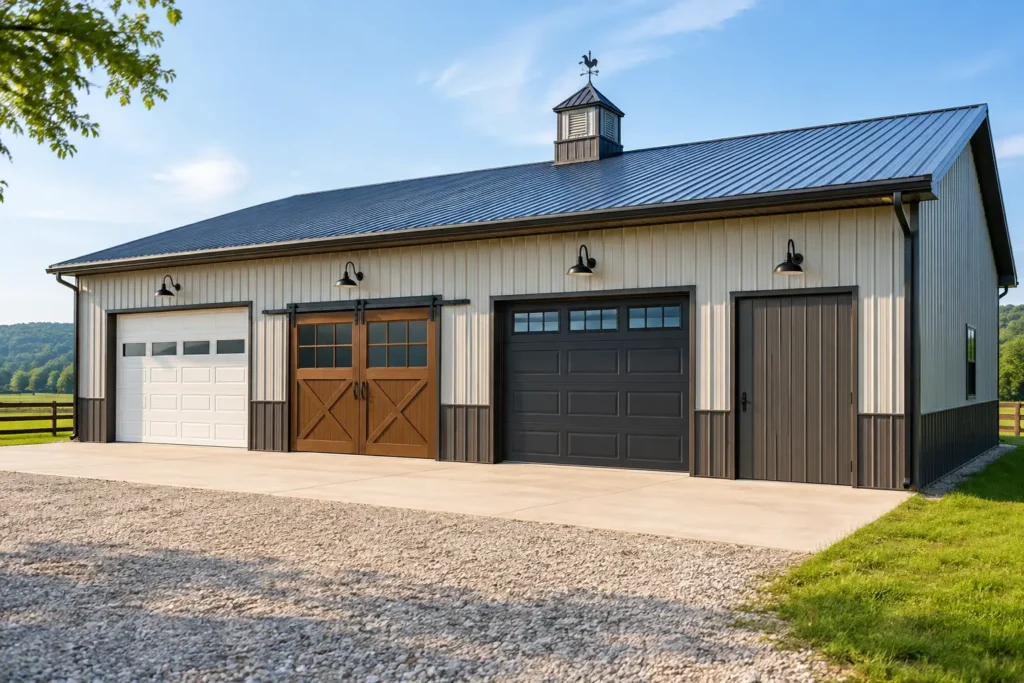
A pole barn door is not a finishing detail. It determines how easily you can move equipment, protect stored property, heat the building, and use the space every day. The top pole barn door options all solve different problems, so the right choice comes down to opening size, traffic, budget, clearance, and how much weather protection you need.
For a Southwestern Pennsylvania farm, shop, storage building, or commercial property, the decision also has to account for snow, wind, wet seasons, and the wear that comes from regular use. A door that works well for a lawn tractor may be a poor fit for a skid steer, delivery vehicle, or busy repair bay.
Top Pole Barn Door Options Compared
Sliding barn doors
Sliding doors are a classic choice for pole buildings, especially agricultural storage, equipment sheds, and larger utility structures. One or two door panels travel along an exterior track, opening wide without needing interior ceiling clearance. That makes them practical when you store hay, machinery, shelving, or other items close to the ceiling.
Their biggest advantage is value. Sliding doors can cover large openings at a lower cost than many powered overhead systems, and they are straightforward to operate. They also suit buildings where the door will be opened occasionally rather than many times each day.
The trade-off is that sliding doors need clear wall space beside the opening. The track and rollers need periodic attention, too. Ice, mud, leaves, or packed snow can make a neglected sliding door harder to move. Good hardware, proper alignment, and a solid bottom guide matter a great deal in our regional weather.
Overhead sectional garage doors
For workshops, garages, barndominiums, retail storage, and commercial spaces, an overhead sectional door often delivers the best balance of convenience and security. The door sections travel upward on tracks and rest beneath the ceiling when open. With an electric opener, entering with a truck, side-by-side, or passenger vehicle is quick and simple.
Sectional doors seal more tightly than a typical sliding door. That is a major benefit if the pole building is heated, insulated, used as a finished shop, or holds temperature-sensitive tools and materials. Insulated door panels can also reduce drafts and help make the interior more comfortable during winter work.
Before choosing this style, verify that the building has enough headroom and that the opening is properly framed. A large overhead door adds weight and requires the right tracks, springs, wind-rated hardware, and structural support. It generally costs more than a basic sliding door, but for a building used daily, the convenience can justify the investment.
Roll-up doors
Roll-up doors coil into a compact area above the opening instead of moving back on ceiling tracks. They are common on self-storage units, small commercial bays, equipment storage areas, and buildings where interior overhead space needs to stay open.
This is a durable, efficient choice for narrower openings and frequent access. Roll-up doors are often built from steel curtains and require little side room. They can be manually operated or motorized depending on the size and use of the opening.
A standard roll-up door is not always the best choice for a conditioned workshop. Many models provide less insulation and sealing than a quality sectional garage door. They also need room above the header for the coil. If energy efficiency, quiet operation, or a more finished appearance is the priority, compare the total cost against an insulated sectional door before deciding.
Hydraulic and bifold doors
Hydraulic and bifold doors are built for large, tall openings where conventional doors are not practical. Agricultural operators, aviation buildings, commercial equipment garages, and owners with oversized RVs or machinery often consider these systems. A hydraulic door swings outward as one large panel, while a bifold door folds upward in sections.
Their clear opening is the main benefit. They can provide room for equipment that would be difficult to accommodate with multiple sliding panels or a standard overhead door. They also create a clean, open work area when raised.
These doors require careful engineering, proper building design, and a larger budget. Wind loads, post placement, header requirements, electrical needs, and exterior clearance all deserve attention before construction begins. A hydraulic door that swings outward, for example, needs unobstructed space in front of the building. This is a specialized solution, not an automatic upgrade for every large pole barn.
Personnel and service doors
A walk-through service door should be part of almost every pole barn plan. It prevents unnecessary wear on a large vehicle door when someone simply needs to get a tool, check supplies, or enter the workshop. In a busy building, a dependable steel entry door with good weatherstripping adds security and everyday convenience.
Consider its location carefully. A service door near the driveway or parking area makes daily access easier, while one near a work zone can improve workflow. If the building will be heated or include a finished room, insulated construction and reliable thresholds are worth the added cost.
Match the Door to How You Use the Building
The best door is rarely the most expensive one. It is the one that fits the building’s actual job. A seasonal equipment shed may do well with wide sliding doors and a basic service entry. A heated woodworking shop benefits from insulated overhead doors that seal tightly. A small contractor yard may need roll-up doors for frequent access, while a large machinery or aviation building may require a professionally planned hydraulic or bifold system.
Measure the equipment you own now, then leave room for what may come next. Account for mirror width, cab height, attachments, trailer clearance, and the turning room outside the building. Door openings that seem generous on paper can feel tight once posts, tracks, and real-world maneuvering are involved.
It also helps to think about traffic patterns. One extra-wide door may be less useful than two smaller doors if vehicles need to enter and leave independently. Conversely, several doors can add cost, maintenance points, and wall framing considerations. There is no one-size-fits-all layout.
Details That Affect Long-Term Performance
Door performance depends on more than the panel itself. The opening needs square, sturdy framing. Tracks must be level, hardware must match the door’s weight, and exterior trim should direct water away from vulnerable edges. On large openings, proper structural support is essential to prevent sagging and binding over time.
Insulation and weather sealing deserve special attention in Pennsylvania. If you plan to heat the space, choose an insulated door with perimeter seals, a bottom seal, and construction that limits air movement. A door can look substantial while still allowing cold air, moisture, and blowing snow into the building.
Security is another practical factor. Steel doors, quality latches, secure tracks, and compatible operators can protect tools, equipment, and inventory. For remote properties or buildings that hold valuable equipment, ask about locking options and backup access if a powered operator loses power.
Plan the Door Before Finalizing the Building
The most cost-effective time to make door decisions is before the pole building is ordered or framed. Door locations affect post spacing, headers, interior layout, electrical planning, concrete transitions, and exterior approach grades. Changing an opening after construction can be done, but it is usually more complicated and expensive.
For property owners in Westmoreland, Somerset, and Fayette counties, local guidance can help avoid mismatched components and costly measurements. Tri County Door & Builders can help compare door styles against the building’s purpose, opening dimensions, and budget, whether you need materials, installation, or a custom pole building plan.
Choose a door that makes the building easier to use on an ordinary February morning, not just one that looks good on a drawing. When the opening, hardware, and access plan match your daily work, the entire pole barn becomes a better long-term investment.