




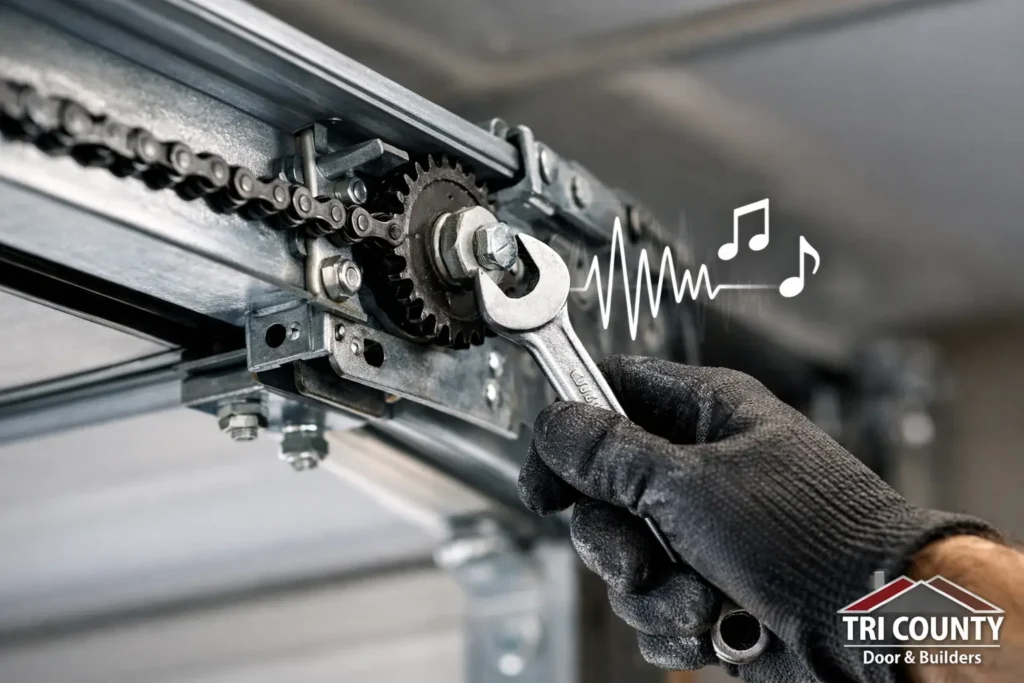
That first loud rattle at 6 a.m. usually gets your attention fast. If you’re asking why is garage door noisy, the short answer is that something is wearing out, out of alignment, or lacking proper lubrication. The better answer is that the type of noise matters, because a grinding sound points to a different problem than squeaking, banging, or popping.
A garage door should make some sound while it moves. It is a large, heavy system with rollers, tracks, hinges, springs, and an opener all working together. But when the sound gets sharper, louder, or more sudden than usual, that is often an early warning sign. Catching it early can mean the difference between a basic adjustment and a larger repair.
Why Is Garage Door Noisy? Start With the Sound
Not every noisy garage door has the same cause. In many cases, the sound itself tells you where to look.
A squeak or squeal often comes from dry metal parts. Rollers, hinges, and bearings can all start making noise when lubrication wears off. This is one of the more common and less serious causes, but it should not be ignored. Dry parts create friction, and friction speeds up wear.
A grinding sound is different. That can point to worn rollers, a problem inside the opener, or hardware that is no longer moving smoothly on the track. If the noise seems to come from the motor unit, the issue may be with gears or the drive system. If it follows the door as it moves, the rollers or tracks are more likely involved.
A banging or popping noise can be more serious. Springs under tension, loose hardware, or sections of the door shifting unevenly can all create that kind of sound. If the door jerks as it moves, stops unevenly, or slams shut, it is best to stop using it until the system is checked.
The Most Common Reasons a Garage Door Gets Loud
In day-to-day service work, a few causes come up more than others. Some are simple maintenance issues. Others are signs that parts are reaching the end of their service life.
Worn or Dry Rollers
Rollers help the door travel along the tracks. When they wear down, crack, or lose lubrication, they can create rattling, squeaking, or grinding. Older metal rollers tend to be louder than newer nylon options, so sometimes the issue is not a sudden failure but a system that has simply gotten noisier over time.
If your garage door has older rollers and the noise has gradually increased, replacement may be a better long-term fix than repeated lubrication. That is especially true if the door is used several times a day.
Loose Hardware
Garage doors move up and down with vibration every time they open and close. Over time, nuts, bolts, brackets, and hinge screws can loosen. That can cause rattling, shaking, and a generally rough operation.
Loose hardware is common, but it needs the right touch. Overtightening can damage parts or throw things out of alignment, while missing worn components altogether can leave the real problem unresolved.
Poor Lubrication
This is one of the first things people think of, and sometimes they are right. Hinges, springs, rollers, and bearings all need the right lubricant to reduce friction. Without it, the system gets louder and parts wear faster.
The key word is right. General-purpose sprays are not always the best choice for garage doors. Using the wrong product can attract dirt or fail to protect moving parts properly. A garage door lubricant made for these systems is the safer option.
Bent Tracks or Misalignment
Tracks guide the door, but they need to stay straight and properly aligned. If a track gets bent or the door shifts off balance, rollers can bind or scrape as they move. That creates noise and also puts extra strain on the opener and other hardware.
This is one of those situations where the sound may start small and grow worse. A slight rubbing noise can become a bigger operating problem if the door keeps running under stress.
Worn Hinges and Bearings
Hinges connect the door sections and allow them to flex as the door moves. Bearings support smooth movement in key areas of the system. When these parts wear down, they often start with squeaks or chirping and then move into more noticeable grinding or vibration.
Because these parts work together with other components, replacing only one worn piece does not always solve the whole issue. A full inspection usually gives a clearer picture.
Garage Door Opener Problems
Sometimes the door itself is not the main source of the noise. Chain-drive openers are naturally louder than belt-drive models, so some noise level depends on the equipment you have. But if the opener starts making new grinding, humming, or straining sounds, it may need adjustment or repair.
An opener can also become noisy when the door is unbalanced. In that case, the motor is working harder than it should because another part of the system is not doing its job properly.
What You Can Check Safely
There are a few things a property owner can look at without taking unnecessary risks. Start with a simple visual inspection while the door is closed. Look for loose brackets, worn rollers, bent tracks, or obvious gaps where parts do not seem to line up correctly.
Next, open and close the door with the opener and listen carefully. Does the noise happen near the top, near the floor, or throughout the full travel? Does it happen only while opening, only while closing, or both? Those details help narrow down the cause.
You can also check lubrication points on hinges, rollers, and springs if you are using a product intended for garage doors. In some cases, that alone reduces squeaking and improves operation.
What you should not do is tamper with high-tension components such as torsion springs or cables. Those parts can be dangerous even when the door looks still and secure. If the noise seems tied to the spring system, or the door is uneven, heavy, or jerky, professional service is the safer call.
When a Noisy Garage Door Means More Than Noise
Some sounds are annoying. Others are warning signs.
If the garage door is loud but still moving smoothly, the issue may be maintenance-related. If it is loud and also shaking, sticking, reversing, moving crooked, or dropping too fast, that points to a more urgent mechanical problem. Noise paired with poor movement usually means something is wearing out or under strain.
This matters because garage doors are not light. A residential door can weigh hundreds of pounds, and commercial doors can be even heavier. When a key part starts failing, the stress spreads to other parts quickly.
That is why waiting too long can cost more. A worn roller can damage a track. An unbalanced door can overwork the opener. A minor alignment issue can turn into a full breakdown at the worst possible time.
Why Professional Diagnosis Often Saves Time
It is tempting to treat every noisy garage door as a lubrication issue, but that approach only goes so far. In real service situations, the same squeak can come from multiple causes, and the same grinding sound can mean very different repairs depending on the age and condition of the system.
A trained technician looks beyond the noise itself. They check spring balance, opener strain, hardware condition, track alignment, roller wear, and safety features as one system. That matters because replacing one obvious part while missing another worn component can leave you with the same problem a few weeks later.
For homeowners and property owners in Southwestern Pennsylvania, weather also plays a role. Temperature swings, moisture, and seasonal use patterns can affect metal parts, lubrication, and door movement. A locally experienced company like Tri County Door & Builders understands the kinds of wear these systems see in everyday regional conditions.
How to Keep a Garage Door Quieter Going Forward
The best way to deal with garage door noise is to stay ahead of it. A basic maintenance routine goes a long way, especially if your door is used as the main entry point to the home or shop.
Have the system inspected regularly, keep moving parts properly lubricated, and pay attention when the sound changes. A garage door rarely goes from quiet to seriously damaged without some warning in between. Most of the time, it starts by sounding a little rougher than normal.
If you notice that change, trust it. A louder garage door is usually telling you something worth fixing before it becomes a bigger interruption to your day.
A garage door does not have to be silent, but it should sound controlled, steady, and predictable. When it no longer does, getting the cause checked early is one of the simplest ways to protect both the door and the people using it.